
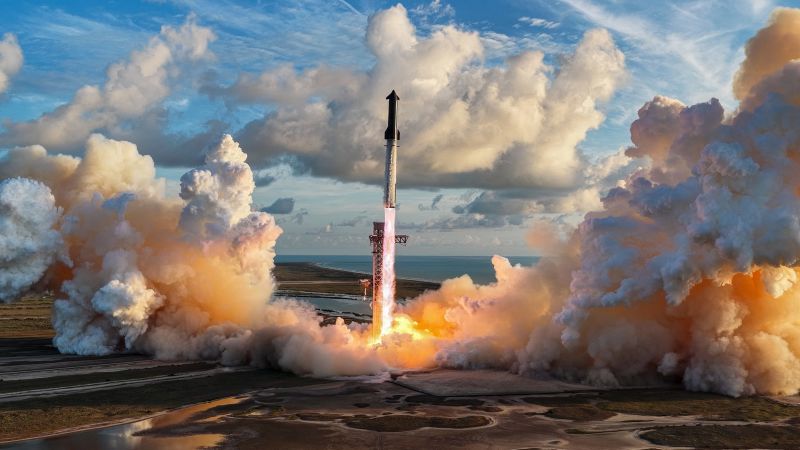
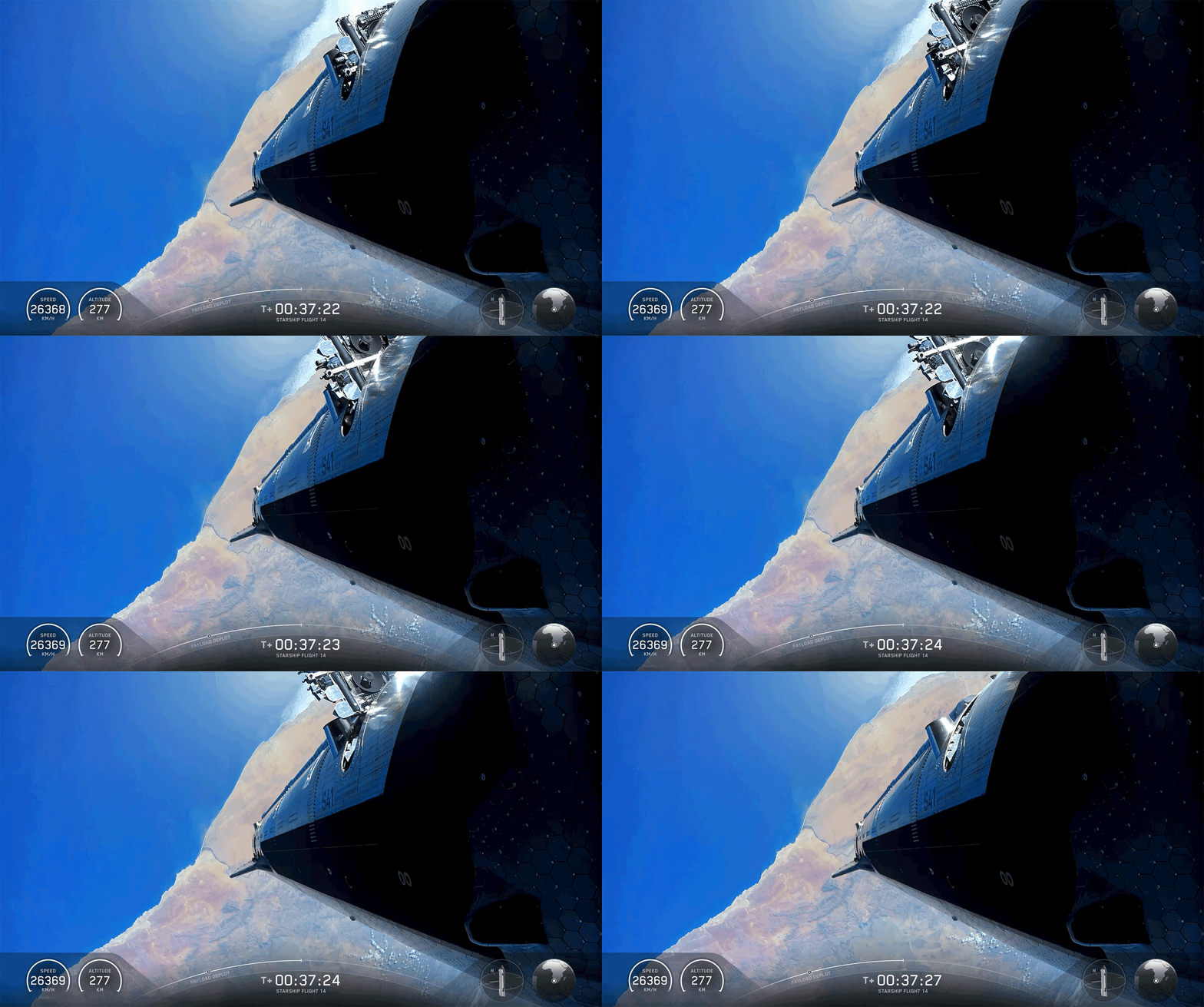
The most powerful rocket ever made, SpaceX’s Starship, reached orbit for the first time on Monday, deploying operational Starlink satellites in an unprecedented step forward. The mission marked the beginning of a new era — and possibly the beginning of the end of another.
As Starship flights ramp up, SpaceX has made clear that the company will phase out the use of two of its most iconic creations: the Dragon spacecraft, which ferries astronauts and cargo to and from the International Space Station, and the Falcon 9 rocket, which for a decade has dominated the global launch market.
These vehicles not only revolutionized the space industry in their own way, they’re also still very much essential to ongoing work in Earth orbit, without clear backup options in place. The prospect of this loss is already spurring panic among some satellite operators, said Caleb Henry, director of research at analytics firm Quilty Space.
“For small satellite operators, which tend to be more entrepreneurial, this crisis has been percolating for about six months at least,” Henry said. “In order to raise money, startups need to show they have a viable path to orbit. They have to move quickly.”
SpaceX’s Falcon 9 has for years offered a crucial route for getting satellites to space. Losing the rocket could slow down development of new technologies, such as direct-to-cellular connectivity — which promises to eliminate dead zones — and space-based data centers for AI computing, Henry said.
It could also drive up the price of getting certain spacecraft to orbit as well as worsen a looming launch bottleneck. That might make it more difficult for some companies to get their ideas — quite literally — off the ground.
Commercial satellite operators are already clambering to claim space on Falcon 9s as the final sales are made. Henry said he expects that most of the remaining space on board Falcon 9 rockets has already been sold and — beyond early 2029 — such flights may be reserved solely for the US government.
Even NASA, which currently counts the Dragon capsule as the only US-made spacecraft capable of getting its astronauts to and from the ISS, has also acknowledged the looming retirement of SpaceX’s workhorse vehicles.
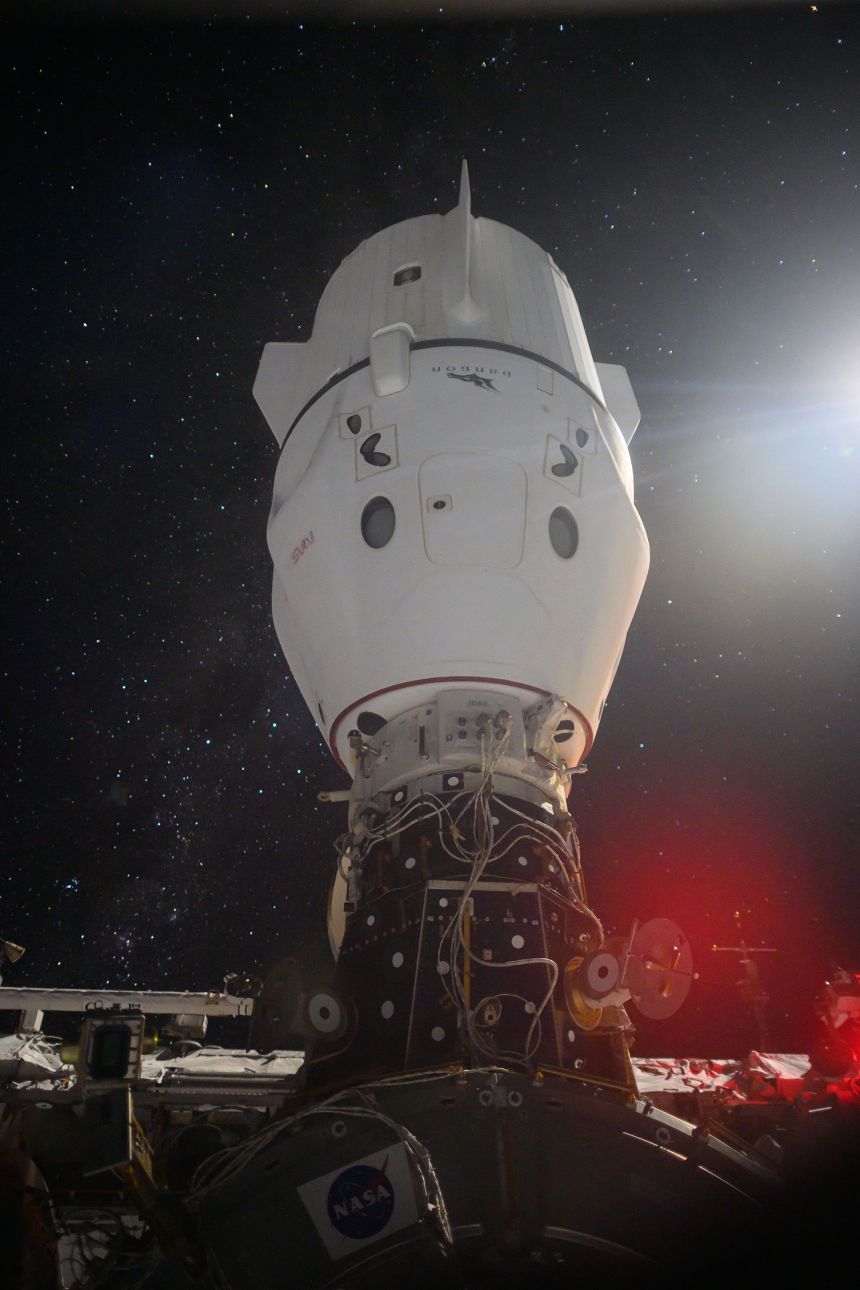
“I do not think it’s a secret that SpaceX intends to sunset older platforms like Falcon and Dragon as they concentrate on their next generation capability, Starship,” Isaacman said Monday.
Despite the success of Falcon and Dragon, a peek at SpaceX’s business book may hint at financial reasons for retiring the vehicles. In its first quarterly earnings report, SpaceX revealed its space segment — which includes Falcon, Dragon and Starship — lost $542 million. By comparison, its Starlink internet and connectivity business made nearly $1.7 billion.
Starship is expected to continue to cost SpaceX untold millions as it moves out of the prototyping phase. But one reason SpaceX is willing to bet big on Starship is that it’s simply “much better” for achieving the company’s own long-term goals, said SpaceX president Gwynne Shotwell at a recent conference. So it makes sense to shift resources toward the megarocket’s future.
Focusing on Starship is also about ensuring SpaceX stays on the bleeding edge of rocket development, she added: “If we don’t obsolete our own products and services, someone’s going to find a way to obsolete them for us.”
For the rest of the industry, that could put the onus on an array of nascent technologies, from unproven launch vehicles to a troubled astronaut spacecraft under development by Boeing that previously malfunctioned with two NASA astronauts aboard.
SpaceX has been a changemaker in the business of launching commercial satellites for a decade now.
But it’s a long-running myth in the industry that SpaceX and the Falcon 9 have driven down the price of launching satellites to orbit, according to a source familiar with customer negotiations, speaking anonymously to discuss sensitive industry developments.
It’s true that “SpaceX’s internal costs are dropping,” the source said. But “the market price of launch has been increasing for the past 10 years.”
Currently it costs about $7,500 to $10,000 per kilogram for a ride to orbit, the source said, which is slightly higher than it was a decade ago. (Robert Sproles, the CEO of launch broker and integration services company Exolaunch, said that figure may even be a bit low, depending on how one calculates launch costs.)
Still, the Falcon 9 has provided immense value to the commercial space industry, in part because it launches far more frequently than anything else.
SpaceX’s Falcon rockets launched 77 times in the first six months of 2026, according to regulatory filings — more than double the number of flights logged by China’s family of Long March rockets, which are the second-busiest launchers on the planet.
The vast majority of those Falcon flights have been dedicated to launching SpaceX’s own Starlink satellites. But 17 of them were for customers, including commercial satellite operators, research institutions and the US government.
One key pathway to orbit has been SpaceX’s rideshare, or “Transporter,” missions, which have allowed various satellite operators to pay to fill slots alongside other customers onboard a Falcon 9 flight.
When flights such as those disappear, it’s likely to worsen a launch bottleneck that has already been looming over the industry as demand for getting satellites to orbit has rapidly outpaced supply of available rides.
This rocket supply crunch has been looming since 2022, when Russia invaded Ukraine — which immediately removed Russia’s Soyuz and Proton rockets from the commercial market, Henry noted.
On top of that, Amazon — which is deploying a space-based internet constellation to rival SpaceX’s Starlink — stepped in to buy more than 100 launches from various rocket makers.
“That’s one company that vacuumed up a massive amount of available supply,” Henry said.
Now, losing the Falcon 9 as a way to orbit is expected to exacerbate the issue: “It’s been a rough ride for folks that are trying to get to orbit,” Henry said, “and it’s not like this is the first aftershock — but it is the most severe.”
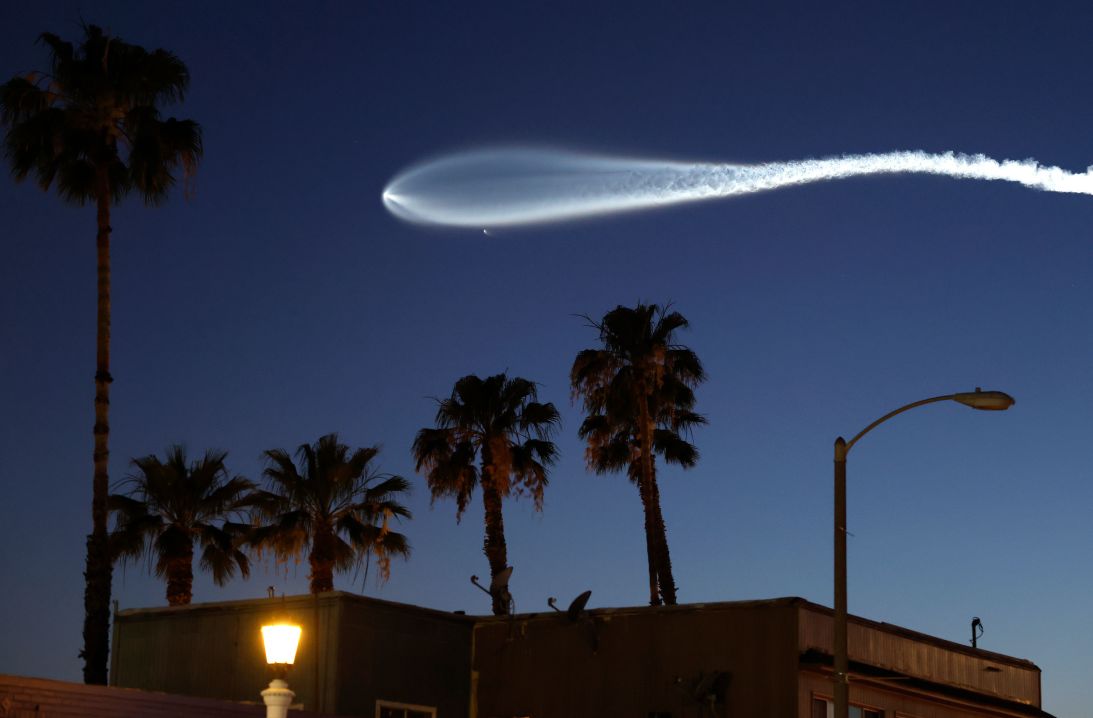
Though some satellite manufacturers are hopeful that space onboard future Starship launches will be offered to satellite operators, it’s not clear when or if that will happen.
The looming launch bottleneck could impact young startups disproportionately to older, more established satellite operators.
For example, US-based company Spire, which operates a constellation of more than 100 tiny satellites that can monitor weather and track supply chains, has been launching hardware for more than a decade.
The company’s CEO, Theresa Condor, told CNN that the company plans “years ahead to maintain a regular cadence, replenish and upgrade our constellation” and has its launch schedule locked down through at least 2028.
Condor said that Spire is not concerned about finding rides to orbit, and her confidence is indicative of Spire’s long history in the launch industry and past experience weathering a rapidly shifting market.
Sproles, the Exolaunch CEO, also told CNN that companies that have been in the space industry a while know that what’s coming is actually a return to the former status quo.
“If we rewind the clock 10 years ago, it was normal to book a launch two years, three years out in the future — and, unfortunately, it was also normal for that launch to be delayed by 18 months or so,” Sproles said.
That may be the future the satellite industry is headed toward.
Turning elsewhere and abroad
It is possible that a launch supply crunch could be averted, noted Micah Walter-Range, a space analyst and contributor to the VettaFi Space Index. But satellite operators may be wary because newer rockets that have for years promised to step up to compete with the Falcon 9 have not yet begun flying with any regularity.
“The space industry hates uncertainty, particularly when it comes to planning of launches,” Walter-Range said.
While the US is home to a handful of rocket manufacturers — including Rocket Lab, Firefly Aerospace, the Jeff Bezos-founded company Blue Origin, and United Launch Alliance — those companies have not yet reached the scale or launch cadence that the industry is demanding.
And while a host of other rockets are under development in the US, by companies including Firefly, Relativity and Stoke Space, it’s not clear when those vehicles will actually start flying — or how successful they’ll be.
Newly developed rockets frequently suffer explosive setbacks. Blue Origin’s New Glenn rocket, for example, recently exploded on the launchpad. And the new Vulcan Centaur rockets from United Launch Alliance have been grounded because of performance issues.
“If both of those rocket programs were going smoothly, I think the industry would be more relaxed,” Walter-Range said. “But they’re not.”
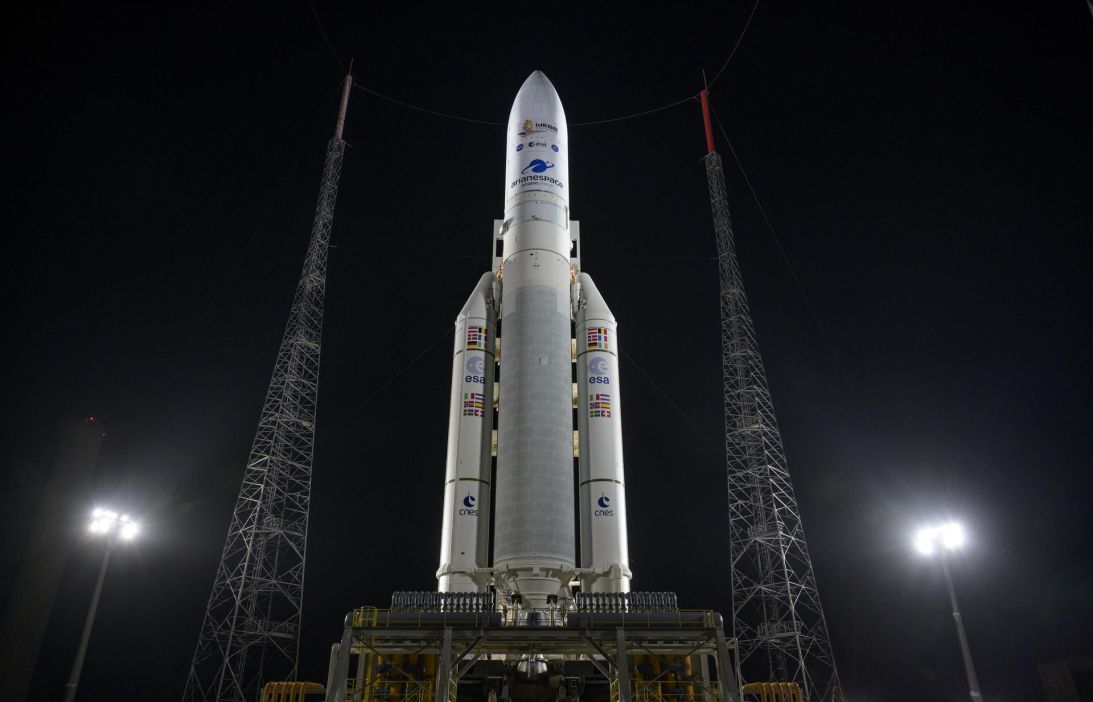
A longtime SpaceX customer, Finland-based Iceye — which has launched its radar imaging satellites aboard Falcon 9 rockets on more than a dozen occasions — may be turning to Europe for its launch needs. The company recently inked a tentative deal with France-based rocket maker Arianespace to consider future launch contracts.
Iceye chief operating officer Eric Jensen told CNN in a recent interview that the company has been planning for the Falcon 9’s retirement for some time.
“We’ve taken proactive steps long in advance of this conversation,” Jensen said, “and will continue to be in discussions with various launch providers.”
Condor, the Spire CEO, echoed that sentiment, saying Spire is constantly looking for launch opportunities in the US and abroad.
“We assess each option based on readiness, reliability, schedule, deployment capabilities and access to the orbits our satellites need,” she said.
Still, there’s a rocket-sized elephant in the room: “Prices are going up, and I expect they will continue to go up,” Sproles said.
As far as human spaceflight goes, SpaceX has been narrowly focused on retrofitting Starship for a multibillion-dollar NASA contact to ferry government astronauts to the moon amid a space race with China.
It’s not clear whether Starship could be used to take over any of the duties of SpaceX’s Dragon spacecraft.
The vehicles are drastically different. While the Starship spacecraft is a 171-foot-tall colossus designed to transport people to deep space, Dragon is a 13-foot-wide capsule fit to carry about four astronauts at a time to low-Earth orbit, where the International Space Station resides.
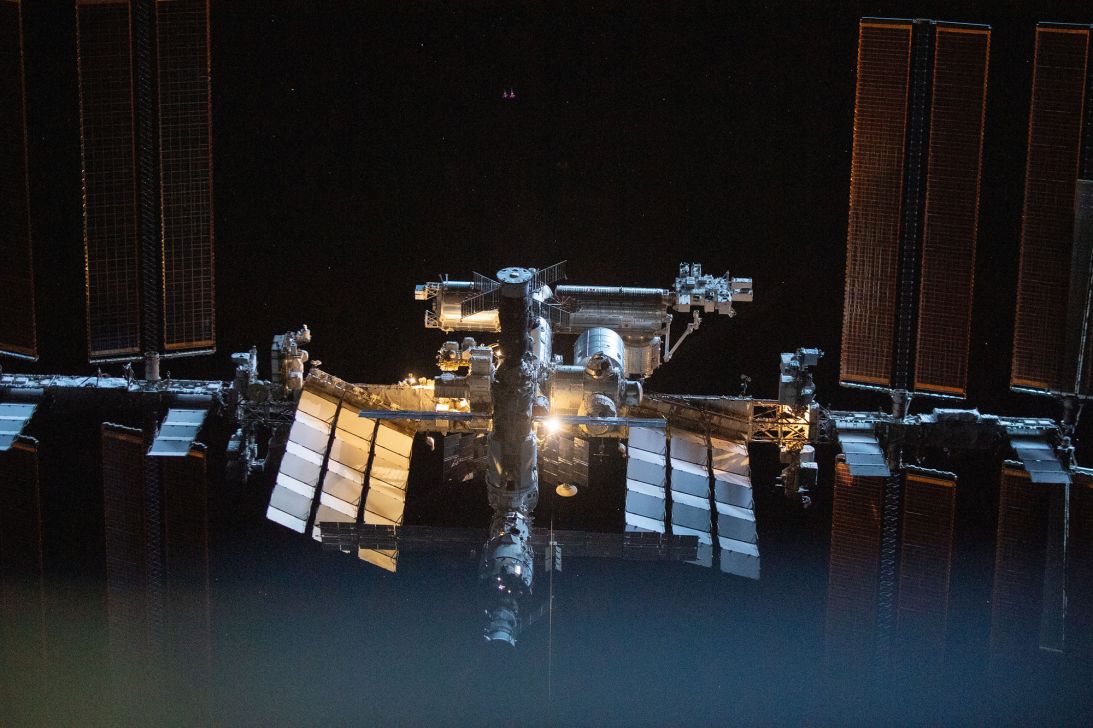
The ISS is slated for retirement as soon as 2030. But even after it’s decommissioned, NASA intends to work with private companies to deploy new, commercially operated stations to ensure that the US still has laboratories in low-Earth orbit where crucial research can be carried out. (China also operates a state-of-the-art space station, spurring some industry experts to deem it a national security imperative that the US continues to operate a laboratory in this area of orbit.)
These future space stations will need spacecraft to ferry people to them. Shotwell has previously said that she expects Dragon will cease operations sometime in the 2030s.
Without SpaceX’s Dragon, the only option for getting people to and from those orbital outposts could be Boeing’s Starliner — a spacecraft that was developed under the same NASA program as Crew Dragon.
But Starliner famously malfunctioned on its debut crewed flight test. The ordeal left two NASA astronauts, Suni Williams and Butch Wilmore, living and working in space months longer than expected. The agency recently classified the event as a “Type A mishap,” in league with space shuttle disasters that cost astronauts their lives.
It’s a precarious situation given that it’s still unclear when, exactly, Starliner may fly with crew again. During a news conference Monday, NASA officials said that if an uncrewed test flight of the vehicle goes well in December, the earliest Starliner could fly with astronauts is mid-2028.

But when asked about the prospect of retiring SpaceX’s Dragon capsules, SpaceX president and chief operating officer Gwynne Shotwell was blunt: “Boeing has been paid — I think probably more than we have been paid — to develop their human capsule,” Shotwell said at the All-In Summit earlier this month.
SpaceX has been awarded $5.92 billion in NASA contracts for 17 flights, while Boeing was given $4.82 billion with a mandatory order for four flights. On Monday, NASA said it was giving Boeing additional funds for fixing Starliner.
“We’re just going to let them have some business,” Shotwell said of Boeing.
Her remark elicited laughter and an acknowledgement from the interviewer that she was being slightly snarky.
But Shotwell struck a serious tone when she laid out the reasons why SpaceX would want to shift resources away from its Dragon program and toward Starship.
Not only will Starship deploy upgraded internet satellites and SpaceX’s planned orbital data centers, Shotwell noted, the vehicle is also the cornerstone of SpaceX’s founding goal — as dictated by Musk over the course of two decades — which is to establish a self-sustaining colony on Mars.
“A Falcon 9 with a Dragon capsule on top is like a minivan,” Shotwell said. “The road trip to Mars is six months, so you don’t want to be in a minivan.”
Sign up for CNN’s Wonder Theory science newsletter. Explore the universe with news on fascinating discoveries, scientific advancements and more.