
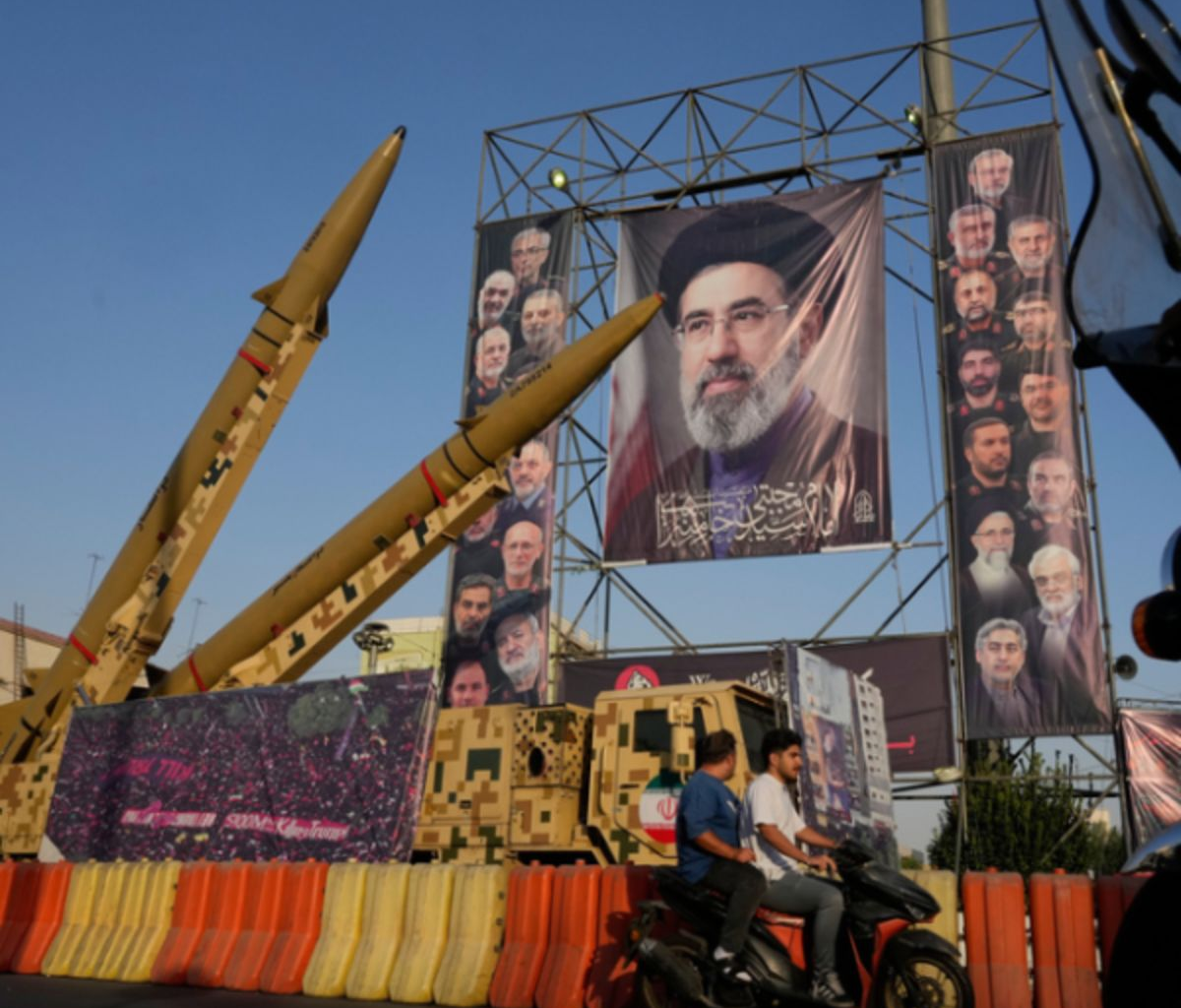

A recent military exhibition in Tehran, Iran. (AP)
Iran has received a U.S. counterproposal aimed at reviving negotiations to end the seven-month war and reopen the strategically vital Strait of Hormuz, even as President Donald Trump has publicly rejected Tehran’s seven-day cease-fire plan.
Iranian officials and state media said Wednesday that Foreign Minister Abbas Araghchi had received Washington’s response through Qatari mediators and would present it to Iranian officials in Tehran.
The development comes days after Trump said he had rejected Iran’s proposal, telling Axios, “They want to make a deal, but it is not the deal that I want to make.”
Trump also said Iran had “overplayed their hand” and suggested Tehran was seeking an agreement because it was “losing badly.”
The president has continued to take a hard line publicly, saying Tuesday that he did not know whether Iran was ready to “give up yet,” but adding, “They’ll give up” and that Iran was doing “very poorly.” Reuters reported the comments as the latest indication that Trump does not view Tehran’s seven-day proposal as an acceptable basis for ending the conflict.
Still, indirect diplomacy has continued through Qatar.
According to Reuters, a non-Iranian official briefed on the negotiations said the U.S. response was conveyed to Araghchi through Qatari mediators in Doha and that the two sides largely agree on the steps that need to be taken but remain divided over the order in which those steps should occur.
The U.S. response itself has not been publicly released.
Reuters reported that the document circulating among negotiators outlines a seven-day period of confidence-building measures intended to return Washington and Tehran to an enhanced version of the memorandum of understanding reached in June, including concrete steps involving Iran’s nuclear program. The official did not provide additional details.
Iran’s original seven-day proposal was more specific about the sequence Tehran wanted.
Araghchi said the plan would reopen the Strait of Hormuz and restore normal maritime traffic at the end of seven days if Washington first met conditions outlined in the June agreement.
Iran has also sought the lifting of the U.S. naval blockade of its ports, sanctions relief and the release of frozen Iranian funds, according to CBS News and other reports.
An Al Jazeera analysis of the proposal reported that Tehran’s intended sequence would broadly involve an end to fighting, the lifting of the U.S. naval blockade and oil sanctions, and the release of frozen Iranian assets, followed by reopening the Strait after seven days and then negotiations over Iran’s nuclear program. The report said the proposal was modeled on the June memorandum but compressed the timetable and changed the sequence.
That sequencing is a major point of contention.
A U.S. official previously told CBS News that Washington would consider sanctions relief and release of frozen funds if Iran makes concrete progress on its nuclear program, but that there would be no agreement unless the nuclear issue is addressed. The official said the two sides remained apart over the timing of their respective commitments and which side should move first.
Trump himself has disputed reports that he has offered Tehran sanctions relief.
“I offered them NOTHING!” Trump wrote on Truth Social Monday in response to an Axios report that he was open to sanctions relief and access to frozen Iranian funds in exchange for progress on the nuclear issue. CBS News also reported that a U.S. official had described such potential concessions as being contingent on concrete Iranian nuclear commitments.
Iran’s proposal is rooted in the memorandum of understanding reached in June between Trump and Iranian President Masoud Pezeshkian. That agreement produced a brief cease-fire but subsequently collapsed.
Tehran has continued to insist that the Strait of Hormuz is central to any settlement.
The waterway, through which roughly one-fifth of the world’s oil previously passed, remains substantially disrupted despite increased shipping in recent weeks, with Reuters reporting that shippers are charging high fees to accept the risks of sailing through the strait. Two vessels were reportedly hit by projectiles in the latest incidents.
The continuing disruption has also kept pressure on global energy markets.
CBS News reported Monday that Brent crude had climbed above $101 a barrel before easing as word emerged that mediators were still working on a possible agreement. The average U.S. regular gasoline price had reached nearly $4.48 a gallon, up from $3.13 a year earlier, according to AAA data cited by CBS.
For now, the diplomatic channel remains open despite Trump’s rejection of Iran’s initial offer.
Iran is considering the U.S. response, while Qatar continues to shuttle messages between the two sides as they negotiate not only what commitments each government will make, but which side will make them first.
© 2026 Newsmax. All rights reserved.