
Ukraine is preparing the fourth phase of Operation Vivaldi, its counteroffensive in the Lyman area of the Donetsk region, which to date has significantly disrupted Russia’s military objective of seizing the entire Donbas.
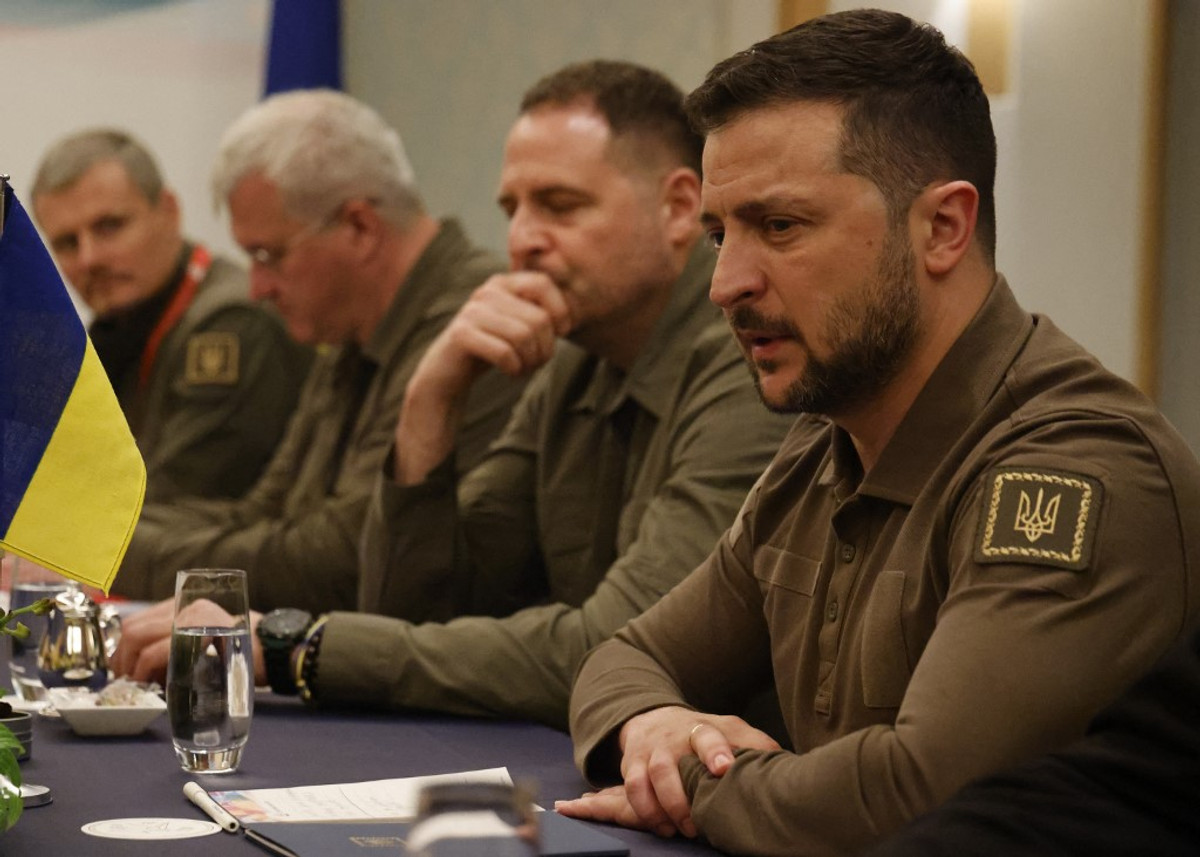
The plan was discussed with Ukraine’s military personnel at the command post of the 3rd Army Corps, which is leading the operation, President Volodymyr Zelensky said in a statement on Wednesday, Sept. 30.
JOIN US ON TELEGRAM
Follow our coverage of the war on the @Kyivpost_official.
Over the first three phases, Russia has suffered more than 5,000 casualties, while another 250 Russian soldiers have been captured.
Ukrainian forces have also retaken 176 square kilometers (68 square miles) of territory. The Atlantic Council’s analysis said that the offensive has reversed more than a year of Russian advances.
“Ukraine’s Defense Forces have thwarted Russia’s plans to break through the rear of the Sloviansk-Kramatorsk” region, and the situation has been stabilized in that section of the front, Zelensky said.
Robots in place of soldiers
Zelensky also met the commanders of units directly involved in the operation, discussing their needs in detail, including artillery and financial support for troops.
He singled out ground robotic systems as a key lesson from the offensive.
“Replacing our soldiers with ground robotic systems whenever possible is a highly promising area at present,” Zelensky said, adding that “during Operation Vivaldi, this element made it possible to accomplish a great deal.”
Other Topics of Interest
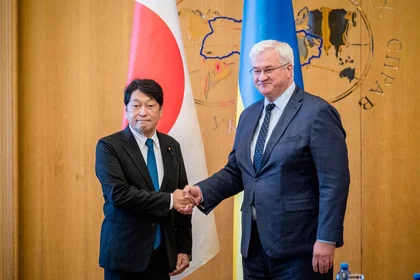
Sybiha Meets Japanese Lawmakers in Kyiv to Discuss Further Security Cooperation
Former Japanese Defense Minister Itsunori Onodera led the delegation, which discussed North Korea’s role in Russia’s war and frozen Russian assets.
In April, Zelensky ordered Ukraine’s Defense Forces to dramatically increase the number of ground robotic systems used in service in 2026, aiming to drastically reduce the need for soldiers to be physically present in the most dangerous parts of the battlefield.
Ukraine’s parliament, the Verkhovna Rada, adopted a law that exempts transactions for the supply of GRC from value-added tax (VAT) in May. The measure was intended to lower procurement costs for ground robots and to speed up their delivery to frontline units.
As of June 9, the Ukrainian military has already carried out more than 50,000 logistics and evacuation missions using GRCs (Ground Robotic Complexes), with the number expected to significantly grow by the end of the year, as preserving human lives remains a priority.
According to a follow up statement from Zelensky, the presidentalso met with soldiers from the 21st Kraken Separate Unmanned Systems Regiment, which is taking part in the operation.
Their discussion centered on scaling up the military’s unmanned capabilities, developing GRCs, equipping crews and the distribution of e-points – a system that rewards units for confirmed battlefield results with points they can exchange for drones and other equipment.
He also presented awards to troops from the 21st Regiment, the 125th Separate Heavy Mechanized Brigade and the 25th Separate Antitank Battalion for their role in the offensive.
“Thank you for defending Ukraine and for carrying out this highly successful operation – for your courage and heroism, and for achieving the right outcome, bringing our country closer to justice,” Zelensky said.
Why is the operation so important?
The operation’s stated goals include pushing back Russian forces, dismantling their infiltration tactics and cutting their supply lines, with its main focus centering on the Donetsk region.
In 2014, after illegally annexing Crimea, Moscow began backing separatist forces in the Donbas, who went on to seize parts of both regions, including their regional capitals. According to CNN, the conflict in the Donbas simmered for almost eight years, claiming around 14,000 lives, until Russia escalated it into a full-scale invasion of Ukraine in February 2022.
More than a decade later, the region remains at the center of Russia’s war aims.
While the Kremlin insists that Kyiv cede the remaining parts of partially occupied Donbas as a prerequisite for a peace deal, Ukraine rejects any arrangement that would require it to give up its territory and sovereignty.
Kyiv nonetheless calls on Moscow to agree to an unconditional ceasefire and is urging its allies to increase pressure on Russia to end the war.
Last week, 51 countries issued a joint statement backing Ukraine and calling on Russia to accept an unconditional ceasefire. The Kremlin has rejected every such proposal so far.
During the 81st United Nations General Assembly (UNGA) held in New York last week, Russian Foreign Minister Sergey Lavrov – representing Russian President Vladimir Putin – said that the Kremlin will not pause its “special military operation” even during negotiations, adding that Ukraine would have kept its 1991 borders if the European nations had not “engaged in their shenanigans.”