
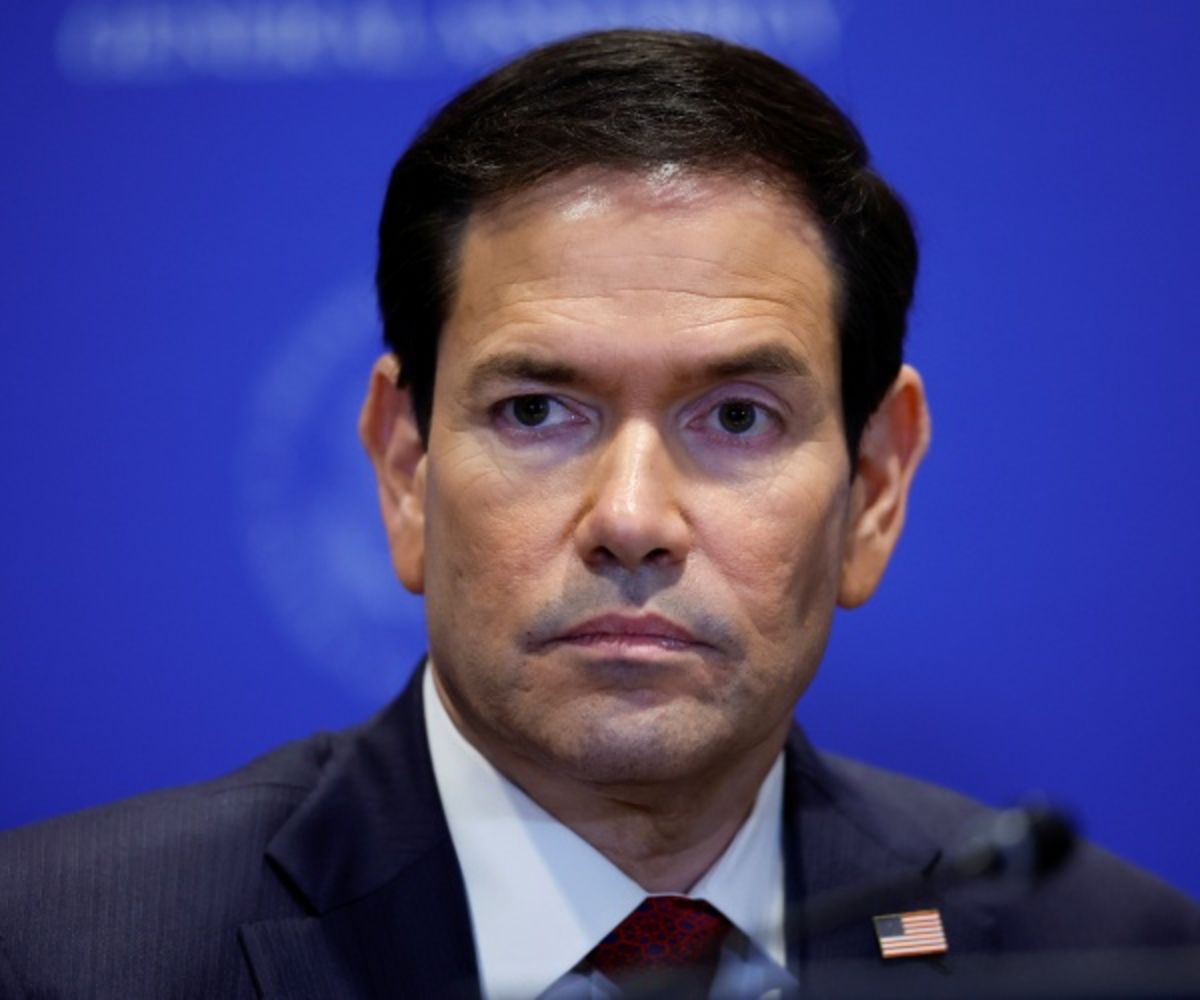

Secretary of State Marco Rubio (Chip Somodevilla/Getty Images)
Secretary of State Marco Rubio ordered Iran’s delegation to the United Nations to leave the United States on Monday after negotiations aimed at ending the seven-month war reached a stalemate, according to Axios.
Rubio directed the U.S. mission to the U.N. to tell Iranian Foreign Minister Abbas Araghchi and his delegation to leave New York immediately Monday evening after the White House had earlier believed talks mediated by Qatar could produce progress.
The delegation departed for Doha early Tuesday.
“Secretary Rubio kicked out the Iranian delegation who had overstayed their welcome. The U.N. General Assembly was over, so it was time for them to go,” a U.S. official told Axios.
The diplomatic rebuke came after Qatari mediators spent days shuttling between Washington and Tehran in an effort to bridge differences over Iran’s nuclear program, the U.S. naval blockade, and the Strait of Hormuz.
One source familiar with the negotiations described the impasse bluntly, saying, “It is stuck. The Iranians are asking for things the U.S. can’t accept, and the U.S. thinks it is winning so there is no need for compromise.”
The stalemate leaves President Donald Trump facing a war that has lasted far longer than the administration initially predicted.
The conflict began Feb. 28, and Trump initially predicted it would last roughly four to five weeks.
In March, he called the operation a “short-term excursion” and said it was “going to be finished pretty quickly,” while Rubio later said the administration expected the campaign to conclude within “weeks, not months.”
More than seven months later, Trump is again predicting that the conflict will end soon.
“Maybe I will blow ’em up,” Trump told reporters Wednesday when asked about reaching an agreement with Tehran.
“Maybe I blow ’em up. We have to make that decision. We will blow ’em up or make a deal. But the time is coming. It’s gonna end very soon one way or the other.”
The prolonged conflict has also complicated Republican messaging with the Nov. 3 midterms approaching.
Rising energy costs associated with disruptions around the Strait of Hormuz have become an election issue, while Republican candidates in competitive races have increasingly called for the conflict to end.
Sen. Jon Husted, R-Ohio, for example, said the “war needs to come to an end as quickly as possible so that we can lower gas prices,” after saying in March that the operation “should be brief and successful.”
The administration itself has shifted its rhetoric as the conflict has dragged on. Vice President JD Vance said in September that he could not say when the fighting would end and argued that the current confrontation no longer amounted to a war.
“You’re asking me a question like, ‘When will the Iranians stop shooting at ships?'” Vance said. “The reality is I don’t know the answer to that question. You’d have to ask the Iranians.”
Trump, meanwhile, has increasingly tied the war’s timeline to the election calendar. In September, he predicted it would end “immediately after” the midterms, saying Tehran was attempting to influence the election.
The political pressure has begun showing up on Capitol Hill as well.
Four Republican senators joined most Democrats last week in supporting a war powers measure aimed at halting U.S. military action, although the resolution failed 49-50.
© 2026 Newsmax. All rights reserved.