
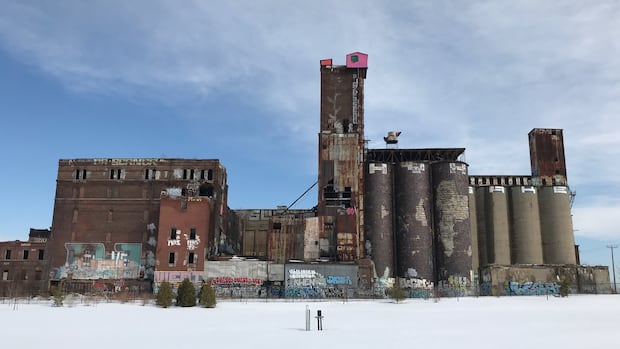
The Canada Malting plant, which looms over Montreal’s Sud-Ouest borough and is notably home to the mysterious “pink house,” could collapse at any moment, according to a new engineering report.
The report says the structure — a mass of brick and concrete silos towering over the Lachine Canal to its south and St-Ambroise Street to its north — represents an “imminent danger” to public safety.
“Controlled demolition is the only possible, safe and rational solution to eliminate the critical danger that this building represents,” wrote the report’s author, André Houle from the engineering firm STP ING inc.
Houle is especially concerned about a facade wall, which he says has detached from the roof and is “hanging by a thread.” He’s worried about this brick facade falling onto St-Ambroise Street, where people walk and cars are currently parked.
“The only way to protect the public with this project right now is to close the street, there’s no other way,” Houle said in an interview with CBC.
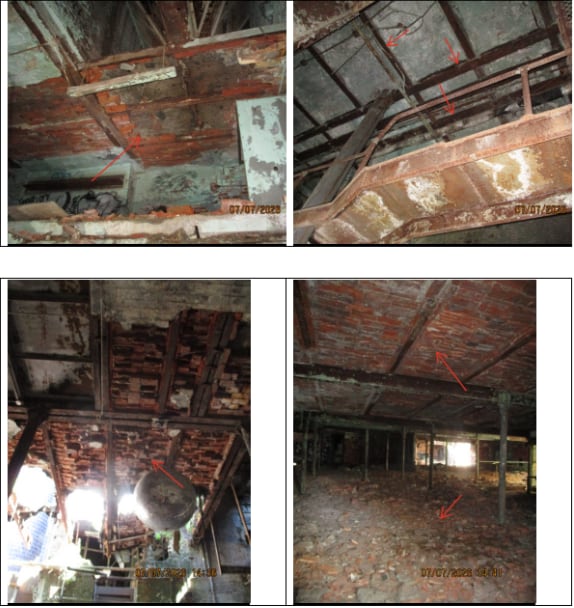 Images from an engineering report show the state of the inside of the Canada Malting plant on the banks of the Lachine Canal. (STP ING inc.)
The danger of collapse could worsen in the winter or spring, his report says. Freeze-thaw cycles could contribute to the collapse, as could vibrations from an earthquake.
Private developer ready to build
The engineering report is the latest development weighing in on the future of the structure, which has lain vacant since 1985.
In a media release, La Malterie inc., a subsidiary of Renwick, the company that owns and plans to develop the site, said a demolition request had been submitted to the city.
Part of St-Ambroise Street will be closed in the meantime.
The city said in a statement on Thursday that it was analyzing the demolition request to “ensure that the emergency demolition of part of the site is justified.”
Antoine Poulin, the chief of staff for Véronique Fournier, the mayor of the Sud-Ouest borough, said in an interview that the city met with the developer and with Houle earlier this week.
He said the city had to conduct its own review of the site before greenlighting a demolition request, particularly given the important heritage of the Canada Malting plant.
He emphasized that the main area of concern in Houle’s report is the crumbling brick facade off St-Ambroise Street, and that the report does not say that the other sides of the building, which are adjacent to a bar and recreational path, are in as dire condition.
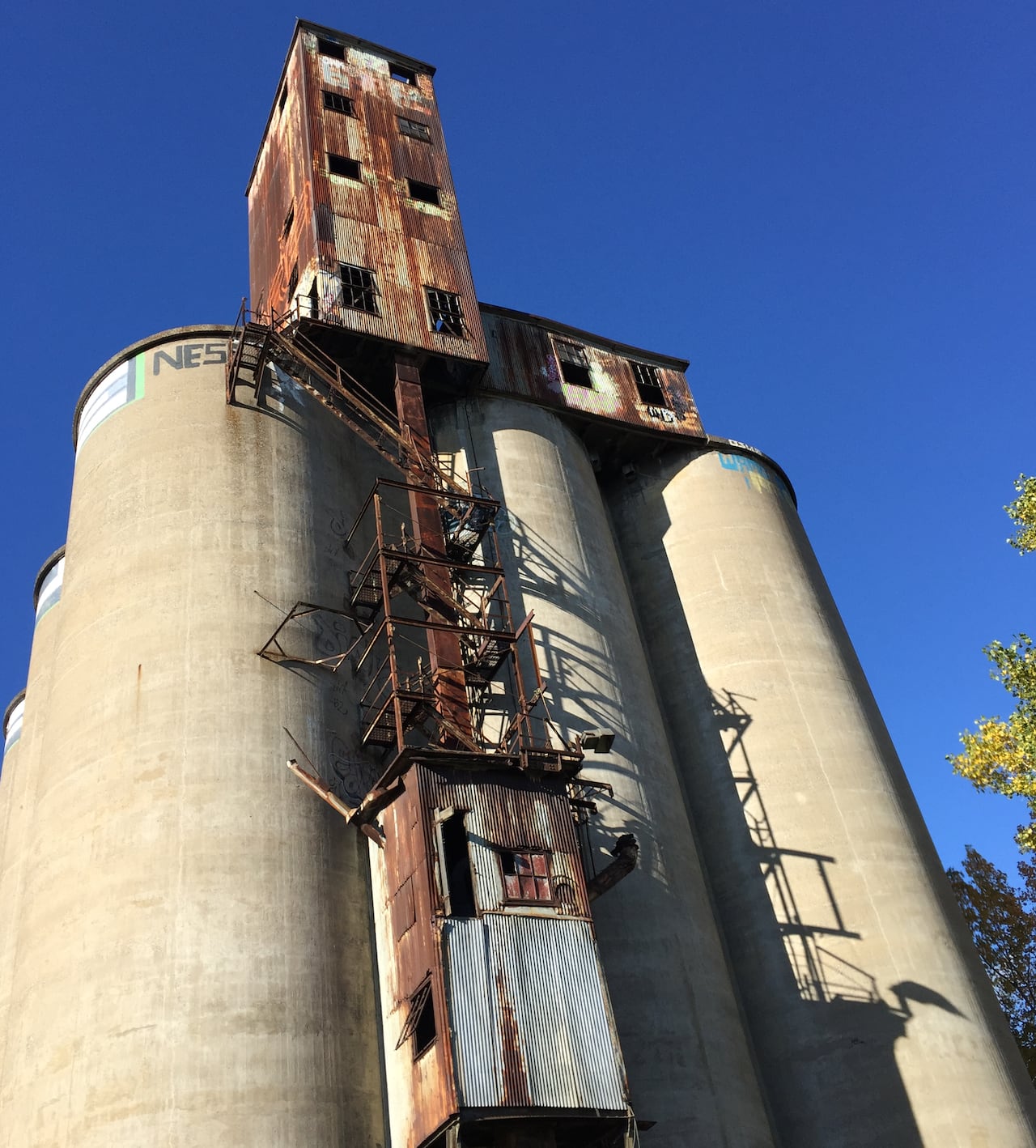 The Malting factory is a collection of buildings, erected in 1905, that the À nous la Malting collective says is big enough for 200 social housing units. (Jonathan Montpetit/CBC)
Noam Schnitzer, the president of Renwick, said in a statement that the former Canada Malting site holds a “unique place in the history of Saint-Henri and in Montreal’s industrial legacy.
“We remain fully committed to ensuring that the identity of this iconic site can live on through the future La Malterie project.”
La Malterie Inc. said its plan for the site includes 685 housing units, 20 per cent of which would be social housing. The plan also includes community spaces, businesses and community services. The company says it will also preserve the “pink house.”
The developer, the city and the community group À nous la Malting have clashed over the future of the site for years.
The group wants to turn the building into a collectively owned complex with 200 affordable rental units, a rooftop garden, a bike repair shop, a public daycare, a community kitchen and a museum.
Members of the group camped outside the plant in 2023 to protest Renwick’s development plan. They had pushed for the site to be used exclusively for social housing.
The Malting plant and elevators were built in 1905 by the Canada Malting Co. Large and cement silos were added in the 1940s to store barley.
The company exported the malt along the Lachine Canal, and when the canal closed to commercial navigation in 1970, the transportation cost rose to the point that the company abandoned the site in the 1980s.
Since then, it has fallen into disrepair. Windows are boarded up, brick walls are crumbling, and the facade is covered in graffiti.
And, though Renwick has set up barriers to prevent people from entering the building, it is popular with “urban explorers” and is home to the “pink house” — a small shack, painted pink and well maintained, which sits atop the crumbling plant.
Engineer says street should have closed earlier
Houle says he’s amazed people are still going into the building, given how dangerous it is. He described arches, made of bricks and steel, that have become especially hazardous.
“When that structure is rusted, it doesn’t hold the brick anymore and the brick falls on the ground,” he explained. “Left and right, the bricks are falling on the ground.”
The STP ING inc. report released Thursday warns that anyone entering the building risks death. In images, the report shows falling bricks and floors that are worn through.
Houle believes the area should’ve been closed one week ago.
“Anywhere else it would be, ‘we’ll close off the street and we’ll do the paperwork after. Because the safety is an issue,’” he said. “Here, we’re saying to the owner, ‘no… you need to go through the approval process.’”
“When it’s an urgent matter, there’s a safety issue, why do you have to wait for the paperwork to be able to act?”
Poulin, the city spokesperson, said the city had to follow a simple procedure to approve the street closure, and he said the developer, and Houle, were aware of it.
Fournier, the borough mayor, said in a statement that it’s the developer’s responsibility to secure the street. She added that the developer is also responsible for communicating with residents of the area.
Fournier said any development that happens on the site will have to meet clear conditions that have been set for it. That includes having a high proportion of social housing, improving access to the Lachine Canal, and honouring the site’s industrial heritage.