
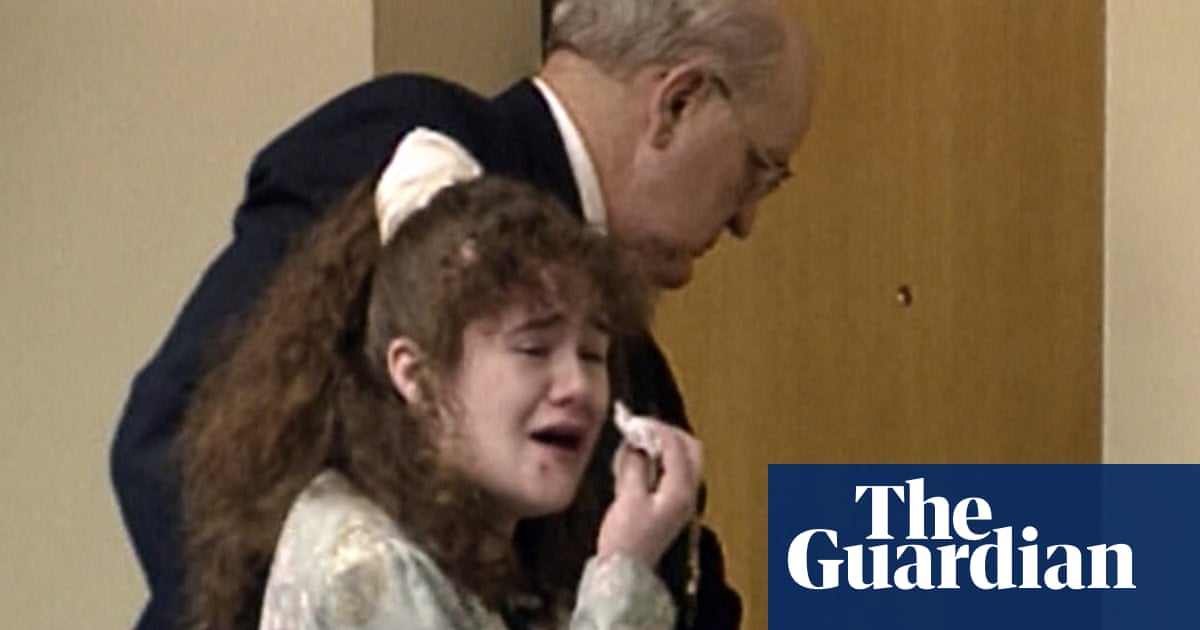
The convicted murderer Christa Pike, sentenced to death, has survived two lethal injections – we take a look at the situation and what might happen next.
Why was Christa Pike on death row?
Pike, now 50, was sentenced to death in 1996 at the age of 20 over the murder of 19-year-old Colleen Slemmer in 1995. Pike and her then boyfriend, Tadaryl Shipp, killed Slemmer at a job training camp in Knoxville, Tennessee. In a grim revelation it emerged that a satanic symbol had been carved into Slemmer’s chest.
According to the Death Penalty Information Center, the last execution of a woman in Tennessee was in 1820, meaning Pike would have been the first woman to be executed in the state in more than 200 years.
Campaigners have long argued that Pike should be taken off death row, with Amnesty International noting Pike endured rape, sexual and physical violence, abuse and neglect during her childhood.
“The state failed to protect her as a child despite having knowledge of what she was facing. Her court-appointed lawyers then failed her at her trial, presenting little of the mitigating evidence of this abuse or its psychological consequences,” the organisation has said.
Earlier this week Tennessee’s governor, Bill Lee, denied Pike’s request for clemency. On Wednesday, the execution was temporarily blocked by judges on the sixth circuit court of appeals. However, the US supreme court subsequently stepped in to overturn the stay, allowing the execution to proceed.
Did the execution go ahead?
Pike was given two lethal injections late on Wednesday, but she survived both, with witnesses reporting she was still breathing after the second attempt, and some stating she was heard to snore.
Pike has now been taken to the hospital.
The Tennessee department of correction said in a statement: “The lethal injection chemical in the protocol has consistently been effective, and the protocol does not allow for additional procedures beyond what was carried out this evening.”
What’s in a lethal injection?
The substances used in lethal injections vary by state. Most states either use a protocol involving three different drugs – one to sedate the prisoner, one to paralyse their muscles and one to stop their heart – or a single drug.
Tennessee takes the latter approach, using an injection of a barbiturate called pentobarbital.
“Pentobarbital usually takes effect within seconds to minutes of injection,” said Richard Levy, a professor of anesthesiology and pediatrics at the Stanford University School of Medicine.
“The intended goal of pentobarbital injection is to render the inmate unconscious and then to induce apnea – cessation of breathing. It is the cessation of breathing that then results in hypoxia – lack of adequate oxygen. Ultimately the heart stops and the prisoner dies,” he said.
“However, pentobarbital may not always induce apnea – if dose is not high enough or injection is not successfully injected into a vein – and the inmate may not stop breathing. Without apnea, the injection will likely not result in death.”
All lethal injections have been the subject of controversy, as is the death penalty itself. However, pentobarbital was removed from the federal protocol by the Biden administration over concerns that it could cause unnecessary pain and suffering. It was later reauthorised by the Trump administration.
How could Pike have survived two doses of pentobarbital?
No official explanation has been provided. The Tennessee department of correction said in a statement that they “followed every step of the State’s lawful, established execution protocol approved by the Attorney General’s Office”.
Clive Stafford Smith, founder of Reprieve, who has spent 25 years working on behalf of those on death row in the US, told Al Jazeera there were two probable explanations.
One, he said, is that the drugs could have been out of date – something he said could arise due to difficulties in acquiring them – while the other is that there may have been difficulties in administering the lethal injections, adding doctors are not involved in the process.
Levy said the case was another botched execution and further evidence that the process of lethal injection needs to be re-evaluated. “The fact that two injections failed indicates that either the doses were too low or they were not injected into her veins,” he said.
What happens next?
At present it is unclear what will happen to Pike, and whether she will be executed at a future date.
Lee has halted the state’s remaining executions for the rest of the year and has ordered a “comprehensive, third-party review to determine exactly what occurred”.
“Carrying out a lawfully imposed sentence is among the State’s most serious responsibilities, and the people of Tennessee expect it to be done in a manner that is not only legal and constitutional, but is effective,” Lee said in a statement.
Levy said policy needs to change. “Either eliminate lethal injection entirely or engage medical experts to guarantee the product,” he said.