
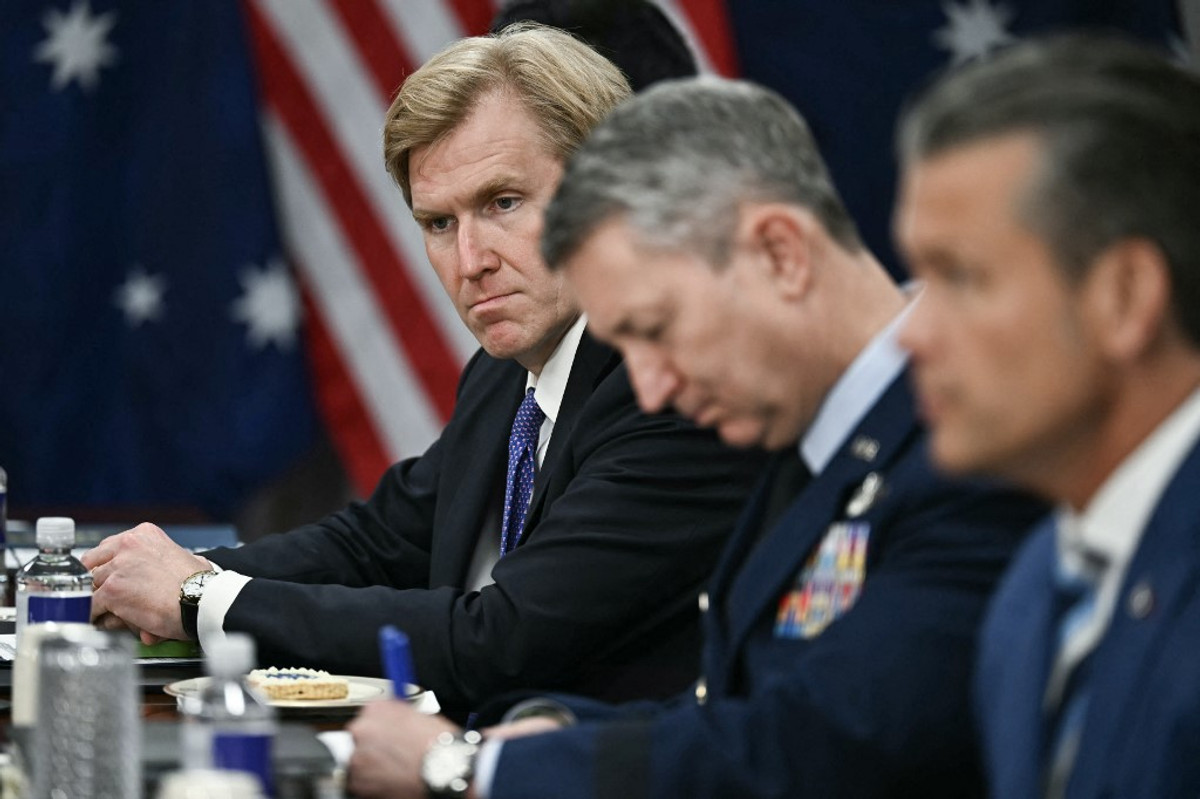
The Trump administration has excluded several major NATO allies, including the UK, France and the Baltic states, from an October meeting in Poland intended to discuss the alliance’s future.
The Pentagon-led gathering is being organized by US Undersecretary of Defense for Policy Elbridge Colby and will involve a select group of NATO countries, Politico reported on Wednesday, Sept. 30, citing six diplomats familiar with the planning.
JOIN US ON TELEGRAM
Follow our coverage of the war on the @Kyivpost_official.
The countries invited to participate are Norway, Sweden, Finland, Poland, Germany and the Netherlands. Colby has already held two similar meetings with representatives of those countries under a format known as the Bergen Group.
The exclusion of Britain, France and Estonia, Latvia and Lithuania has caused confusion because the countries are among NATO’s most active defense contributors and play important roles in deterring Russian aggression in Europe.
“We’re doing everything that is being asked of us,” an official from one excluded country told Politico. “We’re trying to understand what the criteria is and what the purpose of these meetings are. Not much has been passed on to us yet.”
The White House did not respond to Politico’s request for comment, while the Pentagon declined to comment.
Pentagon creates select NATO group
Colby previously described the participants as NATO members that were quickly fulfilling their defense-spending commitments, possessed sufficient military scale and were prepared to focus on practical decisions.
Other Topics of Interest
Trump Again Blames Ukraine for Rising US Diesel Prices, Dismissing Middle East War Impact
However, US Energy Secretary offered a broader explanation for the tightening diesel supply, pointing to disruptions in several major exporting regions.
A diplomat from one participating country said the Bergen Group was not intended to undermine NATO. Instead, members are expected to develop proposals that can later be tested and discussed by the full alliance.
“This can be an engine for transformation” for NATO, the diplomat said.
Denmark could become the next country invited to join following an agreement allowing the US to expand its military presence in Greenland, according to a person familiar with the planning.
However, even some invited countries have questioned why Washington selected particular participants while excluding major European military powers.
“If they try splitting NATO into the good ones and the bad ones, it is dangerous for the US,” another diplomat said. “But for Europe, this is existential.”
Trump increases pressure on allies
The initiative follows repeated threats by President Donald Trump and senior administration officials to reward what they describe as “model allies” while penalizing countries that resist US priorities.
Trump has criticized NATO members over defense spending and their refusal to support the US war against Iran. His administration previously considered creating what officials described as a “naughty and nice list” of allies based on their compliance with Washington’s demands, Politico reported.
Defense Secretary Pete Hegseth has similarly said countries supporting US interests would be treated as model partners, while those that do not could face consequences.
The latest move comes despite NATO leaders’ public efforts to demonstrate unity at their July summit in Ankara. Previously, allies pledged €70 billion ($79 billion) in military assistance for Ukraine in 2026 and promised to maintain comparable support in 2027.
The summit also reaffirmed NATO’s collective-defense commitment and its target for members to allocate 5% of gross domestic product to defense and security-related spending by 2035.