
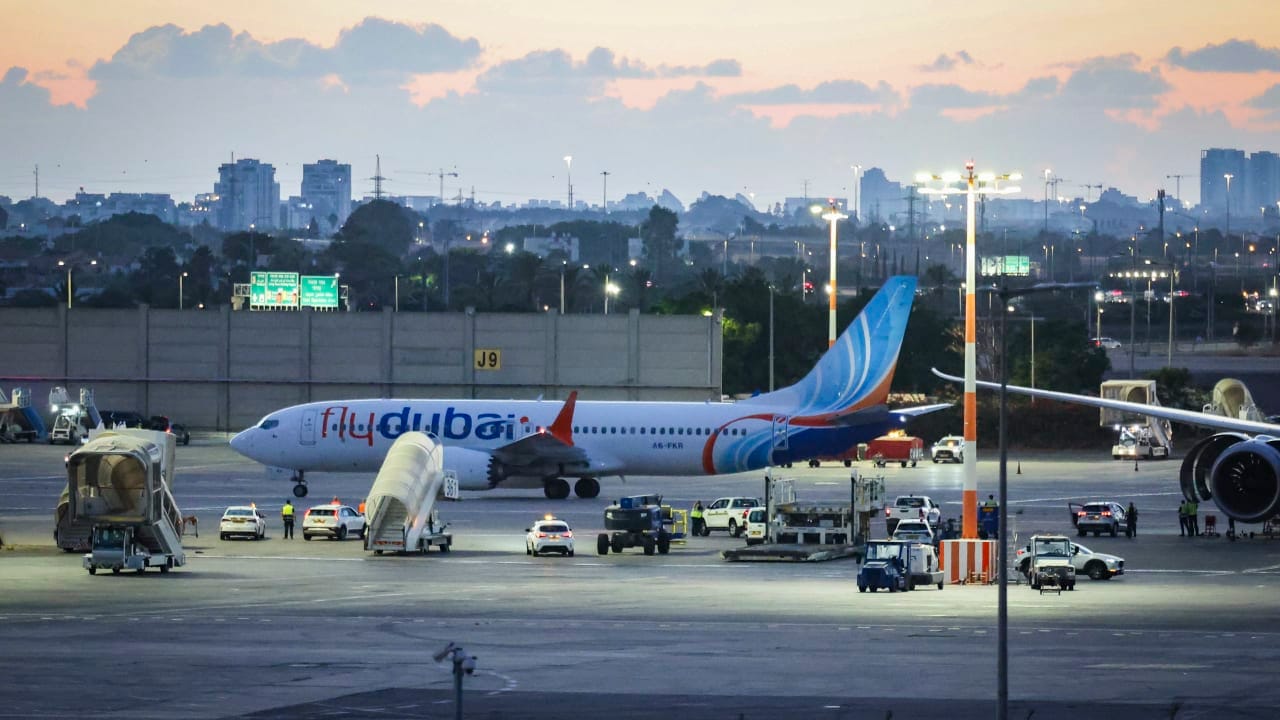
Israelis are a nation of heroes. That might sound like a slogan, but every so often something happens that reminds us how true this is.
Of all the extraordinary stories to emerge from Wednesday’s flydubai flight from Dubai to Tel Aviv, the one that stands out is the courage of the passengers who realized something had gone terribly wrong, forced their way into the cockpit, and helped subdue the co-pilot, who had allegedly stabbed the captain and appeared to be trying to bring down the plane.
The aircraft plunged thousands of feet; there was chaos onboard, and the passengers had no way of knowing exactly what was happening or whether they had minutes, seconds, or no time at all.
And they acted. They didn’t wait for someone to rescue them or see if everything would resolve itself on its own. They took the initiative and saved lives: not only of the passengers on board, but whatever else the plane could have taken down with it.
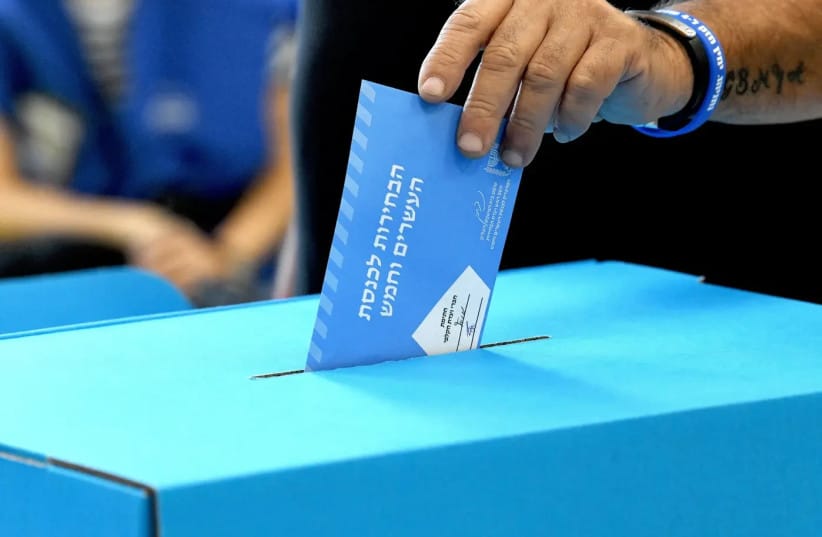 Voters casting ballots in Israel’s 25th Knesset election (credit: REUVEN CASTRO)
When we remember aircraft that have been hijacked or crashed over the years, it is difficult not to appreciate what happened aboard this flight and how there is something deeply Israeli about it.
It is part of this country’s culture: not to stand by and watch events unfold, but to run headfirst into the fire, battle, or the storm and do whatever can be done to save lives.
We have now heard some testimony from passengers aboard the flight. It is frightening and disturbing, particularly as investigators are still trying to understand what exactly happened and what the co-pilot’s motive was. But there is also something heartwarming in hearing how people responded in those terrifying moments.
They literally took charge, and, when we think about it, it is a characteristic we know all too well. Next week, Israel will mark three years since October 7. That terrible day will be seared into our collective memory as one of the greatest failures and tragedies in Israeli history. But, like with the airplane, it too was filled with stories of some of the greatest courage this country has ever seen.
There are many different kinds of heroism, and there is no need to rank them.
But it is impossible to forget the people who woke up that morning, heard that something incomprehensible was happening in the south, understood that people were in desperate need of help, and got into their cars. They took whatever weapons they had, if they had any, and drove straight into the battle.
They did not know what they would find. They did not know how many terrorists had crossed the border, where the army was, or whether they themselves would make it home. They just went.
That, to a large extent, is the story of Israel: a small country whose people are repeatedly confronted with danger and who, when the moment comes, stand up, fight and lead the charge.
A nation prepared to fight
It is worth thinking about that now, just weeks before Israelis go to the polls on October 27.
This election will help determine the direction Israel takes after three extraordinarily difficult years. And whichever government ultimately emerges, it will inherit a country confronting a series of strategic challenges, almost none of which have truly been resolved.
Hamas still controls part of Gaza and retains weapons and military infrastructure. Hezbollah remains a threat to Israel’s north. And Iran remains locked in confrontation over its nuclear program and its wider regional capabilities.
It is true that three years after October 7, Israel has achieved amazing accomplishments, but victory, as we know too well by now, is not measured only by what an army destroys – it is also measured by what a country builds in its place.
And that is where a striking discrepancy has emerged.
Israel’s leaders have been given an extraordinary gift: a population willing to fight, to endure difficult years, and send its children to war knowing the risks and knowing, painfully, that some will not return.
Consider the family of Israel’s ambassador to Washington, Yechiel Leiter. His son Neria was seriously wounded last week in a ramming attack on Route 443 while serving in the reserves. His brother, Moshe, was killed fighting in Gaza in 2023.
Neria had every reason not to continue serving: his brother had been killed, and his family had already sacrificed enough. He could have remained home with his wife and children. He could have spared his parents the anguish of once again worrying about a son fighting on the front.
But he did not. He continued putting on his uniform. He continued reporting for reserve duty. And he continued serving.
Without people like that, Israel would not survive. But courage cannot only be demanded of soldiers and civilians; it must be demanded of politicians as well.
Political courage is different. It is not about charging a cockpit or running toward gunfire. It is about making difficult decisions, accepting risk, challenging traditional assumptions and, most importantly, telling the public where you actually want to take the country.
That is the question Israelis should be asking as they prepare to vote: What is the vision?
Is the future being offered to us simply one of hunkering down, a kind of super-Sparta, stronger and better armed than everyone around us but condemned to fight one war after another?
Or is there another possibility, one that recognizes the threats Israel faces, takes them seriously, and preserves overwhelming military strength, but also searches for a path toward greater security, stability, and eventually something else?
Israel looking for brave leaders
Last week in New York, for example, the US-backed Board of Peace unveiled an ambitious plan for Gaza. Senior officials acknowledged the enormous obstacles standing in the way, including the unresolved dispute over how Hamas will disarm and how Israel will withdraw.
Considering everything that would have to happen for this plan to succeed, skepticism is more than understandable. Is it ambitious and hard to imagine? 100%.
Three years after October 7, with the situation in Gaza still dire – both for its residents and for Israel’s security – this is a thoughtful plan that offers a real chance to change reality on the ground. Considering all the alternatives, isn’t it worth a shot?
But here is the catch: Israelis were not even in the room.
That is what this election campaign should be about. Instead, too much of Israeli politics remains focused on what candidates are against. This person will sit with that party; that person cannot be trusted; this bloc is dangerous, and that bloc is illegitimate.
But what are these politicians for? Where do they want Israel to be in five years?
What is their plan for Gaza? For Lebanon? For the Palestinians? For Israel’s increasingly strained relationship with parts of the Western world? What does victory realistically look like?
Israelis have demonstrated time and again that they are prepared to take extraordinary risks for this country.
The people who stormed the cockpit this week did not wait to be asked. Neither did the Israelis who drove south on October 7. They saw danger. They understood that someone had to act. And despite having no guarantee of what would happen next, they moved forward.
Israel’s political leaders do not need to storm a cockpit. But they do need to show some of the same courage. Instead of spending the next few weeks telling Israelis what they will never do, whom they will never sit with, and why everyone else is dangerous, they should tell us where they want to take this country.
The Israeli people have already shown that they are prepared to be brave. Now they deserve leaders brave enough to offer them a future.
The writer is a co-founder of the MEAD policy forum, a senior fellow at JPPI, and a former editor-in-chief of The Jerusalem Post. His newest book is While Israel Slept.