
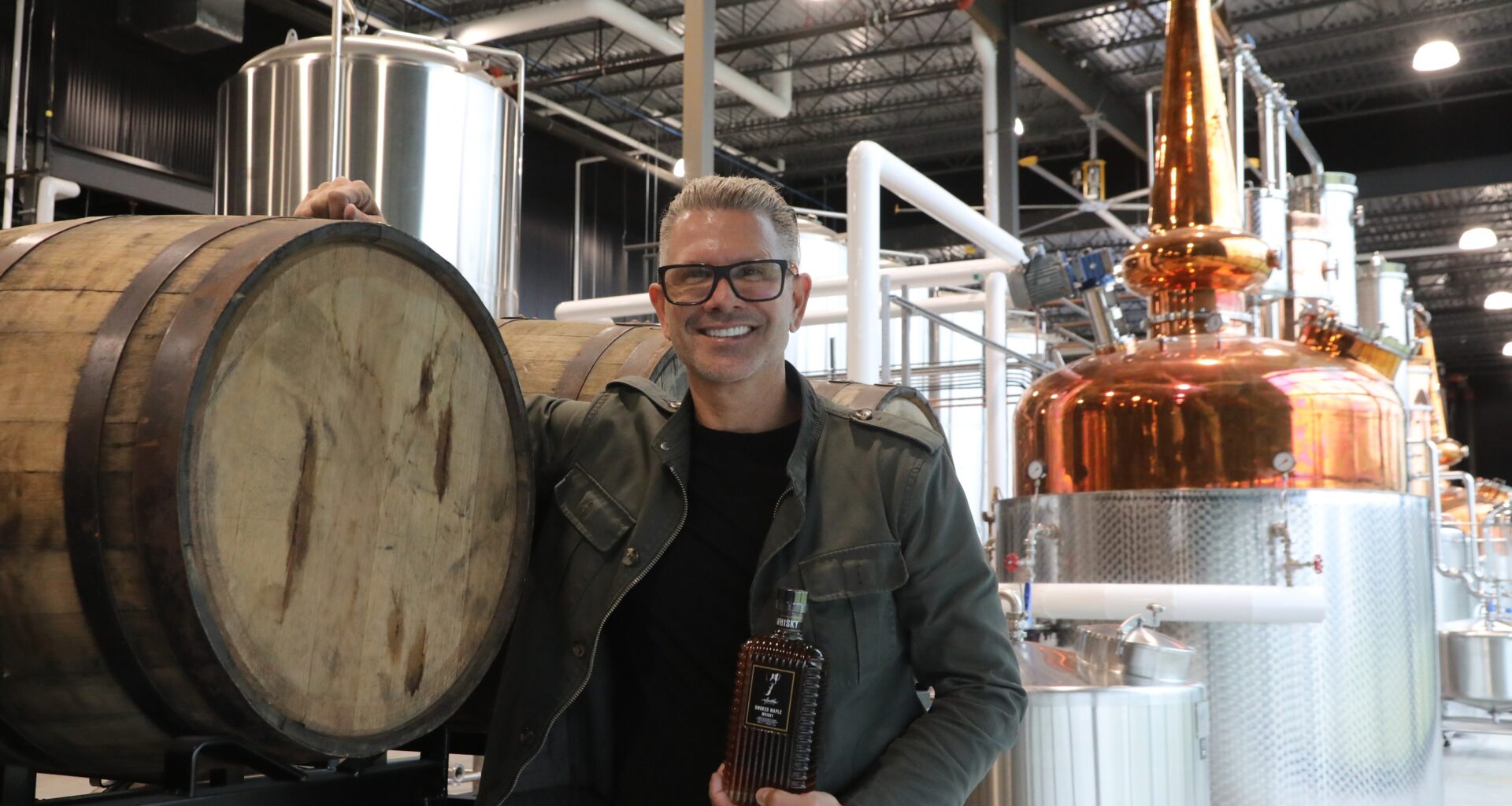
As the U.S. bans Canadian liquor from its shelves, a Quebec craft distiller is putting his southern expansion project on hold.
Gatineau-based Artist in Residence (AiR) Distillerie was set to start building a third location in Harborcreek, Pa., to produce its gin, vodka and liqueurs. But “this is not the time” to build a distillery in the United States, company owner Pierre Mantha says.
“People are not happy with Canada on the north of United States because we’re hurting each other,” Mantha said in an interview. “I’m not going to get the permit for at least a year and a half … until I see that this calms down. Because just so you know, we’re not friends.”
A U.S. import ban on Canadian alcoholic beverages, motorcycles and whey products came into effect Sept. 29 at 12:01 a.m. Washington time, in the latest escalation of the U.S.-Canada trade war aimed to strengthen the U.S. market. In this case, it is pushing businesses like Mantha’s away.
President Donald Trump’s import ban came in response to U.S. liquor bans across several provincial liquor boards, including the Société des alcools du Québec (SAQ). The Quebec government imposed the ban in March 2025 in response to the Trump administration’s tariffs on Canadian goods. At the time, other provinces, including Ontario, also directed their liquor regulators to stop buying U.S. alcohol.
“I found as a fact that Canada is discriminating in fact against the commerce of the United States by banning the purchase, distribution, or retailing of U.S. alcoholic beverages while not banning or similarly restricting such products from other countries,” Trump wrote in the White House announcement of the liquor ban on Sept. 8, the same date Prime Minister Mark Carney’s retaliatory tariffs came into effect.
Editor’s Picks
Before trade talks fell apart, Carney asked provinces to put U.S. booze back on the shelves amid a potential trade deal in August. Quebec Premier Christine Fréchette at the time was uncertain whether she would follow the prime minister’s recommendation, saying “my priority remains the same: to protect our workers, our jobs and our businesses, and to prevent tariff escalation.”
While AiR Distillerie doesn’t export any of its booze to our southern neighbour, the climate around Canadian businesses in the U.S. is deterring Mantha from starting operations there.
“I believe in this project. Worst, we’ll wait two years,” he said, hopeful the political climate will calm down once Trump finishes his second term.
Mantha says he was given an offer months ago to sell the 15 acres of land along Interstate 90, where he plans to build the new distillery. He paid about $1 million for the site, and says he was offered $1.8 million to sell, but he said no.
In Quebec, Mantha says he ran into trouble with the Office québécois de la langue française when he received a complaint for the English in his company name, “Artist in Residence Distillerie.” When he started building the company’s second location in Hawkesbury, Ont., he hoped he would have an easier time in Ontario than Quebec.
“I thought Ontario was going to support me. They never did,” he said, noting the Hawkesbury location is behind schedule on production because of bureaucratic limitations, and for now only bottles the liquor produced in Quebec.
Mantha chose Pennsylvania to open the U.S. location because of connections he had in the state. While he doesn’t have any experience doing business in the United States, his hope is it will eventually be easier and more lucrative to do business there than Quebec or Ontario, once the environment “calms down.”
“I go to Pennsylvania, they think I’m sexy. They think I’m from Paris,” he said.