
September’s weak jobs report was the last reading on the labor market before the midterm elections, and the weak figures will further complicate the job facing President Trump and Republicans to sell voters on their economic record.
The president and his party have already been grappling with an economic message that is failing to gain traction, as polls show voters are deeply unhappy about the economic trajectory one month out from Election Day.
US payrolls rose by just 29,000 jobs in September after 90,000 had been expected. Wage growth also cooled, another significant figure underscoring Americans’ worries about their purchasing power amid persistent inflation.
Average hourly earnings rose just 0.1% in September and are up 3% over the entire year. That’s below the 3.4% rate of inflation over that same period.
Friday’s release also showed that the unemployment rate ticked up to 4.2%, and July and August payroll numbers were revised downward, further clouding the economic picture.
Read more: Credit card vs. savings: What to use when you’re unemployed
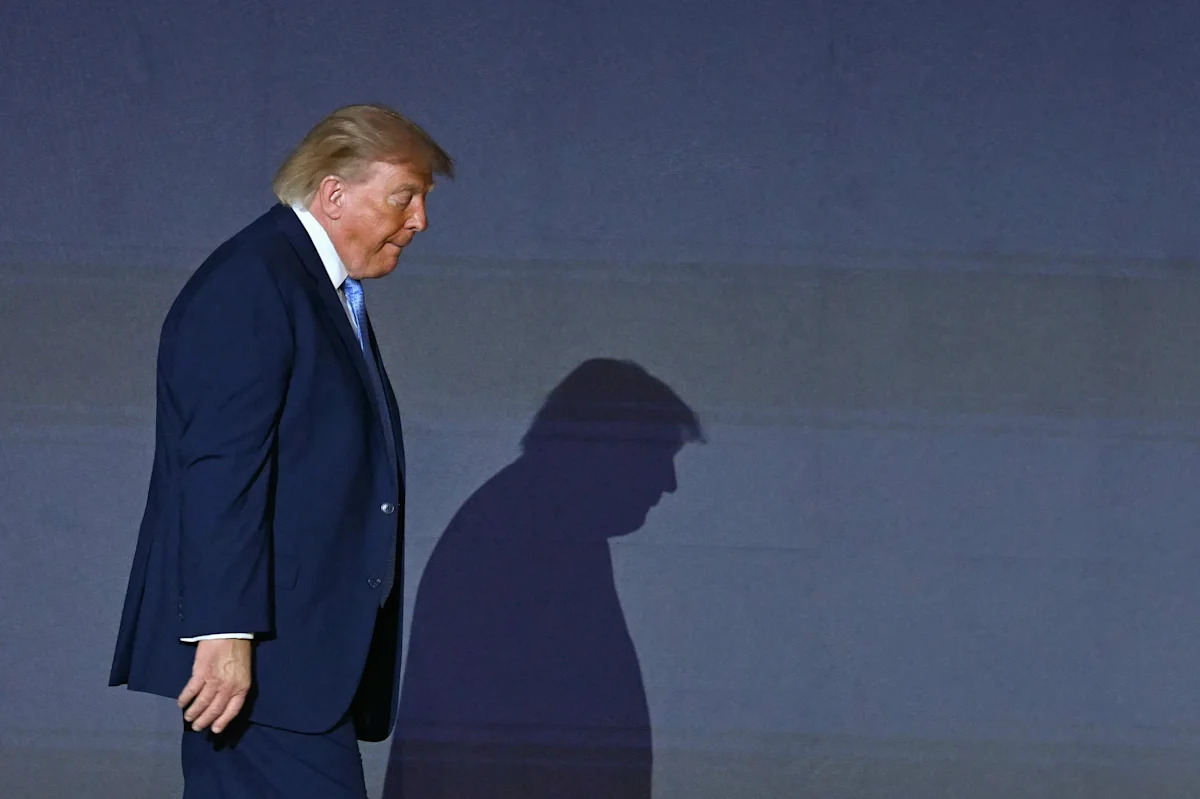
 President Trump arrives to speak during an event in Washington on Sept. 29. (Jim Watson/AFP via Getty Images) · JIM WATSON via Getty Images
Allianz chief economic adviser Mohamed El-Erian told Yahoo Finance on Friday that economic pressures have a pronounced effect on lower-income households.
“It’s not just an economic worry. It’s a social and political worry as well,” El-Erian said.
Democrats were quick to tout the number as an indictment of Trump’s economic record, while the White House and Republicans highlighted specific facets of the report to paint a more positive picture.
National Economic Council Director Kevin Hassett said in television interviews that he was “not even a little bit” disappointed by the number and that the US economy was being realigned. He acknowledged that the latest number was a “little bit lukewarm,” but said that monthly job figures “bounce up and down.”
Hassett and other White House officials, like Deputy Press Secretary Taylor Rogers, also focused on increasing labor force participation and pointed out that the government shed 17,000 jobs last month as private payrolls gained 46,000, although that latter figure was still below expectations.
Rogers noted that over 1 million private-sector jobs have now been created during Trump’s second term.
 Yahoo Finance
Trump, meanwhile, continued to tout his economic message Friday, posting about investments from South Korea (even amid questions about whether South Korea was actually on board with the plan).
The president is set to crisscross the country in the coming weeks to sell his economic record.
His message, as the election enters its final stretch to Nov. 3, is that the economy is in a “golden age” and the main issue is that he and his fellow Republicans have “done a very bad job of explaining.”
Democrats, meanwhile, put the number in election-year terms. Sen. Elizabeth Warren of Massachusetts calculated that Trump’s economy has added an average of 33,000 jobs a month since Inauguration Day in 2025 — “far below the 120,000-a-month average in 2024” of the last year of former President Joe Biden’s time in office, she said.
Like other Democrats, Warren also zeroed in on weak wage growth, writing that “since the start of Trump’s war [in Iran], real wages have fallen.”
Gbenga Ajilore, chief economist at the Center on Budget and Policy Priorities and a former Biden administration official, added that “this is an okay reading for the labor market, but in the broader context, lower wage growth is a warning sign given the administration’s harmful policies.”
The latest release also comes as countless polls have shown Trump and Republicans deeply underwater on the economy, an area of intense focus among voters. A compilation of recent polls from Silver Bulletin shows an aggregate 65% disapproval rating of Trump on the economy, versus just 31.4% approval.
The numbers are even worse on inflation: 74.3% of Americans disapprove of Trump’s handling of inflation, while just 22.6% approve.
This story has been updated.
Ben Werschkul is a Washington correspondent for Yahoo Finance.
Read the latest financial and business news from Yahoo Finance