
Two suspected terrorist incidents involving very different targets are raising an increasingly important question: Is the war with Iran beginning to move beyond the battlefield?
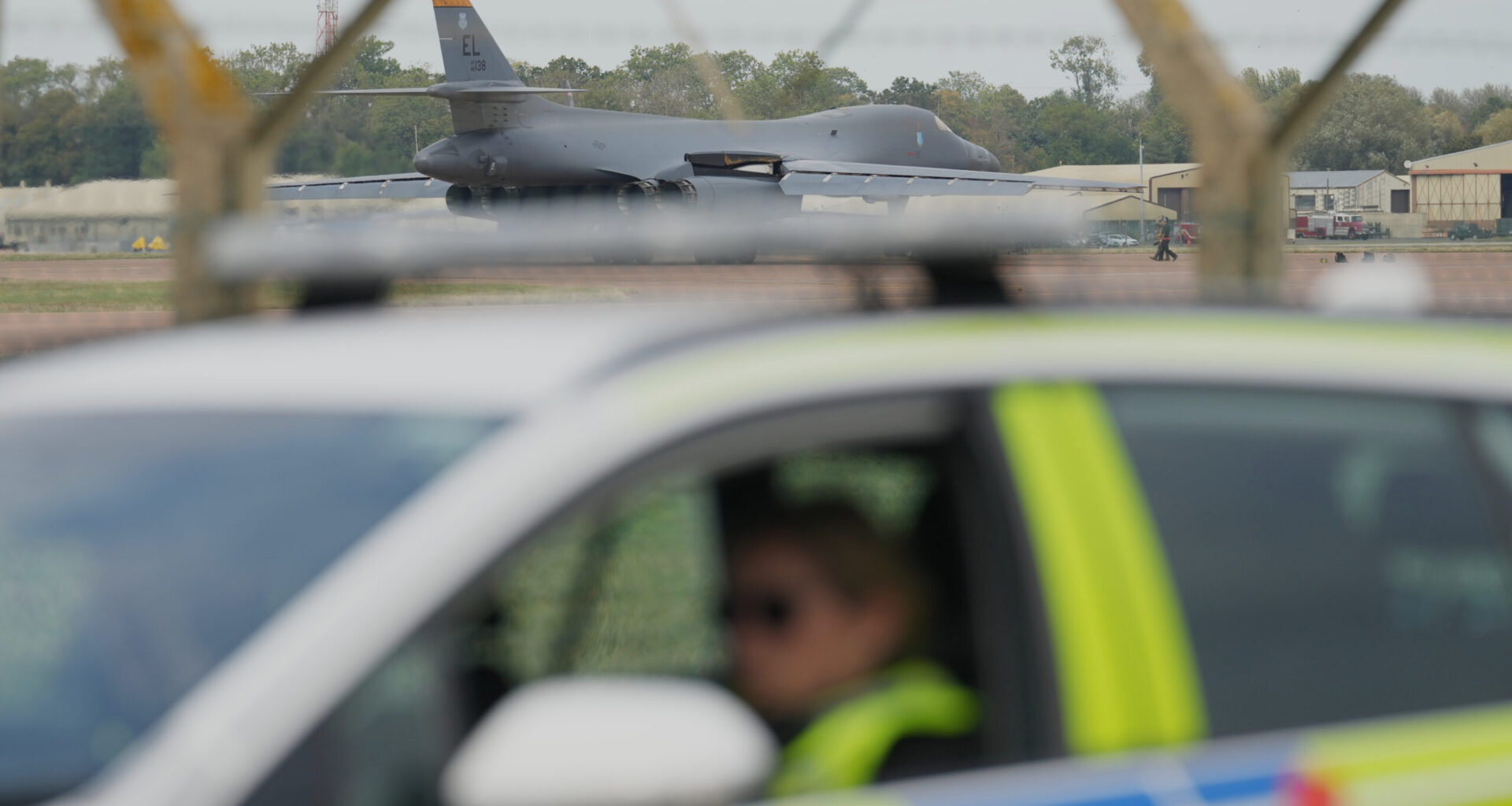
That question now hangs over investigations into an apparent attempt to crash a passenger jet bound for Israel and suspicious activity around RAF Fairford, the British air base used by American bombers operating against Iran.
Investigators have given no indication that the two incidents are connected or confirmed publicly that Tehran directed either one. But the Fairford probe has developed a potentially significant Iranian thread; the Flydubai investigation has not. That distinction is critical.
The Flydubai incident represents the more terrifying scenario. Investigators say an Omani co-pilot aboard Flight FZ1073 attacked the captain as the Boeing 737 MAX 8 carried 182 passengers and crew from Dubai toward Tel Aviv. The aircraft plunged dramatically before the wounded captain managed to open the cockpit door. Passengers and crew subdued the attacker, and other qualified pilots helped land the aircraft safely in Saudi Arabia.
The United Arab Emirates and Israel are treating the incident as terrorism. Israeli investigators are expected to question the co-pilot as authorities examine his alleged radicalization, communications and possible outside connections.
President Donald Trump has publicly raised the possibility of Iranian involvement and warned of consequences if such a connection is established. But publicly available evidence does not currently support that conclusion.
U.S. officials have said they have no direct evidence linking Tehran to the attack. That makes Flydubai, at least for now, primarily an insider-terrorism investigation.
Fairford is different. Five British men were initially arrested after police intercepted three vans near the strategically important air base. Gasoline canisters were discovered, but investigators found no improvised explosive devices. The men were later released on bail while the investigation continued.
Then the case took a significant turn. British counterterrorism police arrested a 25-year-old dual British-Iranian national in London on suspicion of preparing terrorist acts. Another British man was questioned, properties were searched and British officials said there were “strong indications” of Iranian involvement. Iran denies the allegation, and British authorities have not publicly demonstrated that Tehran ordered or directed the suspected operation.
But the target matters. RAF Fairford has been used by American bombers supporting operations against Iran. If investigators uncover communications, financing, instructions or other evidence connecting the suspects to Iranian intelligence or the Revolutionary Guards, Fairford could become evidence of something considerably more consequential: Iranian state-sponsored covert action on NATO territory.
That possibility fits an established security concern. British intelligence has repeatedly warned about Iranian activity inside the United Kingdom. MI5 Director General Ken McCallum said in 2024 that British authorities had responded to 20 potentially lethal Iran-backed plots since January 2022. Those threats involved British residents as well as people Tehran considered enemies of the Iranian government.
The current war raises the stakes because Iran has repeatedly demonstrated its ability to exert pressure indirectly. Proxies, partner militias, intelligence operatives and recruited criminal networks provide Tehran options between diplomacy and conventional military attack. They also provide deniability. That is precisely why investigators need to establish not simply who was involved at Fairford, but whether anyone was directing them.
A suspect’s Iranian nationality is clearly not evidence of Iranian government involvement. Establishing state sponsorship requires something more substantial: communications, financial transfers, operational instructions, intelligence tasking or other evidence demonstrating a connection between an individual and the state.
The same standard applies to the Flydubai case. A radicalized co-pilot attempting to bring down an aircraft would constitute a grave terrorism case. A co-pilot recruited or directed by a foreign government to destroy an Israeli-bound passenger jet would represent something substantially different: an alleged act of state-sponsored terrorism against international civil aviation. There is currently no public evidence establishing that.
But both investigations are unfolding at an extraordinarily sensitive moment. Washington and Tehran are simultaneously trying to negotiate arrangements that could reduce hostilities and restore greater commercial traffic through the Strait of Hormuz. At the same time, both sides continue using military threats to increase their leverage. That creates a dangerous collision between diplomacy, terrorism investigations and deterrence.
An attack also does not need to be ordered directly by Tehran to affect the war. A sympathizer could act independently. A proxy could operate with broad guidance. An intelligence service could employ intermediaries. An extremist could interpret Iranian rhetoric as encouragement to act. Those scenarios may produce similar headlines, but they represent very different intelligence problems and potentially require very different responses.
That is why connecting the dots too quickly is dangerous. The timing of two incidents does not establish coordination. Radicalization does not establish state sponsorship. But given Iran’s documented history of overseas operations and the nature of the potential targets, failing to investigate those possible connections would be equally problematic.
For now, the evidence points in two different directions. The Flydubai case increasingly appears to be a terrorism investigation, but there is no publicly established Iranian connection. Fairford has produced a more substantial Iranian investigative thread, but there is still no publicly disclosed proof that Tehran directed the suspected activity.
If either threshold changes, so does the strategic significance of these cases. The question would no longer be simply whether Iran can strike American and Israeli interests with missiles, drones and proxies across the Middle East. It would be whether the conflict has entered a different phase — one in which airliners, military bases and targets thousands of miles from Iran become part of the battlefield.
Get breaking news and daily headlines delivered to your email inbox by signing up here.
© 2026 WTOP. All Rights Reserved. This website is not intended for users located within the European Economic Area.