
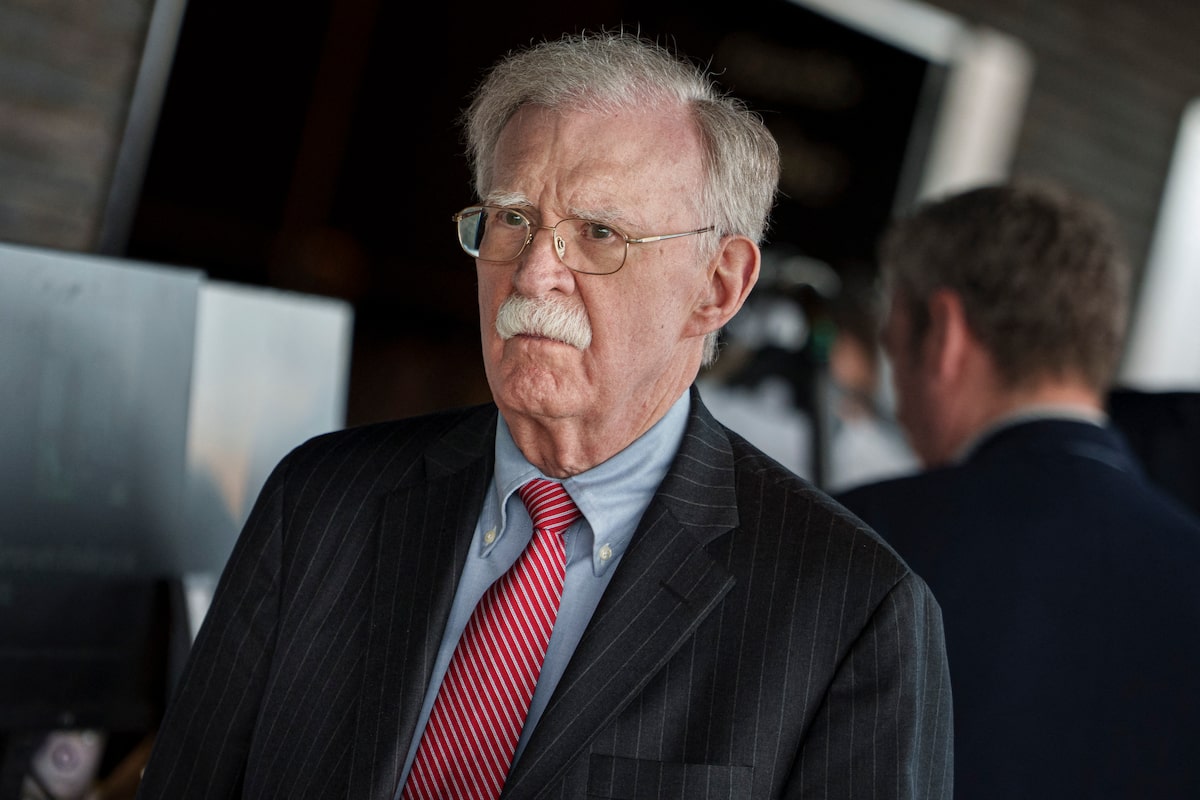
Former National Security Advisor John Bolton attends the Copenhagen Democracy Summit at the Royal Danish Playhouse, May 12.LISELOTTE SABROE/AFP/Getty Images
Former U.S. national-security adviser John Bolton says Ottawa and Washington have failed to adequately investigate whether Russia used directed energy against Canadian and U.S. diplomats in Cuba almost a decade ago.
Mr. Bolton told The Globe and Mail Friday that he suspected Russian involvement when first informed about mysterious illnesses affecting U.S. diplomats shortly after taking up duties during President Donald Trump’s first term.
He was ousted from the Trump administration in 2019 after foreign-policy clashes.
U.S. and Canadian diplomats serving in Cuba from 2016-18 and their families reported sudden, unexplained brain injuries with symptoms of nosebleeds, dizziness, blurred vision, confusion and memory loss.
The symptoms, known as Havana Syndrome, occurred in the evenings after they heard a noise while at their homes in Havana.
Mr. Bolton said it was well known that the Russians had “done various things with directed energy before.”
“The reason Havana may have been the first place to try it is that it was a place other than Moscow where the Russians could operate with complete freedom of action. But they did it in other places, too,” he said. “That says to me that they were experimenting.”
The Globe reported last week that a Canadian diplomat was sharing intelligence with American spies in Havana and that Canadians were using satellite equipment brought into Cuba by the U.S. when officials from both countries began experiencing debilitating illnesses.
“It could be that they [Canadians] were involved in espionage and that made them particularly interesting to the Russians and the Cubans, too,” Mr. Bolton said. He said “people would be stunned if that didn’t happen” since Canada is part of the Five Eyes intelligence-sharing alliance with the U.S., Britain, Australia and New Zealand.
Global Affairs Canada (GAC) has denied that Canadian diplomats were involved in espionage in Cuba. The department says the diplomats should deal with their health ailments through the Federal Workers’ Compensation Service.
Last year, the Justice Department triggered a rare national-security provision to keep secret new details of a multimillion-dollar lawsuit brought by the Canadian diplomats.
The lawsuit – now under court seal and subject to a publication ban – was amended in the summer of 2024 after a joint investigation by CBS’s 60 Minutes and Germany’s Der Spiegel. They reported that the illnesses could have been tied to Russian military intelligence using sonic weaponry.
A former senior Global Affairs official, who was involved with security and intelligence operations, told The Globe last week that the department always suspected Russia was behind the attacks but could not say so publicly because it had no proof.
Canada’s embassy in Havana, Cuba, in 2018.Desmond Boylan/The Associated Press
The U.S. National Intelligence Council (NIC) reported in 2023 that five of seven U.S. intelligence agencies concluded that it was “very unlikely” that a foreign adversary was responsible for the illnesses suffered by U.S. diplomats. Global Affairs Canada came to the same conclusions in a 2024 report.
“The Canadian government and the U.S. government have both failed to perform here in my view,” Mr. Bolton said.
He said the U.S government did not seriously pursue the hypothesis that Russia had developed directed-energy weapons and that they would test them against American diplomats.
“To say it is unlikely is not a sufficient answer,” he said. “I heard of people associated with the NIC study that there was a lot of dissatisfaction within the government, who were concerned [directed energy] wasn’t being given adequate attention.”
In its 2024 report, Global Affairs said the symptoms suffered by 10 diplomats and their families were “not the result of a malicious act of a foreign actor or foreign actors.” It attributed the symptoms to “pre-existing medical conditions, environmental factors and conventional illnesses.”
In its findings, GAC did not mention a joint 2023 study of directed-energy weapons by the National Research Council and Defence Research and Development Canada.
That report said low-power lasers are already being used on people for crowd control during demonstrations and for deterring pirate ships.
“Scientific literature shows that a DEW is suspected to be the cause of the ‘Havana syndrome’ reported by U.S. personnel in Cuba,” the joint report stated. “Potential effects of DEWS like burning skin, eye damage or radiation sickness raise concerns under international humanitarian law, which prohibits inflicting superfluous injury or unnecessary suffering.”
Mr. Bolton and Paul Miller, the lawyer for the Canadian diplomats, blame an uncaring bureaucracy.
“I think the bureaucracy doesn’t want to face up to the potential that there were serious risks out there,” Mr. Bolton said.
Mr. Miller said Friday: “The diplomats and their family members have not been taken care of in any way since the attacks in Havana. After years of uncertainty, our clients deserve answers.”
Unlike Canada, however, the American government disbursed US$3-million in July to U.S. diplomats, spies and military personnel affected by Havana Syndrome. It is the first payment under an act of Congress to compensate the victims.
On Monday, Foreign Affairs Minister Anita Anand said the diplomats’ unexplained health ailments were a human-resources concern for her department.
Prime Minister Mark Carney told reporters later in the week that Ottawa does have a duty of care to the diplomats and has asked for a detailed briefing.
Former Canadian spies and retired senior security officials have called for an independent parliamentary examination on whether Russia targeted the diplomats for allegedly helping U.S. intelligence agencies, and how Ottawa subsequently treated the diplomats.