
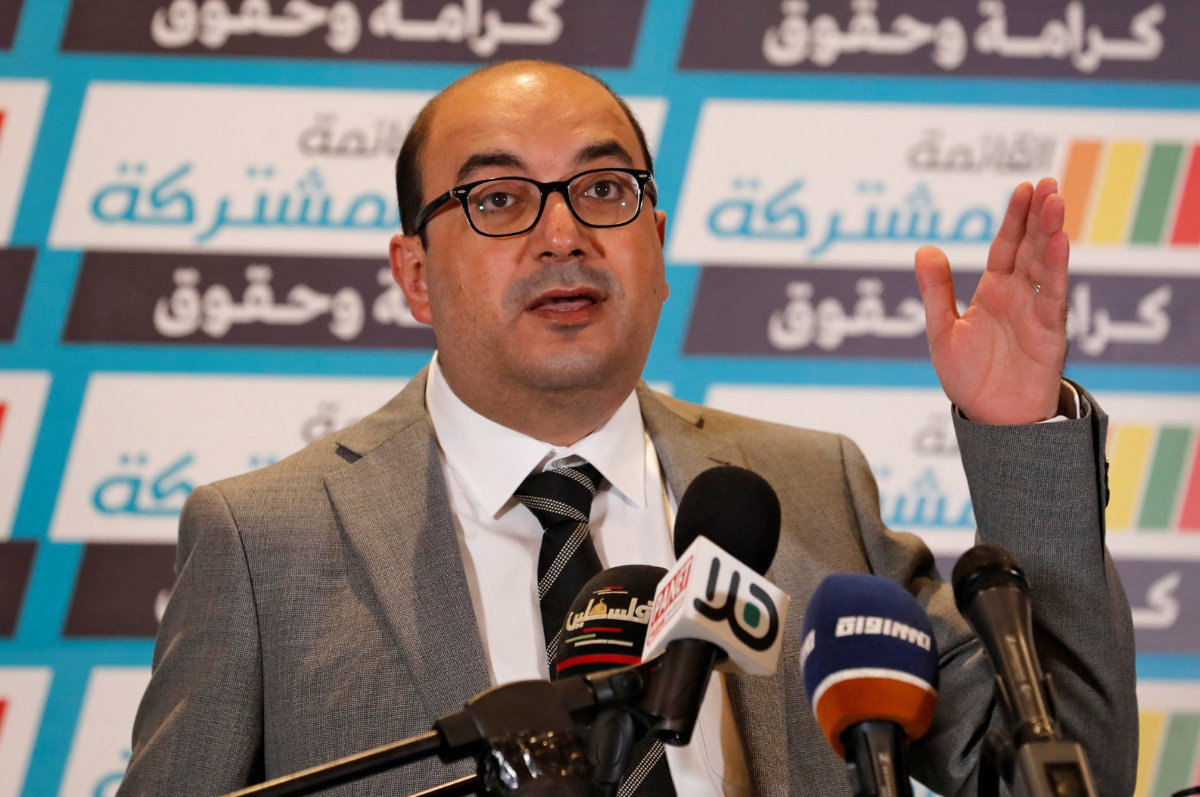
LONDON: If anyone were in any doubt as to who was behind the attempt this week to block veteran Arab politician Sami Abu Shehadeh from standing in next month’s Israeli general election, that doubt vanished on Friday afternoon when cell phones across Israel lit up with a recorded message from the far-right national security minister, Itamar Ben-Gvir.
“We promised that we would not allow the head of Balad, Sami Abu Shehadeh, to enter the Israeli Knesset — and that is what we did,” he boasted.
“Yesterday, following a High Court hearing, it was decided that Sami Abu Shehadeh would not be in the Israeli Knesset, thank God.”
In fact, that was not quite what happened; Shehadeh withdrew his candidacy before the Supreme Court could issue a ruling.
 Arab-Jewish Hadash party leader Yousef Jabareen, second from left, nationalist Balad party leader Sami Abu Shehadeh, center, and Israeli parliament member Ahmad Tibih attend a hearing at Israel’s Supreme Court on the electoral eligibility of Abu Shehadeh and two leading Arab parties, in Jerusalem, Thursday, Oct. 1, 2026. (AP Photo/Mahmoud Illean)
But Ben-Gvir was undeterred. His party, Otzma Yehudit, he added, “will continue to fight for national honor and for democracy in Israel. We will not allow terror supporters and those who glorify shahids (martyrs) to operate freely in the Israeli Knesset.”
And, Ben-Gvir pledged, “soon we will do the same to Ahmad Tibi,” who is one of the longest-serving Arab members of Israel’s parliament, “and Ofer Cassif,” a member of the left-wing Hadash party.
That has not happened, either. But, as Palestinian citizens of Israel realize all too well, so much depends on the outcome of the upcoming election that the Israeli far right is unlikely to stop trying to silence their voices.
“I received this voicemail,” Samah Wattad, a Palestinian journalist in Israel, told Arab News. “My husband received this call. My sister received this call. I know colleagues, journalists, who received this call.
“It is very clear that Ben-Gvir is going after us as a Palestinian community. Ben-Gvir’s dream is not to see any Arabs in the Knesset, or anywhere else.”
People are afraid, she said: “They have just turned out an elected leader of Palestinian Arab society, and I believe this is just the start. This government is watching closely what Palestinian Arabs are saying and how they are active politically and, to be honest, people are already afraid.
“I live here, I see how people are. They don’t want to speak about politics because after Oct. 7, we have seen that they will come after you for an article or something you posted 10 years ago.
“There is no room for any perspective that isn’t an Israeli Zionist one. Before Oct. 7, Israel wanted to be known as the only democracy in the Middle East. Now, they don’t care.”
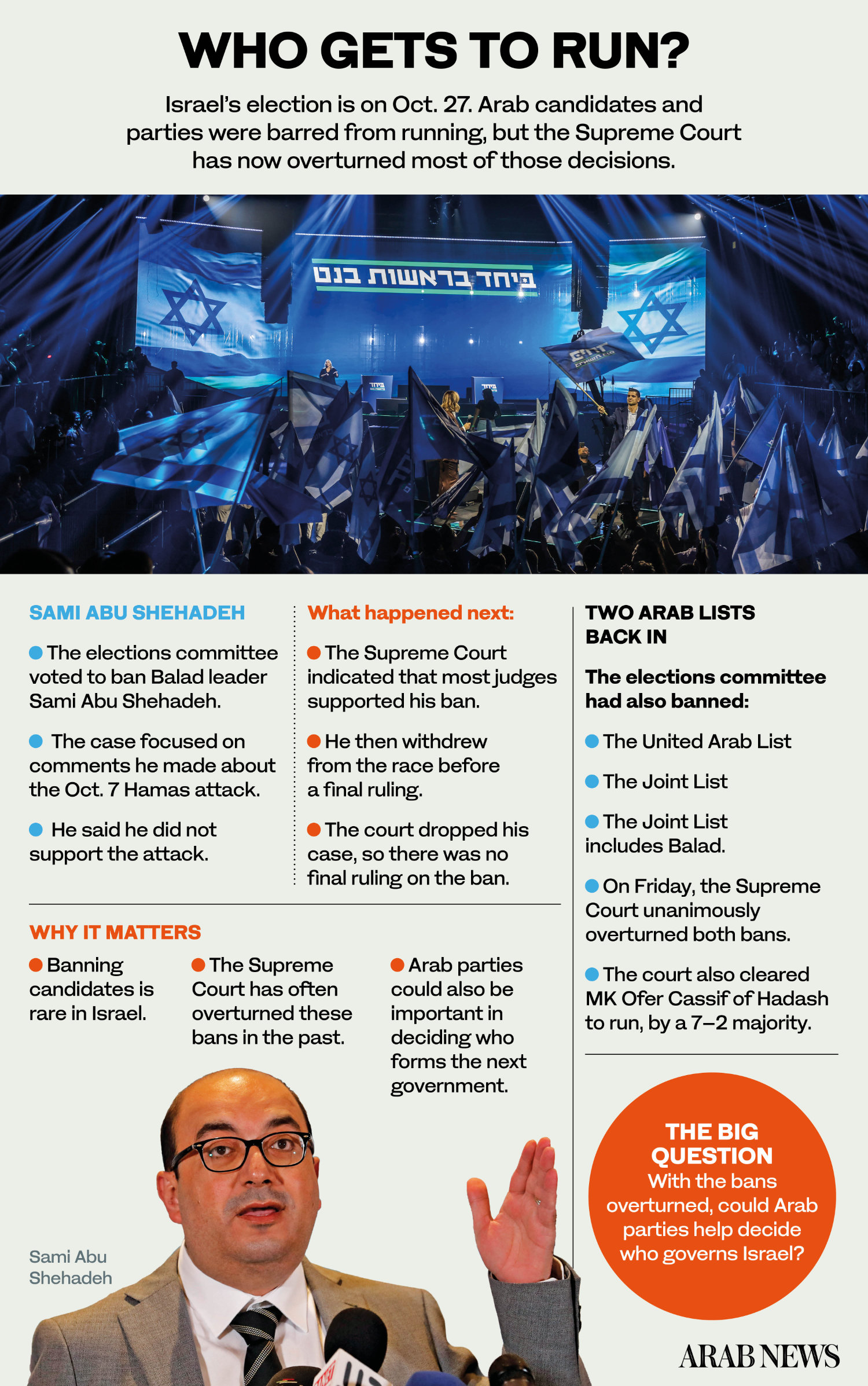
Ever since it was formed in 1969, Israel’s Central Elections Committee has had the legal authority to disqualify both individual candidates and entire party lists from standing in Knesset elections. On Sept. 23, it voted to disqualify Shehadeh, one of Israel’s most prominent Arab politicians.
The committee is not an independent body. A majority of its 31 members represent parties that support Prime Minister Benjamin Netanyahu’s governing coalition.
Now, as Israel heads toward a parliamentary election on Oct. 27 that could bring an end to Netanyahu’s far-right government, the committee has moved to disqualify Arab party lists that, if allowed to run, could hold the balance of power.
Challenges against candidates and parties are nothing new in Israeli politics. It is also common for decisions by the Central Elections Committee to be overturned on appeal by the Supreme Court.
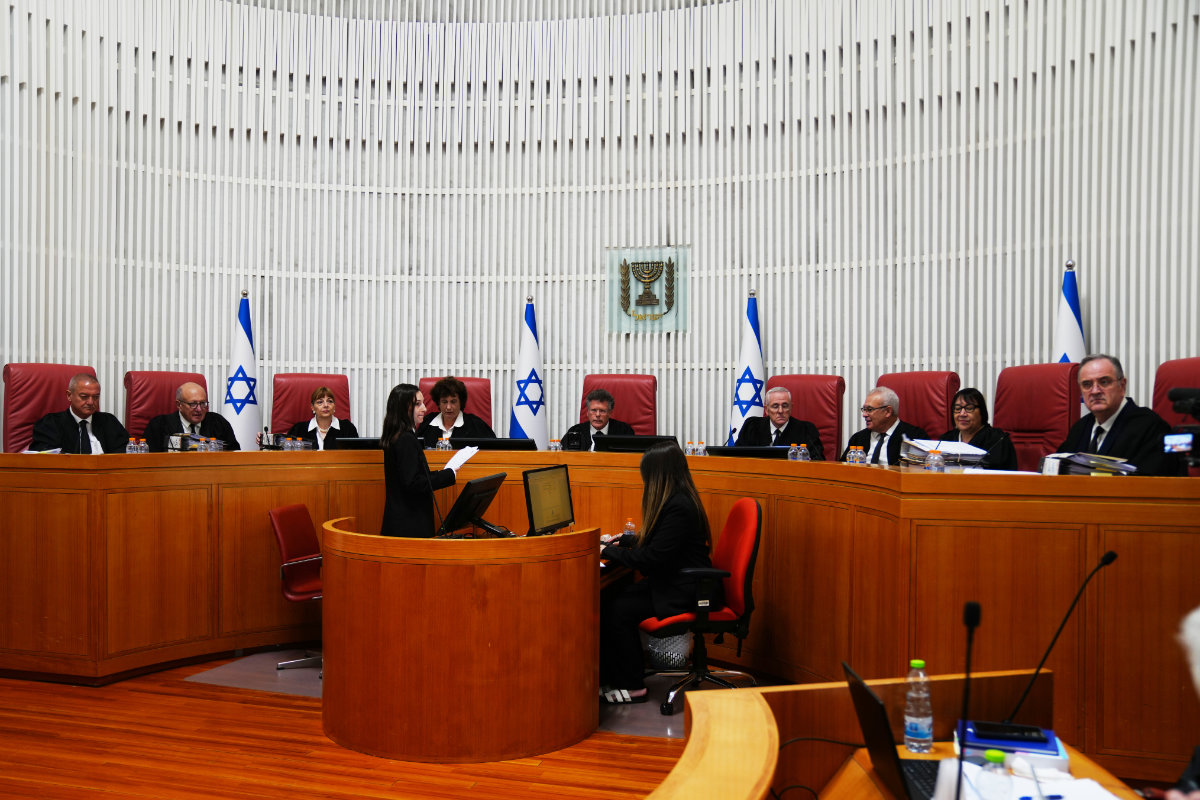 Israel’s Supreme Court holds a hearing session on the electoral eligibility of nationalist Balad party leader Sami Abu Shehadeh and two leading Arab parties, in Jerusalem, on Oct. 1, 2026. (AP Photo)
But this week, “normal” took a strange turn. Late on Thursday, the night before the Supreme Court was due to rule on Shehadeh’s appeal against his disqualification, he announced he was withdrawing his candidacy.
Controversially, Isaac Amit, the president of the Supreme Court, had publicly indicated that a majority of the nine justices appeared inclined to uphold the committee’s ruling. Shehadeh’s subsequent decision to withdraw was a tactical move based on that indication.
In the event, it might have been unnecessary. On Friday, the Supreme Court overturned the Central Elections Committee’s decisions to bar the Joint List of predominantly Arab parties, the Islamist Ra’am party led by Mansour Abbas, and Cassif, the Hadash lawmaker. Because Shehadeh had already withdrawn, the court did not rule on his case.
Ben-Gvir’s gloating message was therefore misleading. But Shehadeh’s withdrawal was nevertheless ultimately the result of the disqualification process initiated against him by Otzma Yehudit.
What happened is a complex story the roots of which stretch back to 1984, when Israel’s parliamentarians faced an embarrassing problem.
His name was Meir Kahane, a racist, ultra-Zionist extremist who had emigrated to Israel from the US in 1971, founded a party campaigning for the removal of Israel’s Arab population, and won a seat in the Knesset.
Kahane, who had been convicted of terrorism-related offenses in the US, was the founder of the militant Jewish Defense League and had been arrested repeatedly in Israel before his election.
In 1980, he was jailed over plans for armed attacks against Palestinians. While in prison, he wrote “They Must Go,” a manifesto advocating the expulsion of Israel’s Arab population.
The Central Elections Committee was asked to intervene. When it was found that Israel’s Basic Law did not provide grounds for removing Kahane, the law was amended in 1985 to include “incitement to racism” as a basis for disqualification.
Kahane was subsequently barred from running. In 1990, he was assassinated in New York by an Egyptian-born US citizen. His political ideology, however, lives on in the term “Kahanist,” which in contemporary Israeli politics is frequently applied to Ben-Gvir and his Otzma Yehudit party.
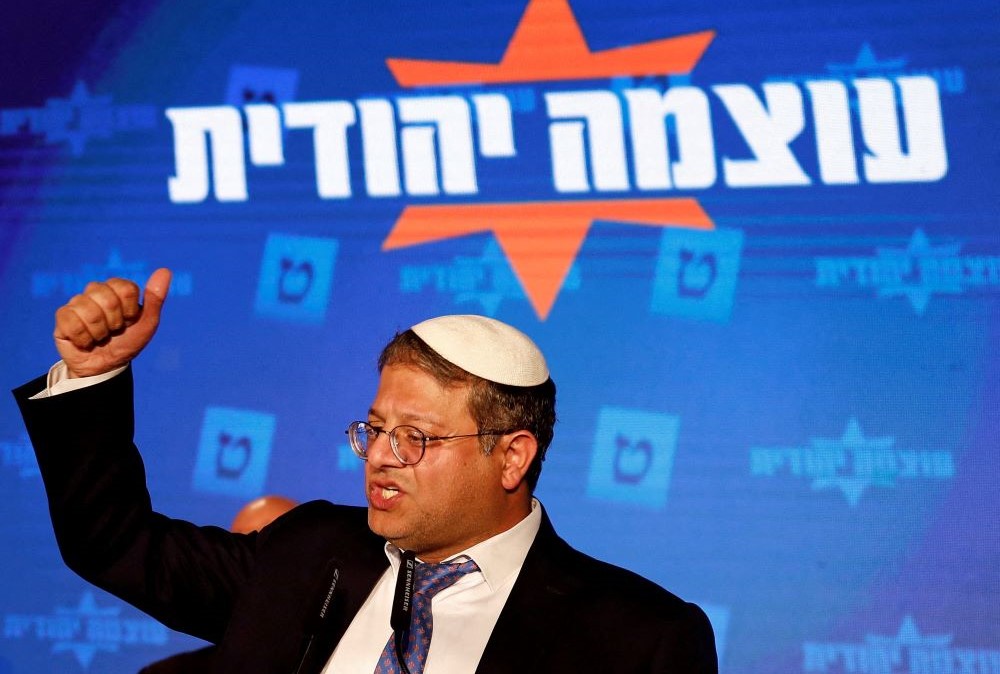 Jewish Power party leader Itamar Ben-Gvir speaks following the announcement of exit polls in Israel’s general election, at his party headquarters in Jerusalem, Nov. 2, 2022. (Reuters)
In 2002, the Basic Law was amended again, this time to include “support of armed struggle of an enemy State or of a terrorist organization against the State of Israel” as a disqualifying condition. It was this provision that Ben-Gvir’s party invoked in seeking the disqualification of Shehadeh.
According to Adalah, the Legal Center for Arab Minority Rights in Israel, Supreme Court precedent holds that disqualification of a candidate is permissible “only in the most extreme cases,” based on a “critical mass” of clear and convincing evidence, with any doubt weighing in favor of allowing the candidate to stand.
The evidence cited against Shehadeh centered on a single article he wrote the day after the Oct. 7 Hamas attacks.
In the article, headlined “Al-Aqsa Flood: preliminary observations,” published on the Arabic-language news site Arab 48 on Oct. 8, 2023, Shehadeh did not explicitly praise or glorify the attack.
 Palestinian fighters from the Ezzedine al-Qassam Brigades, the armed wing of Hamas, take part in the funeral ceremony of Marwan Issa, a top Hamas commander killed in March 2024, in the war-devastated Bureij refugee camp in the central Gaza Strip on February 7, 2025. (AFP)
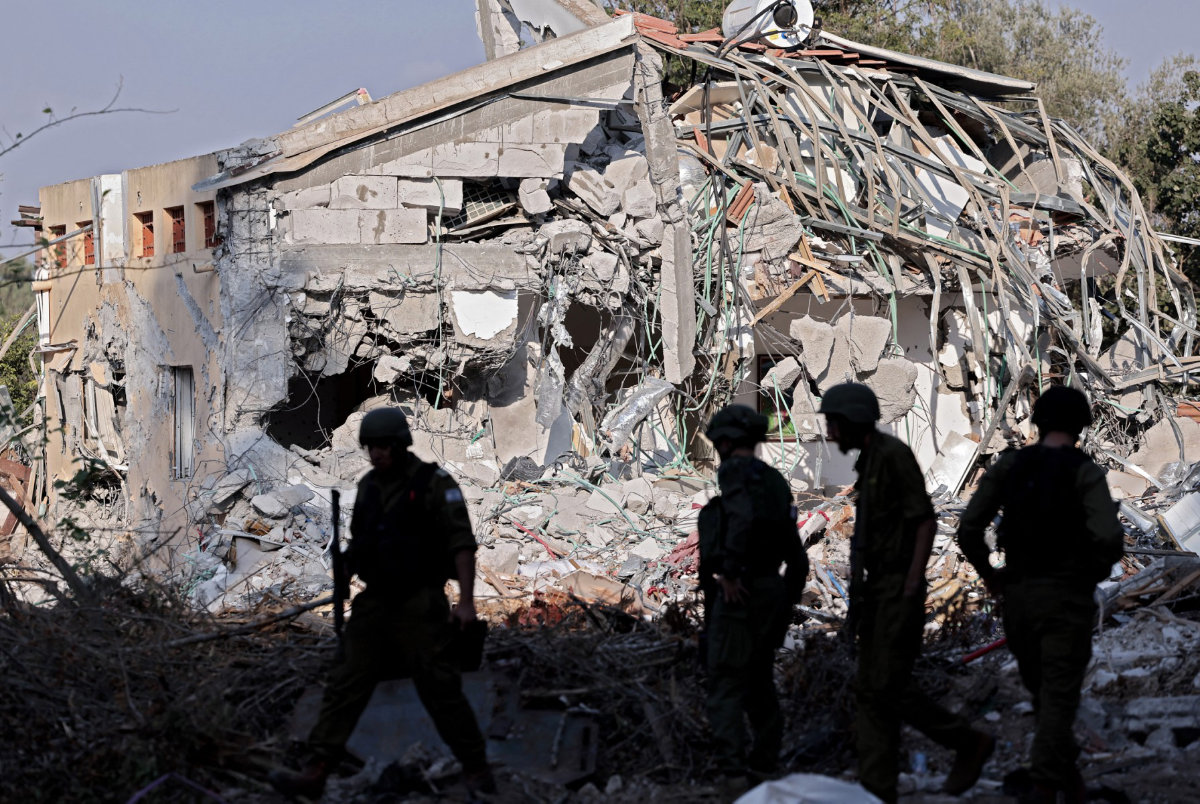 Israeli soldiers walk past a house destroyed in the October 7 attack by Palestinian Hamas militants on kibbutz Beeri near the border with Gaza, on October 14, 2023. (AFP/File)
“It was,” he began, “difficult to write now about the ongoing events, which began in the early hours of Saturday … But it has become clear that it is an important historical event in the military, political and strategic sense, and will have its connotations, consequences and results.”
Shehadeh argued that the attack had been an inevitable consequence of what he described as a “law of physics, which we all know, that too much pressure leads to an explosion.”
After decades “of occupation, siege, assassination of leaders, daily killing of people, violations of the property and sanctities of the Palestinian people, all of which can only lead to a reaction,” he argued that the only surprise was that such an “explosion” had not happened sooner.
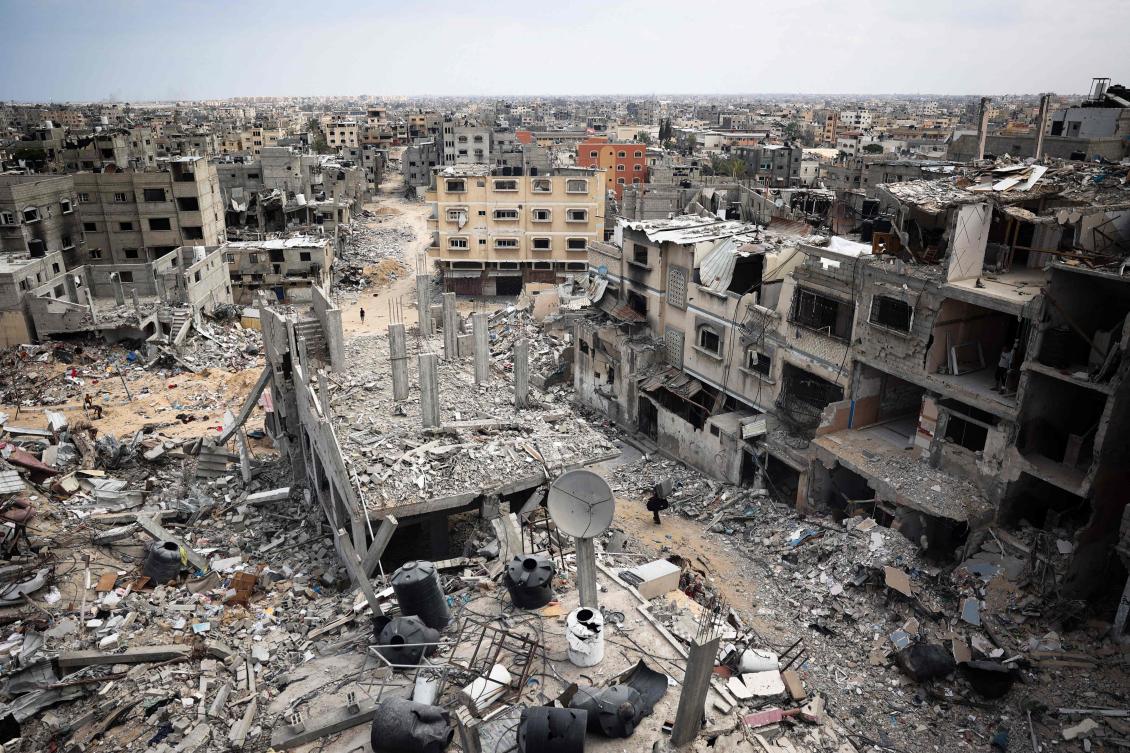 Nearly seven months of Israeli bombardment have caused billions of dollars in damage, leaving many of the crowded strip’s high-rise concrete buildings reduced to heaps. (File/AFP)
Shehadeh withdrew from the election before the court could decide whether those remarks met the legal threshold for disqualification, in part to avoid a ruling his supporters feared could set a precedent.
“There were two different views of this case in Palestinian society,” Wattad said.
“One side wanted Shehadeh to withdraw before the hearing because they believed the Supreme Court would disqualify him anyway, and a decision that would disqualify him for only one article would set a new precedent for the future candidacy of others from Arab society.
“It would be a disaster not only for candidacy for the Knesset, but also for the entire political activities of Palestinian society.
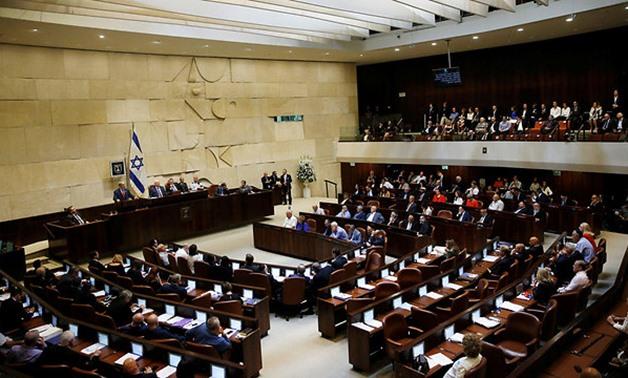 Opening of the Knesset winter session (Reuters)
“The other view was that Shehadeh should follow the process until the end, so we can see how the judges will explain the disqualification of an Arab-Palestinian candidate over just one article, and this will be more evidence in front of the world.”
The appeal against the Central Elections Committee’s decision was submitted to the Supreme Court by Adalah, which argued that the ruling rested on “irrelevant, outdated or distorted evidence” and was fundamentally discriminatory.
The committee, Adalah said, had “disqualified every Arab list, while far-right lists were allowed to run despite extensive evidence of explicit incitement to violence against Palestinians.”
Having voted to disqualify Shehadeh, the committee determined that there was no legal basis for barring Ben-Gvir’s Otzma Yehudit and the Religious Zionist Party. Adalah argued that this decision was reached despite evidence that included “explicit statements by leaders and representatives of these parties encouraging Jewish violence against Palestinians, killing and starvation in the Gaza Strip, incitement to racism, and support for violence against Israeli Supreme Court justices.”
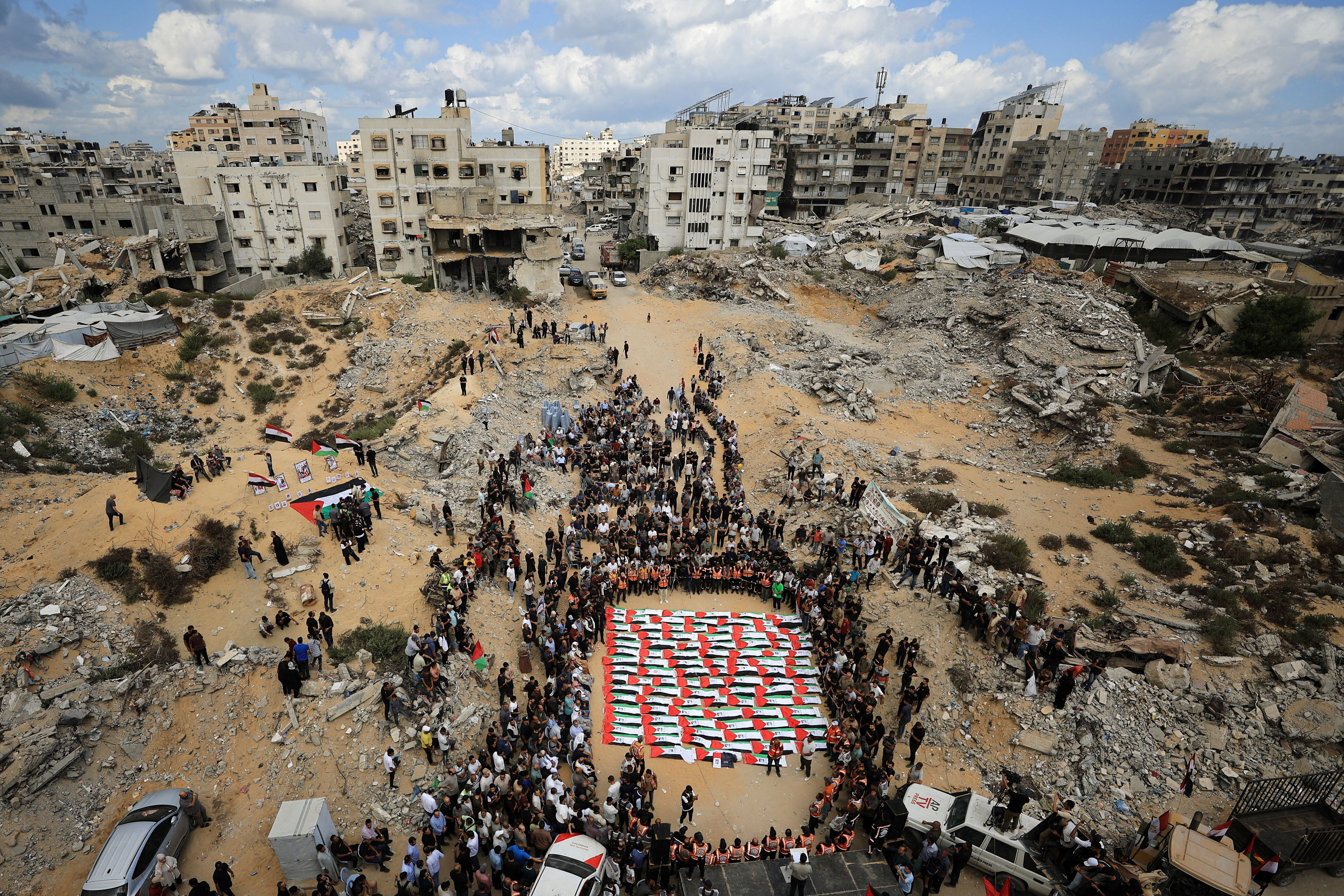 Mourners attend a mass funeral for Palestinians whose bodies were recovered from the rubble of a residential building hit in an Israeli strike in October 2023 in Gaza City on October 1, 2026. (REUTERS)
Given the history of Clause 7A of the Basic Law, under which the committee sought to bar Shehadeh, his supporters saw particular irony in the decision to allow the Kahanist Otzma Yehudit party to run.
In an opinion piece published by Haaretz on Sept. 30, Shehadeh defended his record and accused the government of deliberately attempting to undermine Israeli democracy and silence the voices of Arab citizens.
“Never in my 30-year career did I call for violence of any kind against any person,” he wrote.
“The argument claiming that I support an armed struggle counters all my political activity — from being a representative of the Balad party’s student wing, through working as a civil service employee at the Tel Aviv municipality, to serving as an MK.”
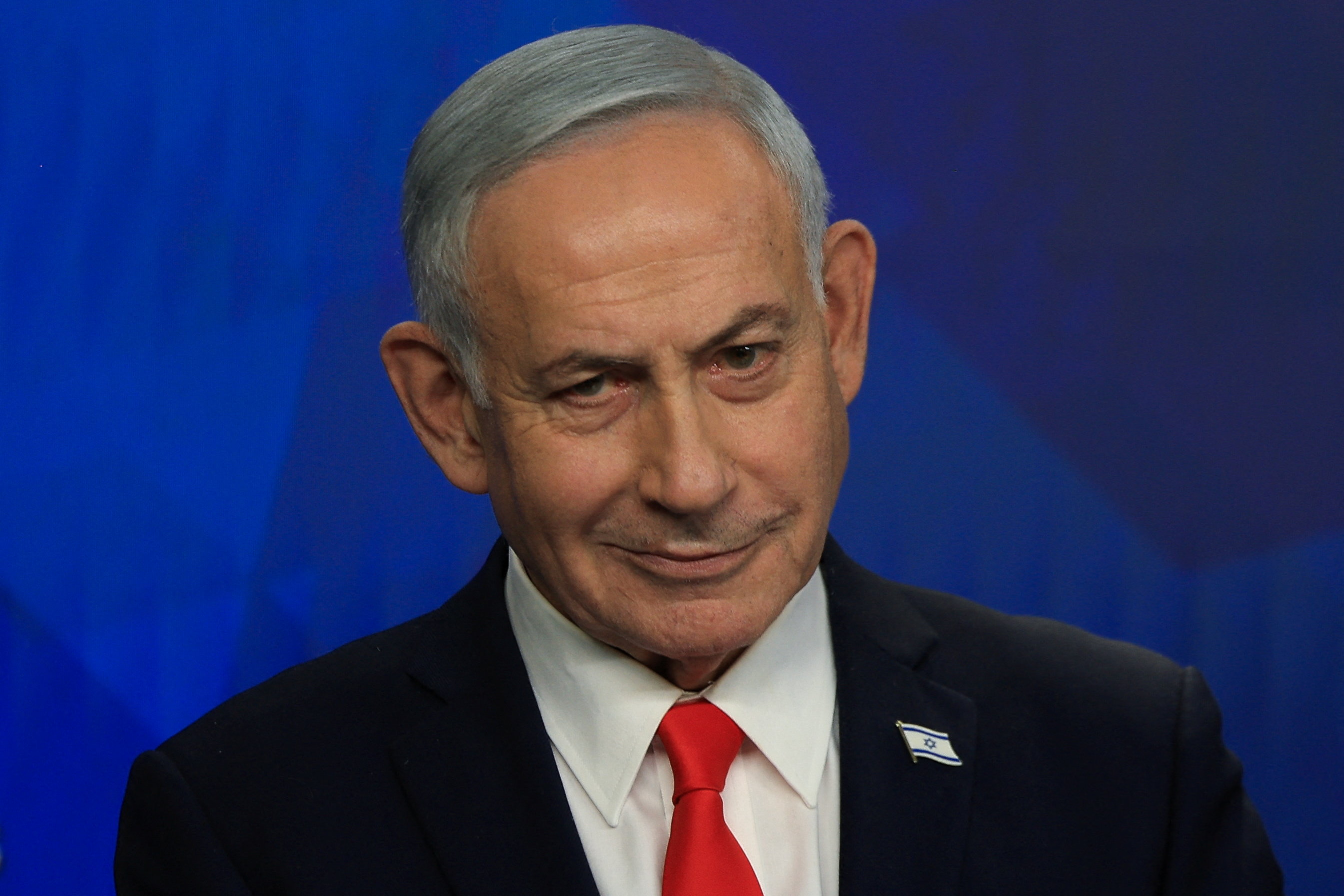 Israeli Prime Minister Benjamin Netanyahu. (Reuters)
Netanyahu and the right, he argued, “have a clear interest in disqualifying representatives of the Arab public, thereby reducing voter turnout among Arab citizens.”
He added: “Netanyahu and his emissaries know that if Arab citizens come in droves to polling stations, their chances of forming the next government will be significantly reduced, which is why they turned to the well-known trick of disqualifying their representatives.
“The fact that five such petitions were submitted, all of them against Arab parties and their representatives, speaks for itself.”