
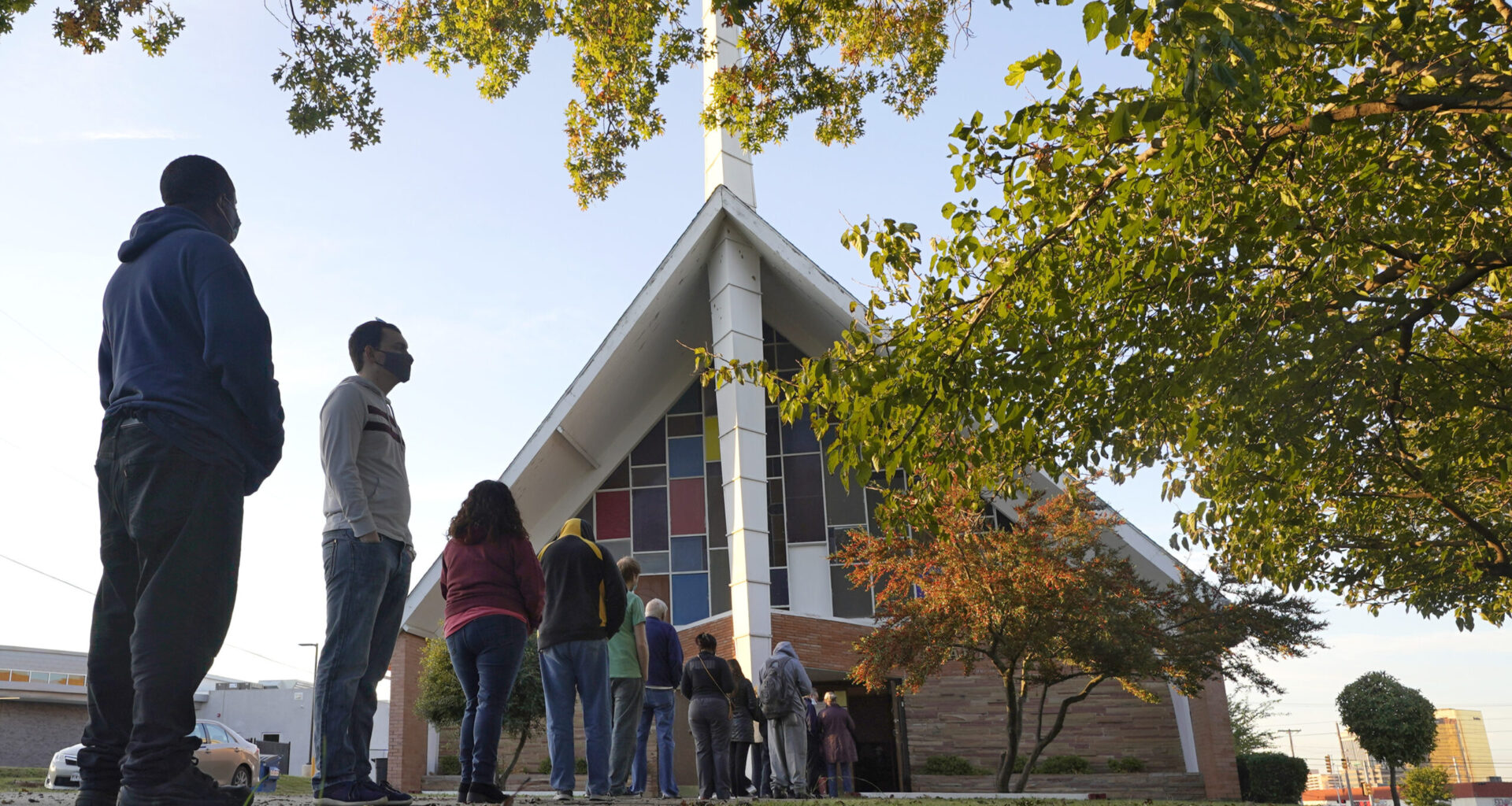
Tarrant County voters filed an emergency lawsuit Friday accusing Republican county officials of intentionally making it harder for Black and Hispanic residents to vote by eliminating dozens of Election Day polling places.
The lawsuit, filed in Tarrant County district court, challenges the county’s plan to operate 224 Election Day voting locations for the November general election, a net reduction of 92 sites compared with the 2022 midterms.
The plaintiffs are seeking an expedited hearing and an injunction requiring the county to reconsider the plan before voting begins.
The lawsuit comes a month after the GOP-controlled Tarrant County Commissioners Court approved the cuts in a 3-2 vote despite intense opposition from residents and the court’s two Democratic commissioners.
County Judge Tim O’Hare and Commissioners Matt Krause and Manny Ramirez voted for the plan.
The pro-voting plaintiffs allege that the closures disproportionately burden Black and Hispanic communities and violate the Texas Constitution and state election law. The lawsuit does not bring federal claims.
The complaint points to stark examples.
In ZIP code 76103, where the plaintiffs say 78.7% of residents are nonwhite and 76% are Black or Hispanic, the county eliminated all three polling locations used in 2022. In ZIP code 76115, which the complaint says is 89.3% nonwhite, four of five voting sites were eliminated.
The plaintiffs also accuse the county of disregarding its own rules for deciding which polling places should remain open.
They identified 46 eliminated locations where more than 500 people voted on Election Day in 2022 — despite a county methodology stating that such locations should be retained.
“This isn’t merely a comparison showing that high-use locations were removed,” the plaintiffs wrote. “The County’s written rule uses mandatory language: ‘Locations where more than 500 votes were cast on election day will be placed on the keep list.’”
The lawsuit also ties the polling place fight to Tarrant County Republicans’ controversial mid-decade redistricting last year.
According to the complaint, the 2025 map increased the Black and Hispanic voting-age population in Commissioner Precinct 1 from approximately 59.8% to 70.5%, while reducing it in Precinct 2 from roughly 49.4% to 41.2%. The result was a county with one majority-minority commissioner precinct instead of two.
When officials later revised the 2026 voting plan, they added exactly 48 polling places — 12 in each commissioner precinct — while citing a goal of “balancing” the four districts. The plaintiffs argue that benchmark is itself distorted because Republicans had redrawn those boundaries a year earlier in a way that concentrated Black and Hispanic voters in Precinct 1.
The complaint also alleges that county officials failed to follow Texas Election Code requirements governing the adoption of a methodology for choosing countywide voting centers, including a requirement to solicit input from people or organizations representing minority voters.
The plaintiffs are asking the court to force the county to adopt a lawful methodology, obtain the required minority-voter input and reconsider the 224-site list before Election Day.
They also ask the court to restore the 92 sites eliminated from the 2022 total. They are not seeking to cancel the election.