
In recent weeks, arms manufacturers from the UK and Canada have sent questionnaires to a range of Israeli defense companies seeking to determine whether they operate or manufacture in the territories, source raw materials from there, or maintain business ties with companies and subcontractors operating beyond the Green Line.
The move follows steps taken by 12 countries, including the UK, France, and Canada, to advance economic sanctions against products originating from settlements in Judea and Samaria. The measures were prompted by what British Foreign Secretary Ed Miliband described a few weeks ago as the Israeli government “turning a blind eye” to Jewish settlers carrying out “ethnic cleansing”.
The responses that British and Canadian manufacturers receive from Israeli companies could determine the future of their business relationships, given that Israeli firms act as sub-suppliers of components essential to weapons systems. In other words, foreign companies could stop selling systems to Israel, or purchasing systems from Israel, if they contain components manufactured in the territories. But the consequences could be far more severe.
1 View gallery
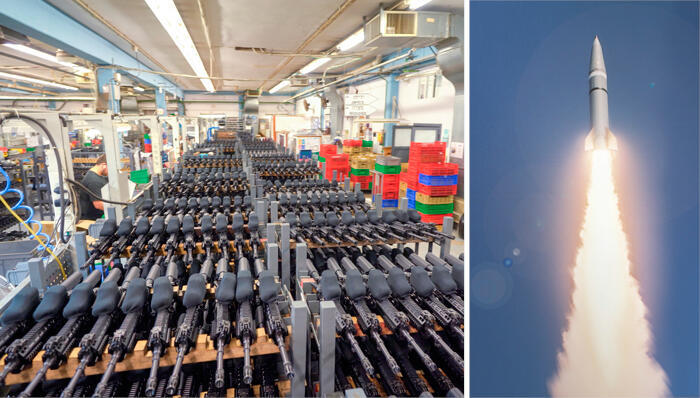
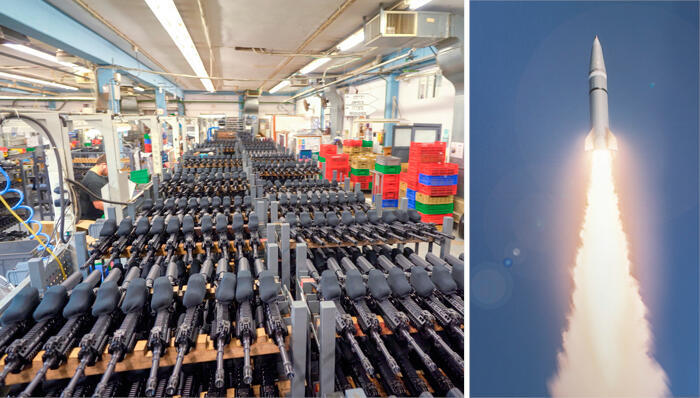
The LORA missile (right) and Israeli assault rifles.
(Photos: IWI, IAI)
“The real concern lies with foreign companies that might make a sweeping decision to halt trade with Israeli firms simply because they are Israeli. Those overseas companies are not fully versed in Israel’s borders, nor would they want to rely on a response from a company that has a vested interest in claiming it does not operate in the territories. They will seek to maximize their safety margins to avoid violating the sanctions regimes to which they are subject. The election results in Israel could dictate the pace of this trend,” a source involved in the matter told Calcalist.
In addition to the UK, France, and Canada, the list of countries intending to restrict trade with companies operating beyond the Green Line includes Denmark, Finland, Norway, Iceland, Ireland, Portugal, Poland, Sweden, and Spain. These trade restrictions are set to take effect in the coming months.
Meanwhile, the UK continues to step up measures against Israel in an effort to pressure its government to curb settler violence in the territories. Two years ago, it suspended approximately 30 defense export licenses to Israel over concerns that the equipment would be used by the IDF in combat operations in Gaza. Since then, it has suspended six additional licenses and refused to approve dozens more export license applications. According to the British government, more than 80 licenses have been suspended or rejected to date.
Last month, London announced that it would also reject applications for the export of equipment and components that could be used by the IDF in its operations in the territories.
Although Britain is not considered a major arms supplier to Israel and the volume of defense trade between the two countries is relatively small, an expansion of its sanctions could still harm Israel. British companies supply essential components used in weapons systems operated by the IDF. Expanding the restrictions would force Israeli defense companies to seek alternative suppliers in other countries or manufacture the components themselves.
Since the outbreak of the October 7 war, Israel’s defense industries have learned to improvise solutions to bridge gaps created by embargoes and restrictions on military exports. But replacing a component or switching suppliers can delay urgent production processes by many months, potentially affecting the IDF’s combat readiness.
“Integrating a replacement component into a weapon system, such as a missile, requires an extensive series of tests and trials, and sometimes even product modifications,” a defense official said.
The components in question relate to fighter jets, helicopters, UAVs, and communication systems. Despite the emerging sanctions, the UK has exempted F-35 aircraft after determining that halting the supply of British-made components specifically for jets used by the Israeli Air Force would not be feasible.
The F-35 is manufactured by Lockheed Martin, which manages a global pool of components and spare parts as part of the aircraft program. Consequently, from the UK’s perspective, supplying those components does not constitute a direct defense export to Israel.
The UK has also exempted components related to air defense systems and the Navy’s submarine fleet, since these are not used by the IDF in the war in Gaza or in operations in the territories. Raw materials and components used to manufacture weapons destined for third countries are also exempt.
Despite these exemptions, Israel’s defense establishment expressed concern over the weekend about a potential “ripple effect” from Britain’s moves. The concern is that they could influence the US administration’s policy on supplying munitions to the IDF and push American arms manufacturers that also sell in Europe to adopt a more selective and stringent approach toward Israel.
A year ago, Prime Minister Benjamin Netanyahu outlined his vision for Israel’s security independence, seeking to transform the country into a “Super Sparta” in the face of what he described as a looming diplomatic tsunami and growing calls to boycott Israeli products.
But achieving that independence is proving far more complicated.
Evidence of the challenge emerged just two weeks ago, with reports that the US administration was advancing a massive deal to supply Israel with billions of dollars worth of munitions, including tens of thousands of heavy air-to-ground bombs and specialized guidance systems.