
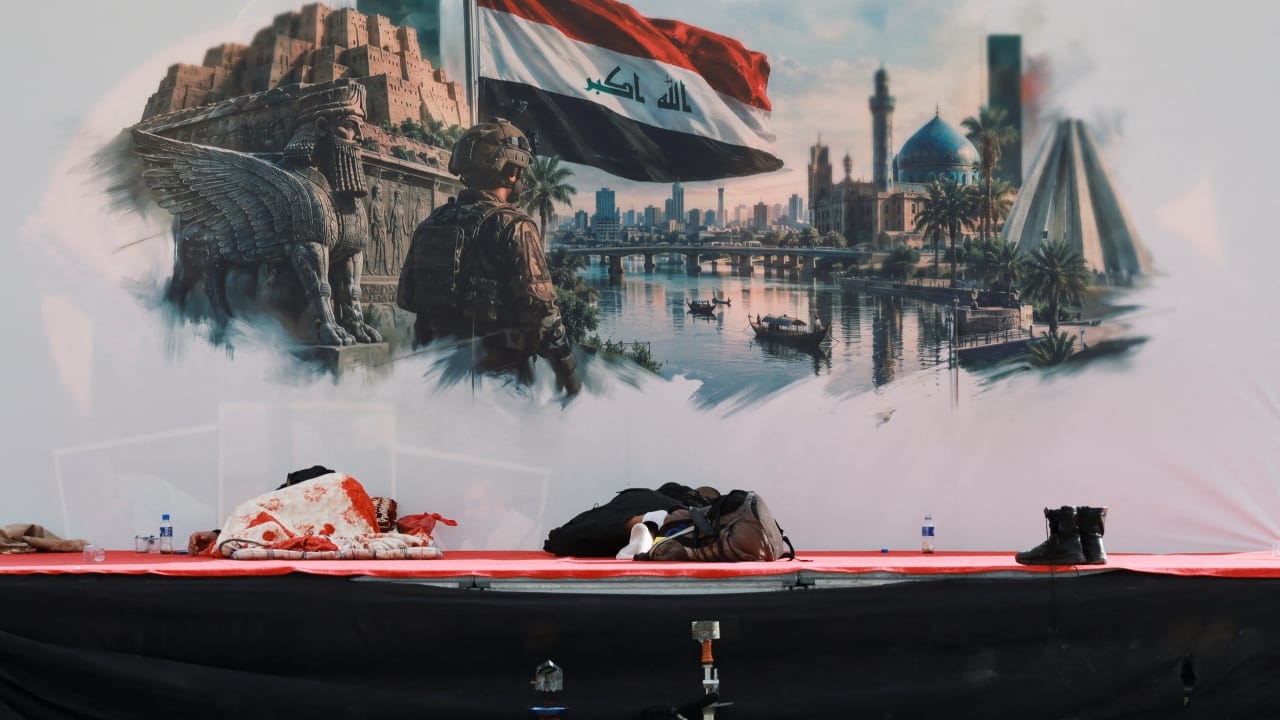
The United States’ planned withdrawal from Iraq on Wednesday has been celebrated by Iraqi militias as an “incomplete victory,” emboldening them to continue to resist disarmament beyond the previous deadline, with the extension likely to be pushed back again, Dr. Ronen Zeidel, an Iraq specialist at the Moshe Dayan Center, told The Jerusalem Post on Sunday.
With US forces fully withdrawn and Turkey expected to leave the strategic Bashiqa-Zilkan military base in northern Iraq by the end of 2026, Baghdad has projected a celebratory sense of “sovereignty” despite Iranian and Houthi military elements remaining unofficially present in the country. Iraqi militias have shared videos of themselves driving over American flags to demonstrate their sense of accomplishment.
With Iran maintaining a physical presence in Iraq, Zeidel said much of Washington’s remaining leverage over Baghdad would come through economic pressure, including potentially halting transfers from the Federal Reserve. Since 2003, Washington has held Iraq’s oil revenues, giving it significant leverage over Baghdad’s affairs and helping prevent Iraq from fully aligning with the Iranian axis.
If Washington concluded that Baghdad was not committed to disarming the militias or was testing the limits of its patience, Zeidel said the United States could threaten Iraq’s entire economy, though it has so far shown patience. Zeidel said that Baghdad is aware of such a threat, but insisted that there was still a “dilemma” over whether to risk military escalation against the Iran-backed groups.
The apparent reluctance to confront the militias, as shown by the deadline extension, and America’s withdrawal have resulted in a sense of confidence that will see the militias continue to resist and influence Iraqi legislation.
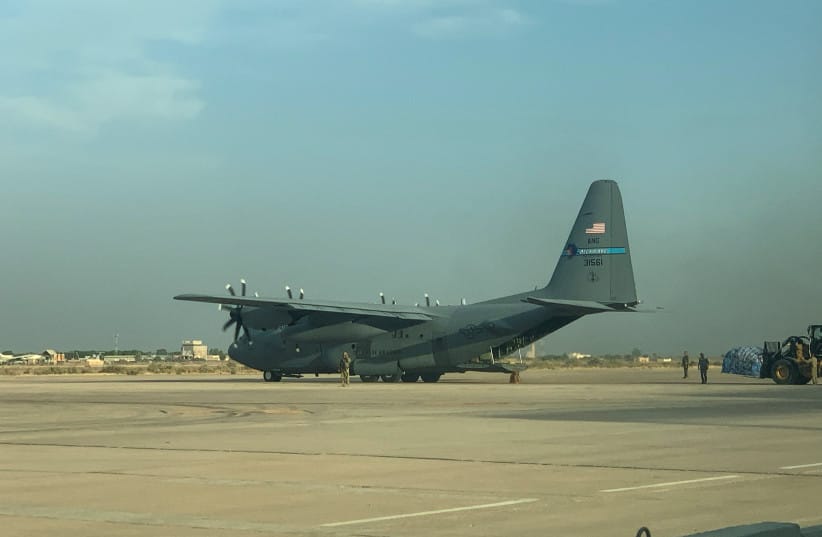 A US military transport aircraft stands at Camp Victory near Baghdad International Airport in Baghdad Tuesday, 29th September 2026 (credit: REUTERS/STRINGER)Iraq postpones militias’ disarmament
Iraqi Prime Minister Ali Al-Zaidi announced on Thursday that the original September 30 deadline for militias to disarm would be pushed back to June 30. However, statements from the militias have indicated that they may disregard the extended timeline as well.
Kataeb Hezbollah military spokesman Jaafar Al-Husseini said Baghdad had not yet responded to the group’s negotiations to “regulate” its weapons.
As a result, “the Islamic Resistance declares that it is not bound by any timetable or agreement that any governmental or political party has spoken of or may speak of,” he claimed.
Zeidel said the development was not surprising, noting that the militias would likely point to the continued presence of armed Kurdish groups in the semi-autonomous Kurdistan Region as an excuse for refusing to disarm, as well as continued American military flights over Iraq.
The militias would continue to “bluff” in negotiations, finding new ways to delay disarmament, Zeidel said, noting that their terminology had increasingly shifted away from disarmament and toward the “regulation” of weapons.
Any new “eruption,” whether a return to active conflict between the United States and Iran or an escalation between the Houthis and Saudi Arabia, would likely see the groups abandon all their commitments, he predicted, pointing to militia demands to retain missiles and drones capable of striking Israel and Saudi Arabia.
“They make a distinction between small arms or light arms and strategic arms. Under strategic arms, they include long-range missiles and long-range drones that can hit Saudi Arabia, Israel or any other country in the region. So they are ready to deliver some of the small arms, and probably some of the short-range drones, but not the strategic arms,” Zeidel said.
Beyond the issue of arms, Zeidel acknowledged that the US withdrawal had altered the psychological state of the groups. He noted that leaders aligned with the militias had pressured the cabinet to finally approve the new Popular Mobilization Forces (PMF) law, controversial legislation that would formally recognize the Iranian-backed paramilitary network as a permanent national security institution.
Legislation to integrate the PMF into Iraq’s armed forces under a unified military hierarchy was pulled last year following both internal strife and pressure from Washington.
“It’s not going to be voted on this week, but it’s very close to being put on the agenda of the Iraqi Parliament, and they might have their way by having this law approved,” Zeidel warned.