
By Mohammed Ghobari and Timour Azhari
ADEN, Oct 4 (Reuters) – The leader of Yemen’s Saudi-backed government announced the beginning of a major military operation against the Iran-backed Houthis on Sunday, aimed at seizing the territory under their control.
Regional and western officials had previously told Reuters that Saudi Arabia and its Yemeni allies were planning to launch an assault on the Houthis, with the Saudis leading aerial combat and Yemeni forces fighting on the ground.
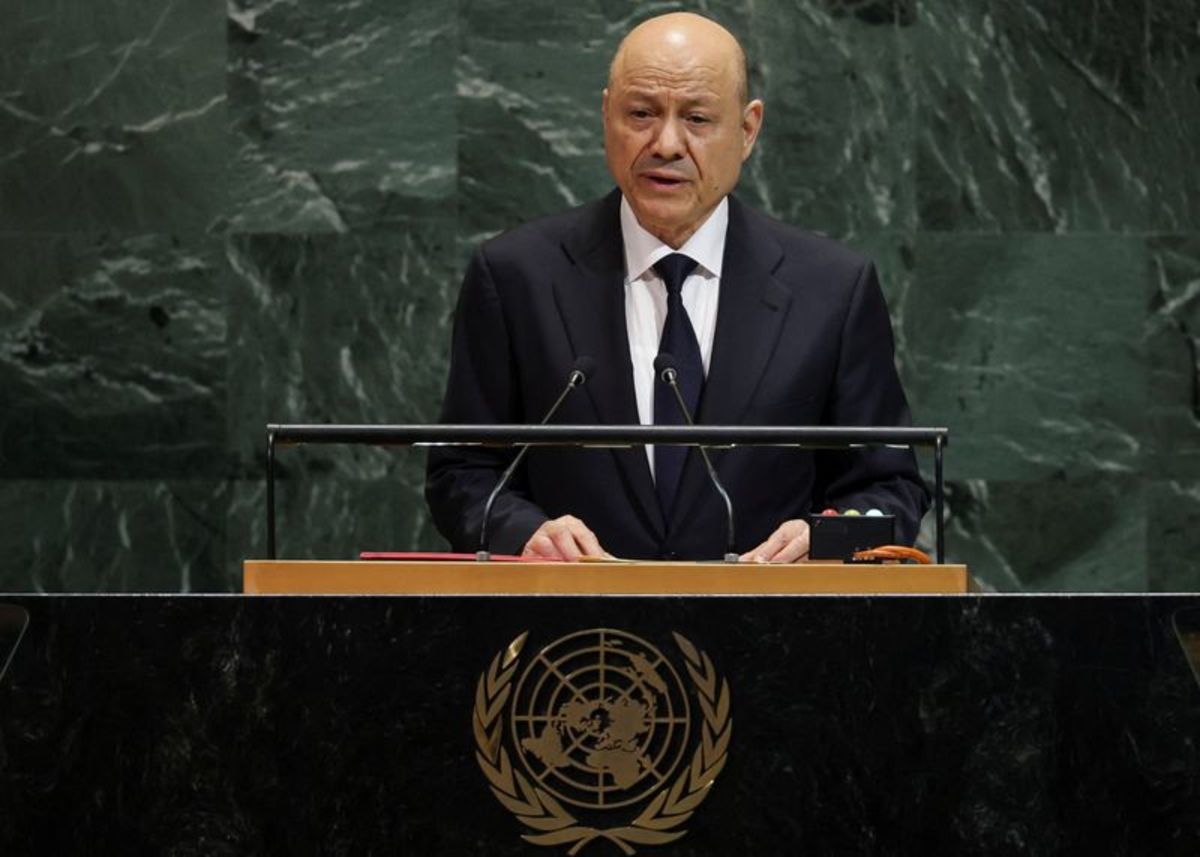
“Today, I announce the start of military operations to retake the remaining territory of the republic and extend the authority of the state and its institutions across the entire national territory,” Yemeni President Rashad al-Alimi said in a televised address.
Saudi Arabia entered neighbouring Yemen’s civil war in 2015 at the head of an Arab coalition in support of the internationally recognised government, which the Houthis had driven out of the capital Sanaa.
A truce agreed between the warring parties in 2022 largely held until this year, when the Houthis launched missile and drone attacks on Saudi shipping and oil infrastructure in a spillover from the Iran war.
HOUTHIS’ LIGHTNING OFFENSIVE
Despite the preparations for a counteroffensive, the Houthis have so far maintained the initiative on the ground, weeks after seizing the strategic Bab el-Mandeb Strait in a lightning offensive down the coast that saw government forces collapse.
Bab el-Mandeb is the southern exit passage of the Red Sea, a key shipping route between the Mediterranean and Asia that has assumed even more importance this year as an alternative to the Strait of Hormuz, which has been effectively closed by the Iran conflict.
In the last 48 hours, the Houthis have made gains against government and local forces on strategic hilltops near Yemen’s Taiz, military sources said, advancing on the last road between the city and Aden, where the Saudi-backed Yemeni government is based.
Houthi control over the Taiz-Aden road would lead to an effective siege of the city, Yemen’s third-largest, inhabited by hundreds of thousands of civilians and where thousands of government forces are also stationed.
It would also consolidate control of that flat coastal Bab el-Mandeb area by seizing the rugged mountains overlooking them in the western Taiz countryside, according to Mohammed Al-Qadhi, a veteran Yemeni journalist from Taiz now working as a political analyst.
“This will help them protect their back in case of any operation against the coastline, and make recapturing those areas much more difficult,” he said.
The city is important not just for its strategic location; Yemeni President Rashad al-Alimi is from the region, and a siege of Taiz would amplify an already-dire humanitarian situation in the country.
Three-in-four families in parts of Yemen are going hungry from the impact of the surge in fighting, which has displaced tens of thousands of people and disrupted supplies to millions, the World Food Programme said last week.
(Reporting by Eman Abouhassira and Timour Azhari; Editing by David Goodman, Louise Heavens and Alex Richardson)