
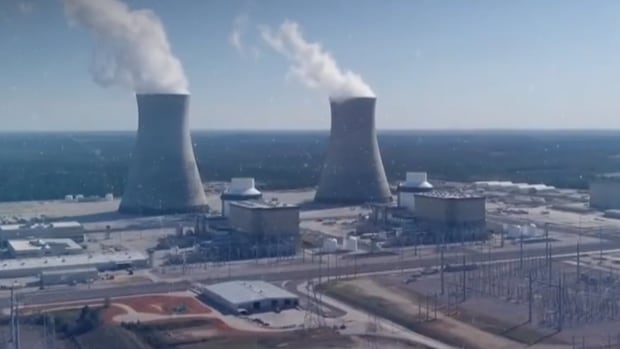
Saskatchewan is going big on nuclear energy.
Premier Scott Moe has announced a plan to explore two large nuclear reactors in northwest Saskatchewan.
The first is expected to be online by 2042 and the second by 2050.
“We must invest in a future source of power that is reliable in every season, available around the clock, [and] is affordable for decades to come,” Moe said at a Tuesday news conference at the University of Saskatchewan.
“But also most importantly, affordable for the families that live here. And that source is none other than nuclear power.”
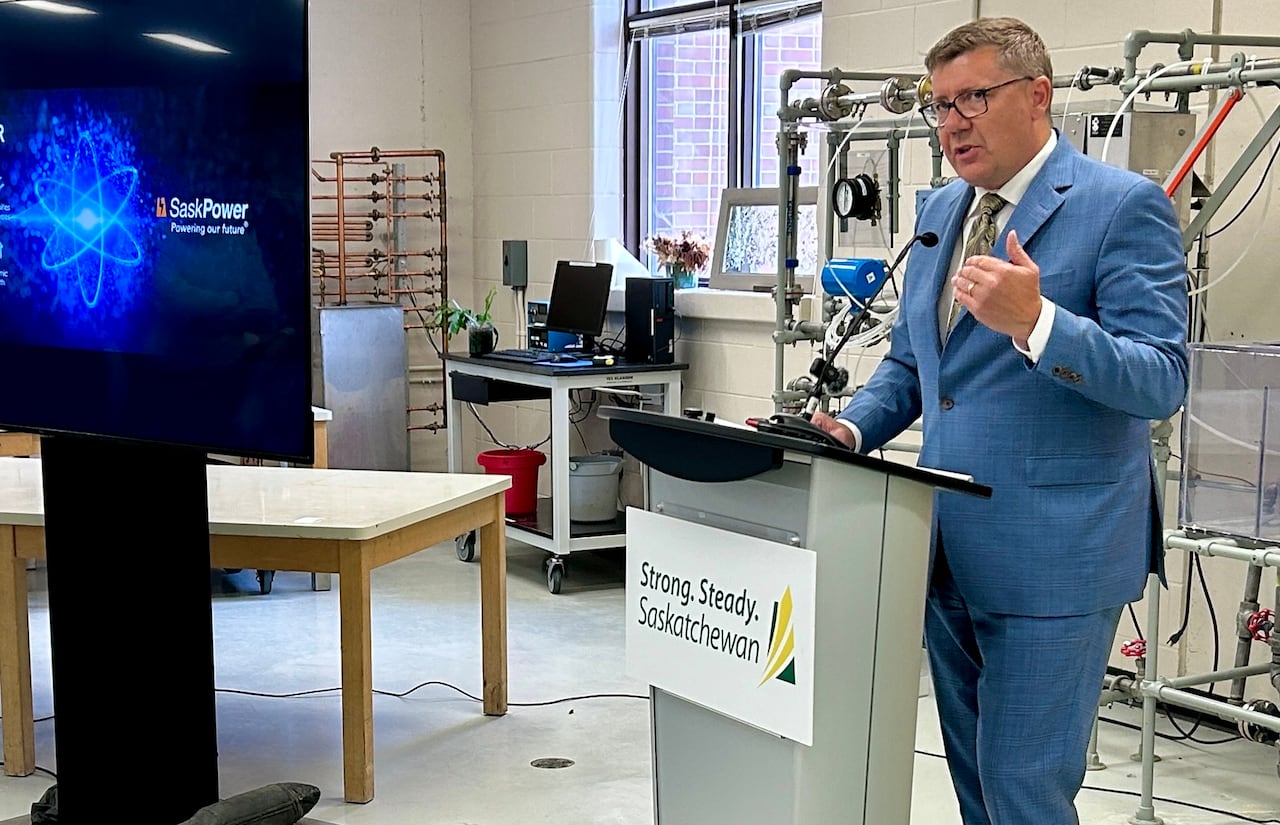 Saskatchewan Premier Scott Moe announces the province’s new Delivering Energy Security Through Nuclear Power plan at a news conference at the University of Saskatchewan in Saskatoon, Saskatchewan, on Sept. 29, 2026. (Trevor Bothorel/CBC)
The government said it will also continue with its plans for small modular reactors (SMRs).
Saskatchewan’s first SMR is set to be built at the Rafferty Dam, west of Estevan. It is expected to be operational in the mid-2030s.
“We’ll be the ones doing much of the heavy lift on this work, and we’re prepared,” said Eric Anderson, executive director of the Saskatchewan Industrial and Mining Suppliers Association.
The association represents more than 36,000 workers, and says they’re ready to play a significant role in building everything that connects and supports large reactors.
“Whether they be large or small, with support from the provincial and federal government, our members have spent years preparing for nuclear opportunities and have the capacity and capability to support major bills,” Anderson said.
The province said Saskatchewan’s nuclear plans will benefit Indigenous communities by committing to working with First Nations to build the reactors.
“It’s a heavy lift not only for Saskatchewan, but our First Nations as well,” said Sheldon Whitney, president and CEO of the First Nations Natural Resource Centre of Excellence.
“That creates not only partnerships, that creates opportunity and it generates hopefully generational wealth for their entrepreneurs or band-owned companies.”
Moe said the province’s new “Delivering Energy Security Through Nuclear Power” plan establishes an initial target of 2,600 megawatts (MW) of nuclear power generation by 2050.
How will it affect Sask.’s environment and economy?
Climate change is accelerated by power generation that produces CO2 or methane emissions that enter the atmosphere.
Greg Peltzer, a professor in the School of Environment and Sustainability at the University of Saskatchewan, said nuclear power won’t directly contribute to climate change.
“Nuclear power itself is considered clean energy because it doesn’t have those CO2 emissions that you get from coal production or from natural gas,” Peltzer said Thursday on CBC’s Blue Sky.
“And when you look at a lot of jurisdictions across Canada, the majority of generation is actually for homes.”
Peltzer estimated that roughly a third of the power will be used by homes and the rest will be used for industrial purposes.
That means some of the financial burden will fall on the people of Saskatchewan.
“There will be ratepayers, both industrial and commercial ratepayers as well as residential ratepayers, paying for the electricity that’s produced,” he said.
“The capital costs on the front end are expensive, there’s no getting around it.”
By investing in nuclear, Saskatchewan is following the lead of others in the country and around the world. France and the United States were the leaders in adopting nuclear energy as part of their national grid systems.
In Canada, the first SMR project is underway in Darlington, Ont. Saskatchewan isn’t far behind with its own SMR project.
“The strategy the province is doing is, it’s not really playing a leader role, it’s playing a follower role,” Peltzer said.
“So other jurisdictions are going to take the hits in terms of learning the lessons of how to do this more efficiently. And so from that perspective, I think there’s a bit of hedging there.”
New AI data centre’s energy usage
Bell Canada and the province are building a 300-megawatt artificial intelligence data centre outside Regina, set to be one of Canada’s largest data facilities.
Bell is already planning to quadruple the size of the centre, taking it to 1.2 gigawatts of power and a $52 billion investment.
SaskPower will only be responsible for supplying the initial 300 megawatts and Bell Canada has said it will supply the remaining 900.
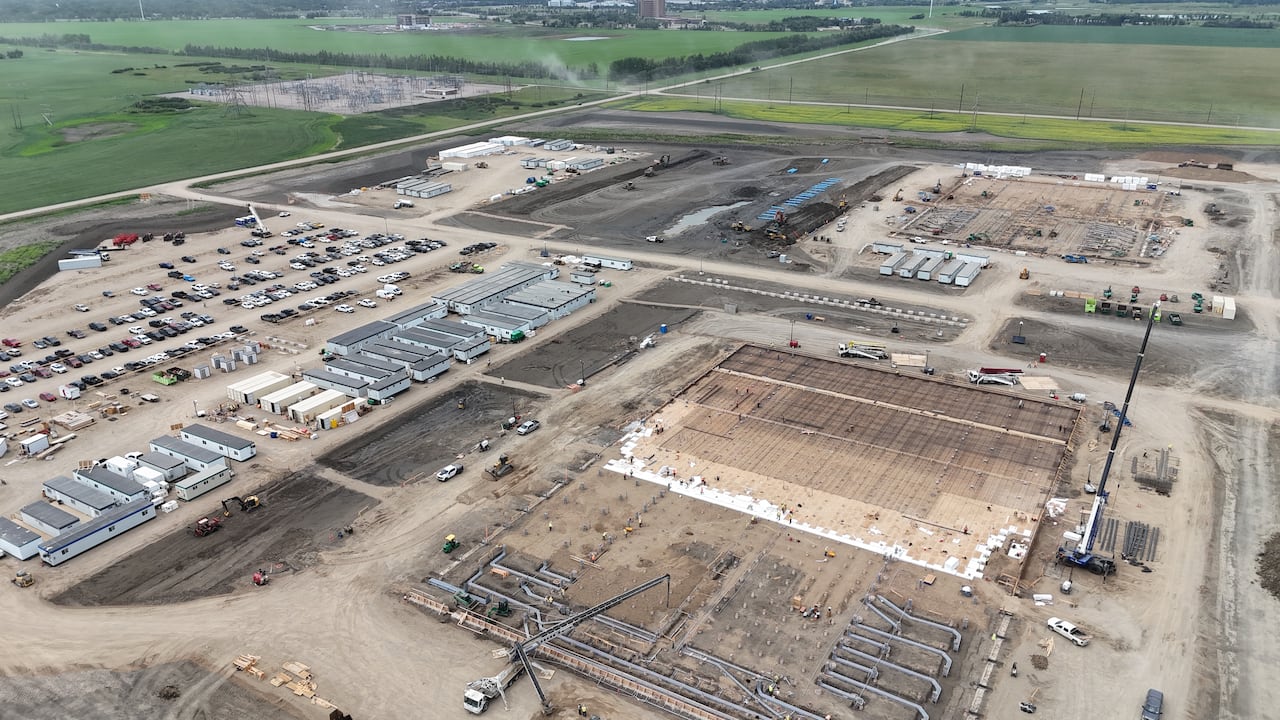 Construction underway at the Bell Canada AI data centre just south of Regina, Sask., on July 14, 2026. (Adam Bent/CBC)
“When you look at the projections without data centres in the growth of the province, growth [of the] industrial sector in the economy, we will be at 10,000 megawatts,” Peltzer said.
“So if we’re going to get off coal, which is if we don’t want to bake the planet, then we’ve got to have other clean energy options.”
Saskatchewan’s government plans to keep its coal-fired power plants running until 2050, defying federal phase-out deadlines.
Bob Halliday is among those concerned about the continued use of coal and how nuclear projects will affect the province financially.
He’s a board member with the Saskatchewan Environmental Society and a former director of Canada’s National Hydrology Research Centre.
“These things could add another $40 billion to the debt load or it could lead to very large power increases,” Halliday said.
The data centre is projected to cost $1.7 billion. As of June, SaskPower’s total debt sat at $11.5 billion.
“So I’m really skeptical about the timing and the cost of these new projects,” Halliday said.
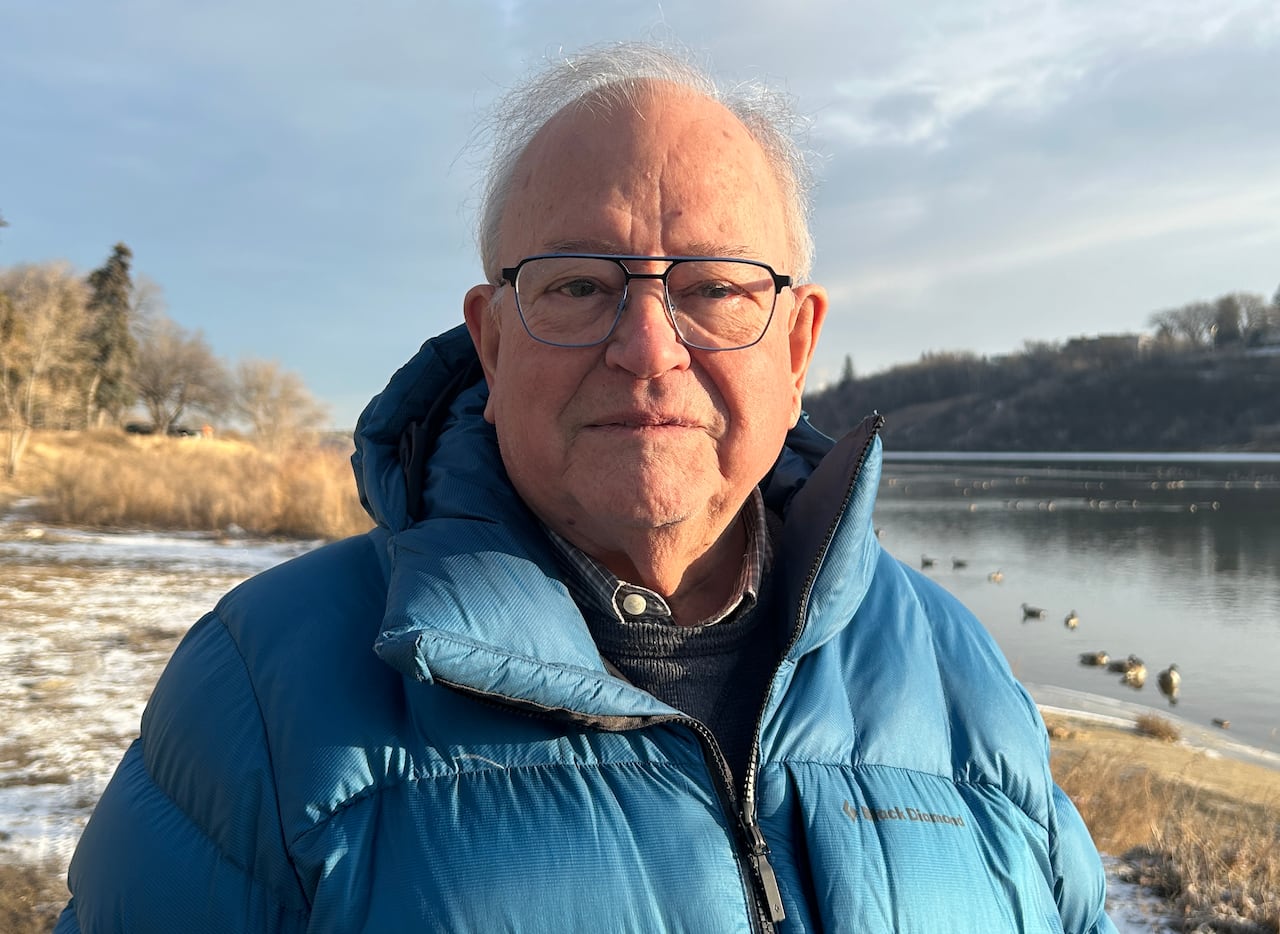 Bob Halliday, a board member with the Saskatchewan Environmental Society. (Pratyush Dayal/CBC)
There are two ways to safely generate electricity from a nuclear plant. Both require a large amount of water for cooling.
It’s done either through the use of cooling towers or flow-through cooling, a process where water runs through the system and goes back to the source water body.
Experts believe Saskatchewan will go with the later option, and that will come with repercussions.
“These are enormous quantities of water and you don’t remove that much water from a stream without consequences,” Halliday said.
“I also worry about the fact that during drought conditions that water will not be available for cooling a nuclear power plant.”
The province did not confirm where the two large nuclear reactors would be constructed, but Moe has previously alluded to potential locations along the North Saskatchewan River.
“We do have excellent hydro resources in the north that could produce a lot more hydroelectricity, but they may not be politically accessible,” Peltzer said, noting that choice would come with the risk of flooding traditional Indigenous lands where people hunt and fish.
SaskPower said it will evaluate potential locations while having “meaningful engagement with local communities and Indigenous peoples.”