
Ireland v Israel was drenched in rancour from the moment the draw was made, and across months it filtered down from fan groups to football associations to coaches and press officers and, finally, to the players. And so the final act in this bleak and acrimonious series was to keep both sides separated as they left the field in Backa Topola. In the end, all these teams could share was a draw.
The Irish players responded much better to the intense pressure in Debrecen last week, but the Israeli media were in no mood to lessen their players’ load for this rematch. The Israeli coach was asked on Saturday why his team had “choked” with the nation’s honour on the line, and the same journalist wrote on Sunday of the need to avenge last week’s “humiliating” defeat. And, of course, everything was cast in a wider context.
“The Israeli team wants to achieve sporting revenge on the team and the country that has no idea what is happening here and allows itself to intervene, tell lies, and take the wrong and inhumane side,” wrote Lian Bitan of ONE, an Israeli football outlet.
The same journalist spent much of the preamble to the game in animated discussion with security and Uefa officials, as she was one of two Israeli journalists told ahead of the game by Uefa that they would not be welcome at the post-match press conferences. The other journalist excluded was the TV reporter who made an allegation of racism against the Irish players that led to the abandonment of the press conference. Uefa made the decision, saying it was due to their political line of questioning. Uefa also scrambled in additional help from their media relations team for the press conferences, with a brief to oversee the questions and ensure that they would be solely about the game.
It was a strangely dissociative experience, then, to experience this noxious enterprise in a boxfresh, empty stadium adjoining a hotel in a rural Serbian town. That a fortnight of fierce sound and fury would culminate on a silent stage was bizarre. Perhaps this is what it would be like to scream underwater for 90 minutes.
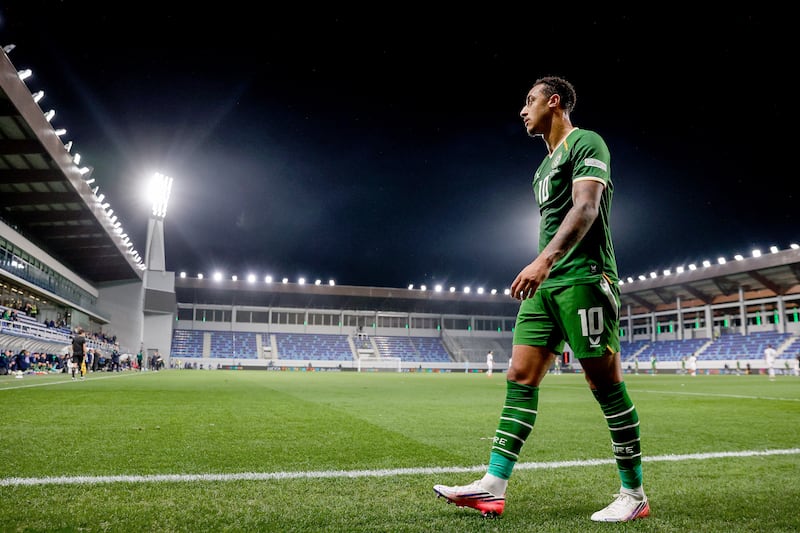 Ireland’s Adam Idah during the game at the TSC Arena in Backa Topola, Serbia. Photograph: Ryan Byrne/Inpho
The pregame playlist over the PA was smooth jazz at a low volume, sounding like we were all sitting in a hotel bar clinking glasses. However, true to custom, Gala’s Freed from Desire kicked in a few minutes before kick-off. The music died for the final few minutes before the players entered the pitch, meaning the only sounds in the stadium were the waspish distortions of the walkie-talkies of security guards. The PA announcer ran through the team line-ups, perhaps out of sheer force of habit, and twice read Uefa’s standard pregame message of respect.
“This game should be played in the spirit of respect and fair play, and remember, there is no room for racism.”
The game was prefaced by the now-familiar formalities – Irish heads bowed for the Israeli anthem; no handshakes exchanged – and then slowly the temperature was cranked higher. Without the white noise of the crowd, every single yell and claim and recrimination made by players and benches were audible, accentuating the contention of every contested moment. Jayson Molumby came in for particularly close attention, and Israeli captain Dor Peretz left a foot in on the Irish midfielder in the second minute. Molumby took the challenge in his stride, reacting only with a slight smirk.
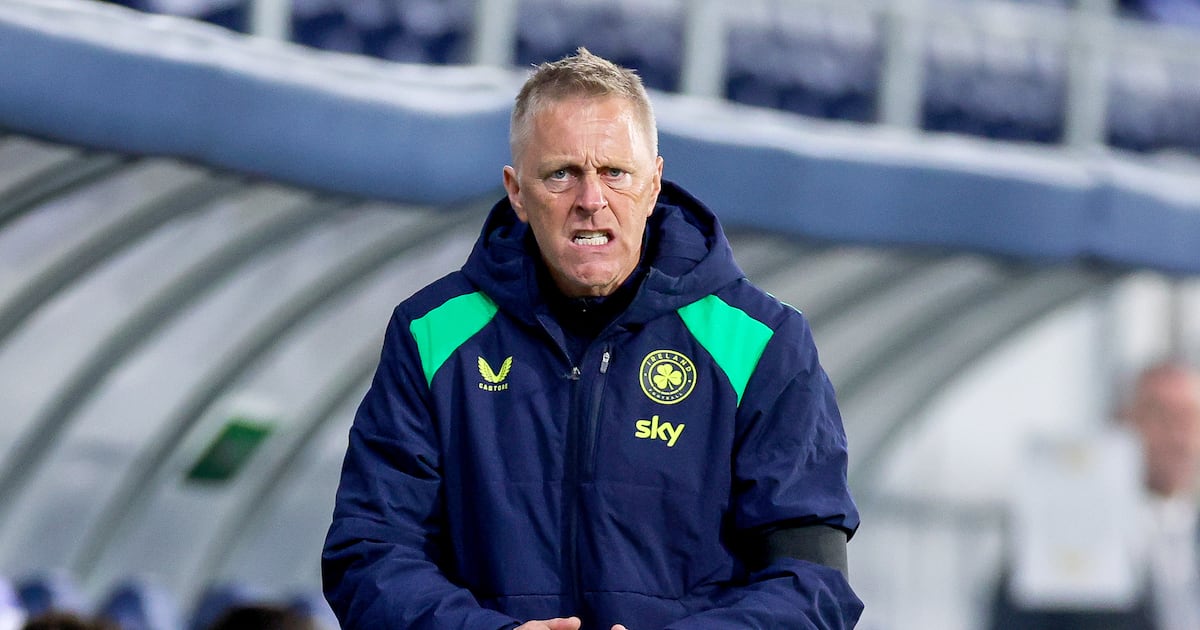
Molumby was officially fouled five times – there were many more kicks that went unpunished – but it was from one of those five that Ireland wound up scoring. Hallgrímsson yelled at Ryan Manning, “This is you, Ryan!,” which was the signal to unveil some training ground choreography. Manning slipped the free-kick into a gap in the Israel defence for Troy Parrott – think the Wout Weghorst routine for the Netherlands against Argentina in the 2022 World Cup – at the end of which Jimmy Dunne was fouled by Peretz. Parrott scored from the spot, obviously, moments after Manning tried to draw the officials’ attention to an alleged kick by an Israeli player. Meanwhile, Molumby appeared to exchange some words with the Israeli bench.
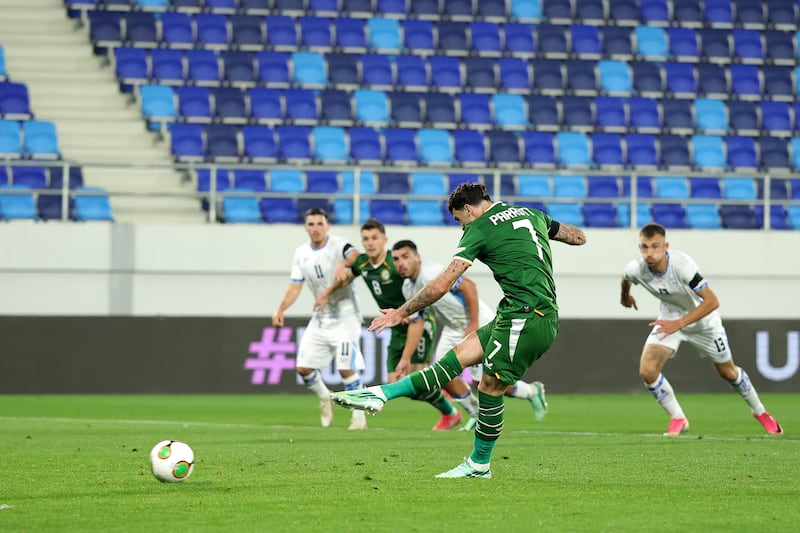 Troy Parrott scores a penalty for Ireland. Photograph: Srdjan Stevanovic/Getty Images
The mood further soured as the sides made their way off at half-time, with Ireland’s head of athletic performance, Damien Doyle, audibly alleging that an Israeli player spat at him. The FAI confirmed at half-time that Doyle made the allegation. The players had to be separated as they made their way down the tunnel, Hallgrímsson with his arms stretched wide as an ersatz steward. “Guys, be clever, be clever,” pleaded the referee.
Hallgrímsson spoke on Saturday of the need to cool down his players before playing Israel last week, asking Conor Coventry to lead the squad in prayer before kick-off. Perhaps the half-time flashpoint disturbed Ireland from their focus, for they lost their lead within two minutes of the game’s resumption and lived on their wits’ end from there. The game became stretched and the Irish players harried; and twice the clank of Caoimhín Kelleher’s left-hand post echoed around the empty stadium. An Israeli journalist thumped a glass panel behind the press box at frustration at the second of these near-misses.
The game ended in one more flash of rancour, with an Israeli player restrained from approaching Molumby. “Calm, calm,” yelled the referee. The Irish players disappeared down the tunnel, with the Israeli squad held back on the pitch.
“Thank you for attending the match,” concluded the PA announcer, now either thoughtlessly reading a script or else possessed with mischievous humour. The few who did attend did so out of obligation, and none will want to do this ever again.