
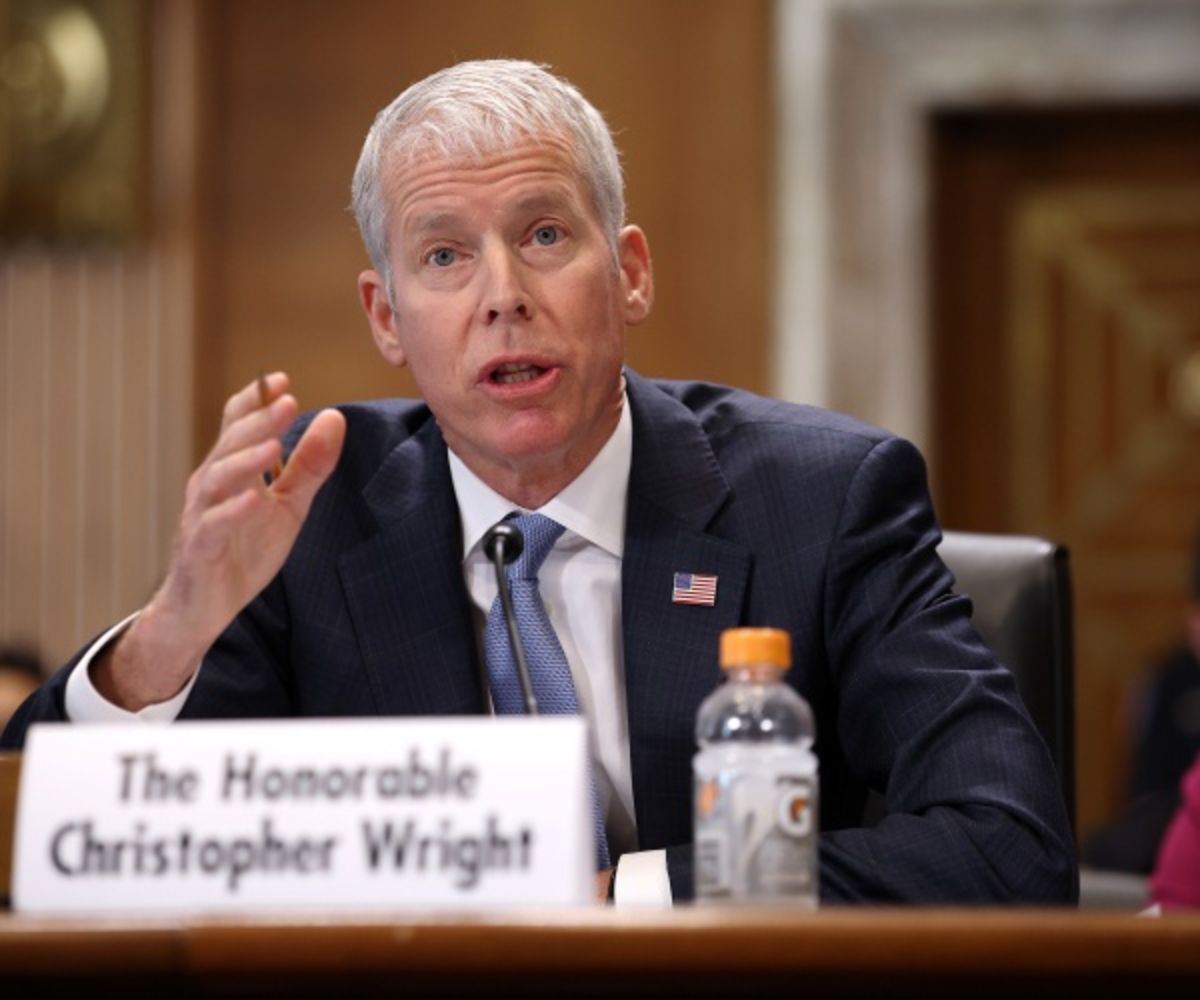

Secretary of Energy Chris Wright (Kevin Dietsch/Getty Images)
President Donald Trump was fully aware that launching military action against Iran would drive up energy prices but decided the threat of a nuclear-armed Iran outweighed the short-term economic costs, Energy Secretary Chris Wright told CBS News’ “Face the Nation” on Sunday.
“He knew it was going to elevate energy prices in the short run,” Wright said of Trump, adding that the president said, “I’m going to take a hit there, but I got to do the right thing.”
Wright praised Trump’s decision to go to war, arguing that Iran’s nuclear ambitions posed a long-term threat to global security and energy markets.
“The world cannot sustain a nuclear-armed Iran,” Wright said, describing Tehran as “the world’s greatest terrorist regime” and endorsing Trump’s position that the country “cannot and will not have nuclear weapons.”
The remarks come as American consumers and businesses continue to feel the financial effects of higher fuel prices following the conflict, with gasoline and diesel costs putting pressure on household budgets, farmers, transportation companies, and other industries.
Wright expressed confidence that fuel prices would decline in the coming weeks, citing increased energy flows through the Strait of Hormuz, strong U.S. gasoline production, and the seasonal slowdown in summer driving.
Asked whether he expected prices to fall over the next four weeks as Republicans face a challenging political environment ahead of the midterm elections, Wright responded, “Absolutely,” adding that “diesel prices have been going down, gasoline prices have been going down. I expect that to continue.”
Diesel prices recently surged above $6.50 per gallon, placing additional pressure on farmers, construction companies, food banks, and other businesses dependent on diesel-powered equipment and transportation.
Wright said diesel prices had already fallen by slightly more than 20 cents in recent days and predicted that “you should see it below $6 before too long.”
The energy secretary attributed the administration’s strategy to increasing domestic fuel production and reversing policies he argued had constrained the country’s energy sector.
“Everything we’re doing is to grow the supply of diesel, to grow the supply of gasoline, and frankly, again, to reverse years of policies that have been directed exactly the opposite — to shrink our ability to produce, refine, and deliver hydrocarbons,” Wright said.
He also touted a recent agreement with Group of Seven nations to release 100 million barrels of fuel over four months, calling the arrangement a significant step toward easing global supply pressures.
Wright said the release would help reduce diesel prices in the U.S. and internationally through the winter, particularly as European countries draw on their reserves.
Europe maintains substantial diesel stockpiles because its refineries cannot meet all of its domestic demand, Wright said, adding that European countries have an interest in maintaining American diesel exports.
“Why not release some of that?” he said, arguing that the reserves were intended to help address supply disruptions such as the loss of Russian diesel exports, China’s decision to halt additional deliveries, and reduced fuel shipments from the Persian Gulf.
Wright said Gulf supplies were beginning to recover but cautioned that restoring energy flows takes time.
The secretary also addressed the possibility of a U.S. ban on diesel exports, an option he has opposed as the administration looks for ways to ease domestic fuel costs.
He declined to say whether Trump had ruled out such a move, saying the president continued to consider a range of proposals to reduce energy prices.
“Every day” Trump is “throwing out ideas,” Wright said, describing the president as constantly evaluating ways to lower costs for gasoline, diesel, heating, and electricity.
Wright suggested that Trump’s public focus on energy affordability may have helped secure the international fuel-release agreement.
Wright also declined to speculate about whether the president might escalate military operations against Iran after the midterm elections, saying Trump is “always planning for contingencies and he’s always negotiating.”
© 2026 Newsmax. All rights reserved.