

Listen to this article
Estimated 4 minutes
The audio version of this article is generated by AI-based technology. Mispronunciations can occur. We are working with our partners to continually review and improve the results.
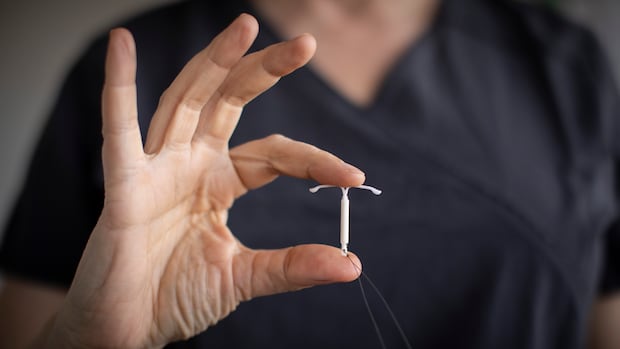
A Dartmouth, N.S., woman says there is seemingly little research and training on women’s health after she learned her family doctor couldn’t remove her IUD.
Stephanie Comeau says after her family doctor contacted three gynecologists without success — either because they weren’t taking on new patients or because of years-long waitlists — she was told to contact the Halifax Sexual Health Centre.
“I called probably 300 times to finally get ahold of someone at 3 p.m. that said we can book for the end of September for a consultation. So not even the appointment,” Comeau told CBC Radio’s Information Morning Halifax this week.
Comeau said she has been trying to get the T-shaped birth control device removed since June.
“I suffer from PCOS. Once a month, I get debilitating migraines that I can’t even get out of bed. And the longer I have to wait and see if this is going to be the fix is going to help, the longer I have to deal with those things as well.
“The sad part about it is because the wait times are so long and because you’re jumping through hoops so many times if you’re not advocating for yourself, you’re going to suffer in silence.”
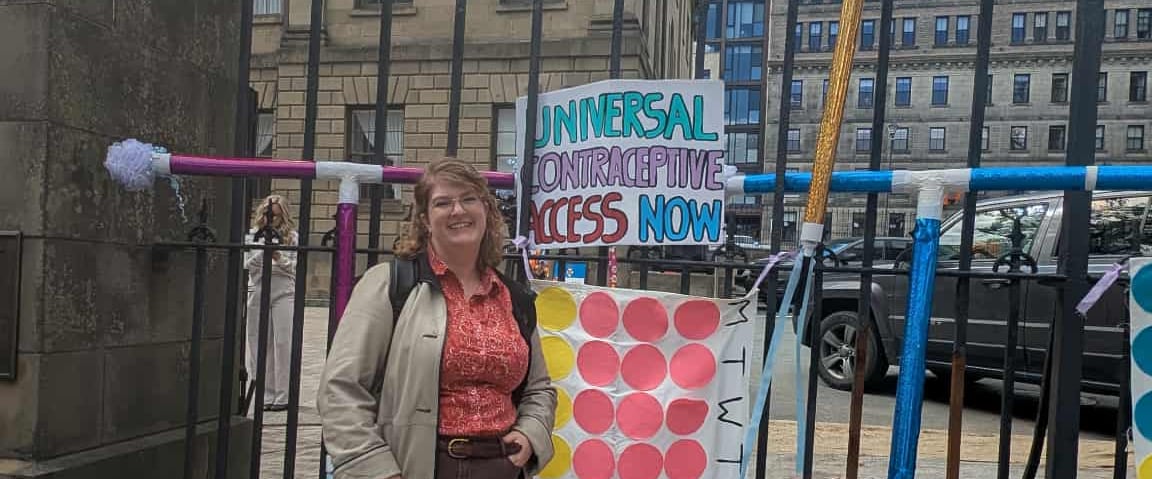 Abbey Ferguson is the executive director of the Halifax Sexual Health Centre. (Submitted by Abbey Ferguson)
Abbey Ferguson, the executive director of the Halifax Sexual Health Centre, told Information Morning they’ve been hearing about situations like Comeau’s for years.
“We’ve always been a location by which people who even have family providers still end up coming to us because inserting and removing IUDs take some additional training — well within the wheelhouse of a primary care provider but some training and familiarity as well as additional equipment,” Ferguson said.
Ferguson said removing an IUD takes practice and that some health-care professionals either haven’t had to remove any since their initial training or may not have an interest in reproductive health or no access to the equipment or cleaning equipment needed to do it.
There are a lot of ethical considerations health-care providers make before setting up their practice, Ferguson said.
“As long as you refer onto someone else and don’t provide misinformation, then that is considered ethically sound,” Ferguson said.
“But there are many conversations you can have about sending folks out into community health-care centres or charitable health-care centres rather than taking care of your own patient.”
Why wait times are so long
Ferguson said Bayer, the drug company that makes hormonal IUDs, has a directory of training. She said the Halifax Sexual Health Centre is a place where medical professionals can do shadowing shifts to improve their skills.
The Halifax Sexual Health Centre has 500 to 900 appointments a month, Ferguson said, speaking to the long wait times patients face.
“The reason your call is being missed is because 100 other people are calling at the same time. The demand is very, very high. Especially where we are seeing patients who not only don’t have a provider but also patients that do have a provider,” Ferguson said.
Incentives for health-care providers
Ferguson said there should be incentives for more health-care providers to be able to insert and remove IUDs.
“Like ensuring the medical school curricula within our provinces meet the expectations of the services we’d want to see on the other end. And another thing we can advocate for is better billing for it,” Ferguson said.
“Sexual health services are a supply-heavy service. And all of those things — if you’re not working out of the health authority directly — are expensive. If billing kept up with the cost of what it takes to actually perform a sexual health service and perform it well, I think that would incentivize people to take the time to actually do them.”
Province says it’s working on improvements
Nova Scotia’s Department of Health and Wellness told Information Morning in a statement the province recently announced several steps to create a strong foundation for long-term change and to take action to improve women’s health services across Nova Scotia.
Those changes focused on three initial priority areas: gynecology, menopause and breast screening.
“There is more to do, but government is committed to making real and effective change,” the statement read.
MORE TOP STORIES