
Now that Vladimir Putin has got his rigged Duma elections behind him, he has introduced a budget which signals his determination to keep fighting his war against Ukraine, and, if necessary, one against its European backers. Russia’s economy may be creaking under the demands of this war, but he wants nobody to think that he might back down. When Donald Trump makes optimistic noises about a peace deal, he does so without any encouragement from Moscow. For Putin, peace can only come with a Ukrainian capitulation.
We have very little idea about what it would take to persuade him that the game is up, and that it is time to accept a ceasefire that does not involve more Ukrainian territorial concessions. But we do know how he is trying to get a peace more to his liking. First, he is mounting an unremitting and systematic campaign against Ukraine’s society and economy using jet-powered drones and missiles. Ukraine has little choice but to cope, but with limited defences it is a struggle.
This is not the only test that Ukraine faces this winter. Putin also expects his army to complete its takeover of the Luhansk and Donetsk oblasts. Here Ukraine appears better placed, with its forces more than holding their own in recent encounters. For Putin to accept the need for a strategic reappraisal, a necessary, if possibly not sufficient, condition would be for Ukrainian society to get through the winter despite the regular bombardments and for its army to not only prevent the Russians from advancing but also to liberate lost territory.
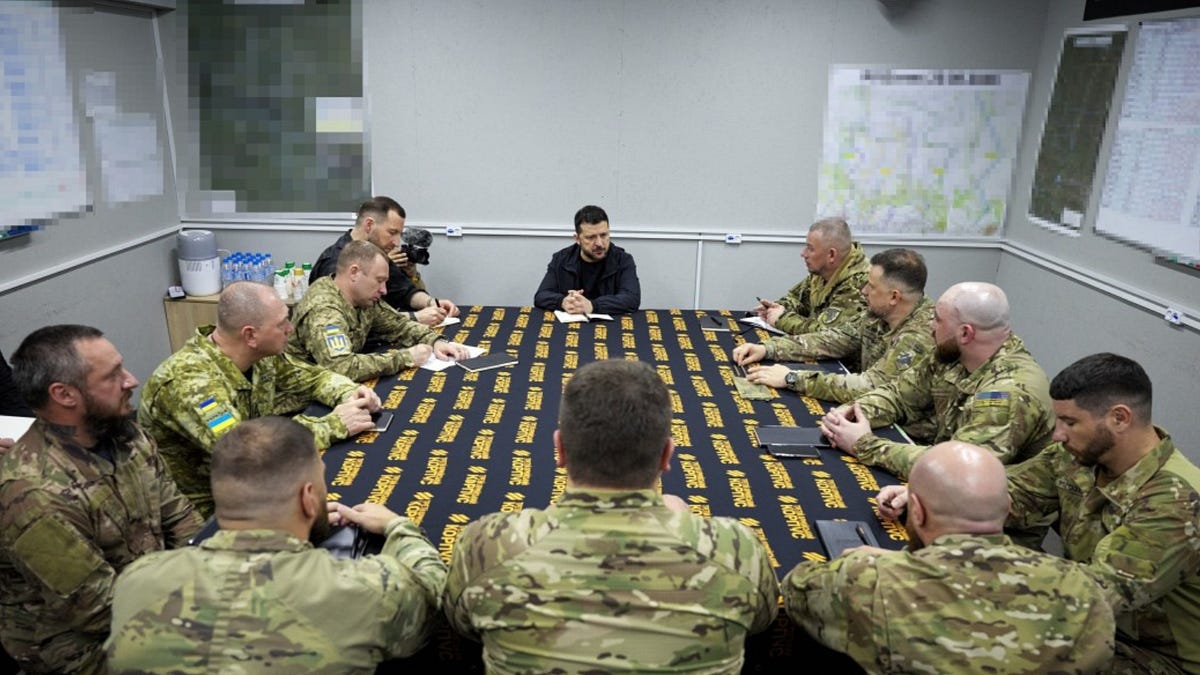
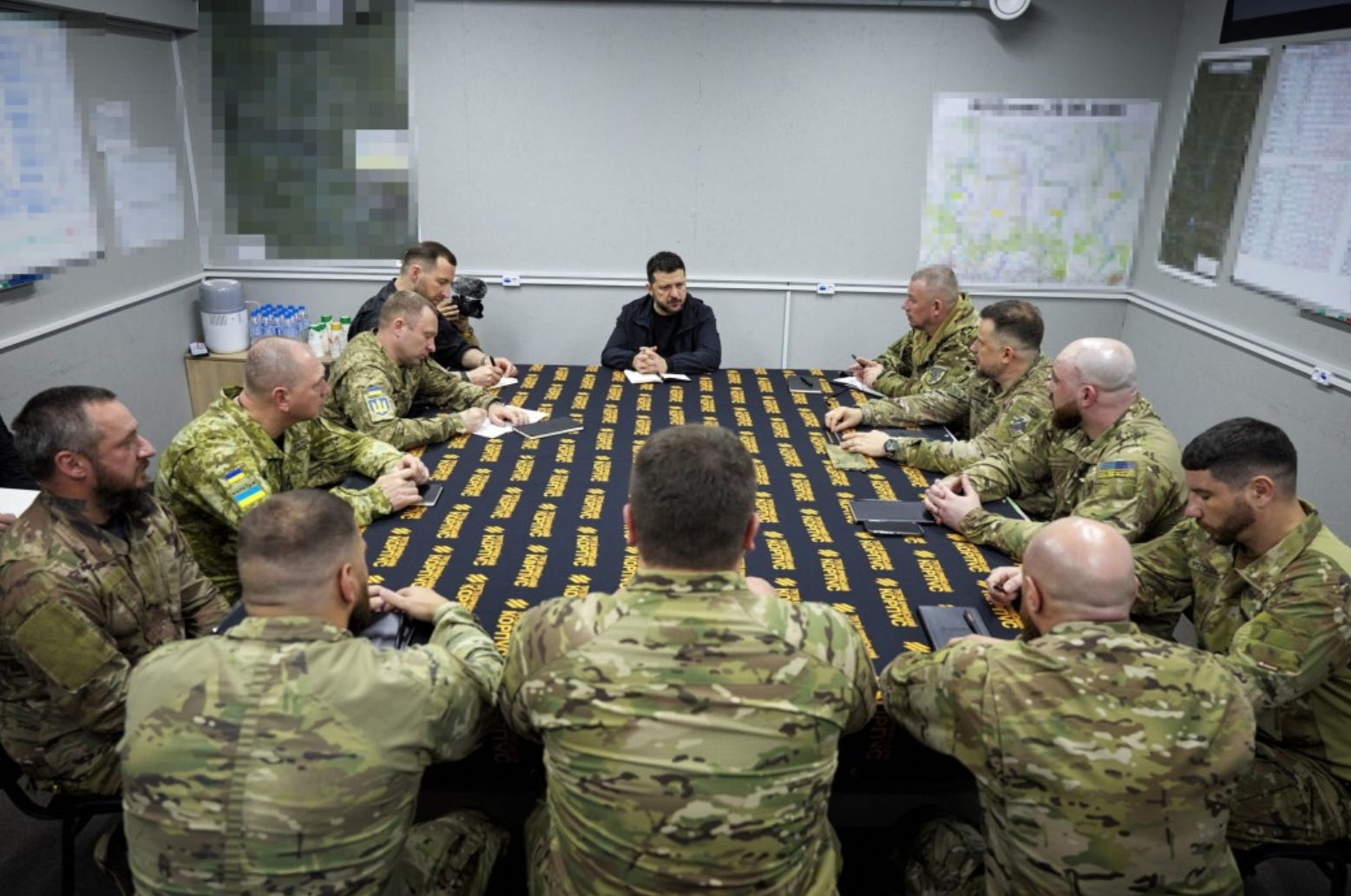
That is why Ukraine’s Operation Vivaldi, conducted in the Lyman Sector in Donetsk, has attracted so much attention. Its importance was underlined by a visit to the command post of one of the brigades engaged in the operation by Volodymyr Zelensky on 30 September (pictured above). He thanked the troops for liberating more than 125 square km of territory.
One of the impressive features of this operation has been the way that the 3rd Army Corps has shaped the narrative surrounding it. Calling it Vivaldi immediately invoked his famous ‘four seasons’ and thus suggested a sequence of moves that had been carefully composed. 3 Corps Commander, Brigadier-General Andrii Biletskyi, encouraged this impression when he confirmed that the operation was underway and successful on 15 September. If this was the first season completed, then the second soon followed.
On 20 September, the liberation of two more villages was announced. Biletskyi described this as a ‘turning point for the entire operation’ because a ‘key enemy hub was captured at the bridgehead of the large settlement of Nove’. This was important because ‘whoever controls the heights around Nove holds the initiative.’ On 28 September, Biletskyi had moved on to the third season, when he reported the liberation of three more villages in northern Donetsk, with 2,000 Russian casualties and over 250 Russian soldiers taken prisoner. We are now well into the fourth season but a finale has yet to be announced.
The speed with which we are moving through these seasons suggests rapid breakthroughs, but that would be misleading. Preparations for Vivaldi began last March, and serious fighting began in late spring. The way in which the 3rd Army Corps has progressively released details about the operation’s planning, execution, and current direction has led to some sceptical commentary, suggesting that it has all been hyped up to boost Ukrainian morale. There may be an element of that, but the gains made are real. It is too early to say whether this will count as a turning point in the land war. But it certainly gives Ukrainians confidence that they now have tactics that might enable them to gain sustainable advantages against their enemy.
In this post I will first look at what we have learnt about the operation, including about the importance of new command structures and the use of ground-based drones, before focusing on the issue of operational security. As I discussed in my previous post of 20 September, the effects of Ukrainian deception seem to have been accentuated by Russia’s continuing capacity for self-deception, and we have more evidence of this. I’ll conclude with a look at what this means for the next stage of the battle for Donetsk.