
Developers behind the future suburb of Tewin have submitted detailed plans for the City of Ottawa to approve, but it turns out that a project first pitched as an act of reconciliation now sees members of the Taggart development family at the helm of the Algonquins of Ontario Realty Corporation, their Indigenous partner.
In 2021, a former member of the Algonquins of Ontario (AOO), Lynn Clouthier, and former chief of Algonquins of Pikwàkanagàn First Nation Wendy Jocko called on Ottawa city council to allow them to develop rural land with their partner, Taggart Group.
At the time, Clouthier and Jocko were listed as directors of an offshoot realty corporation of the AOO, a body created in 2005 to negotiate a sweeping modern treaty.
Corporate records show a change on Dec. 11, 2022, naming Christopher Taggart as CEO of the Algonquins of Ontario Realty Corp., Michelle Taggart as president, current AOO executive director Jim Meness as a vice-president and Jocko as secretary.
Michelle Taggart heads Taggart subsidiaries Tamarack Homes and Tartan Homes, positions she took over from her uncle Chris, who is now in an advisory role with Taggart.
Veldon Coburn, a member of the Algonquins of Pikwàkanagàn First Nation who is a professor of public administration and governance at McGill University and has followed the file for years, said the Tewin project has been “usurped” by the Taggart family, leaving it “essentially now Taggart Inc.”
“I am flabbergasted. This is an organization that was created by and for Algonquins,” he said.
“This strikes me as very disingenuous. It seems to be a family on a multibillion-dollar initiative wants to be in the driver seat and use our nation’s name for their personal gain.”
No Indigenous ancestry
In September, the Algonquins of Ontario, Taggart Group and Caivan Communities formally submitted more than two dozen documents in an application to the City of Ottawa.
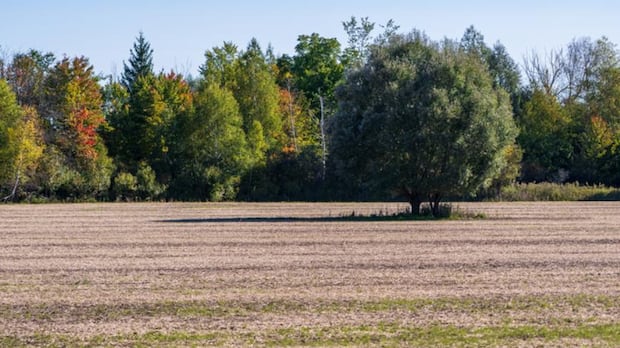
They intend to create a community just south of the Highway 417 interchange with Anderson Road, built on Algonquin principles of sustainability, biodiversity and respect for land, water and people.
Once complete, it could have 24,900 housing units and 64,500 residents — 20,000 more than originally planned.
The planning application this fall comes after several years of technical studies and community planning, set in motion after city council approved adding the Tewin land in a controversial 2021 decision.
CBC News asked Michelle Taggart for an interview about ownership of the AOO Realty Corp. at an event, but she declined and a written statement was sent instead.
Attributed to “the Tewin Team,” it said AOO Realty Corp. was originally incorporated with three Algonquin directors, but the board was expanded in December 2022 to include two Algonquins of Ontario members and two Taggart representatives.
“As the project moved from its initial formation into active planning and development, the governance structure evolved to include Taggart representatives with the development and project-delivery expertise required to advance a community of this scale,” the statement read.
Christopher and Michelle Taggart have no Indigenous ancestry, the Tewin Team wrote, but “their experience positions them well to lead the corporation through the complex work of moving Tewin from planning and vision to implementation.”
It called Tewin a “true partnership” where “each party contributes what they do best.”
“The Algonquins of Ontario (AOO) have led the cultural vision, stewardship principles, and community legacy, taking an active role in how development on their traditional territory takes shape,” reads the statement.
“Taggart brings the technical, financial, and delivery expertise needed to turn that vision into a functioning, sustainable community that will deliver much-needed housing in Ottawa.”
It said the partnership structure has been publicly discussed for years and is nothing new.
CBC News asked to speak with the executive director of the Algonquins of Ontario, Jim Meness, about the Taggarts being in the CEO and president roles of one of its corporations, and about whether the AOO still has a significant decision-making role and financial stake.
Meness’s response, which came not by the AOO but from the Tewin Team email account, called the project “reconciliation in action.”
He wrote that the AOO has pursued that goal through a lawful, transparent process, and he views its partnership in the Tewin project as a natural extension of that.
“It is providing profit sharing, educational opportunities, training and employment. The AOO is proud of this partnership,” Meness wrote. “Any suggestions to the contrary are inaccurate and hurtful to the progress we are making.”
Taggart a major landowner
Many of the parcels of land that formed the starting point for the Tewin development had been held by the Ontario government for several decades, intended for a “model city” beyond the Greenbelt in the 1970s that was never built.
Land registry records show the Algonquins of Ontario Realty Corporation purchased three dozen properties from the Ontario government for $16.9 million in 2020.
As part of the studies for the Tewin suburb, much of the land the AOO purchased has since been designated significant wetlands, and won’t be built upon.
The AOO told CBC News in 2021 that its land was bought separately from its treaty negotiations, under a first right of refusal due to the province’s duty to consult with Indigenous people, and it paid market value for the properties under an agreement with its financial partner, the Taggart Group.
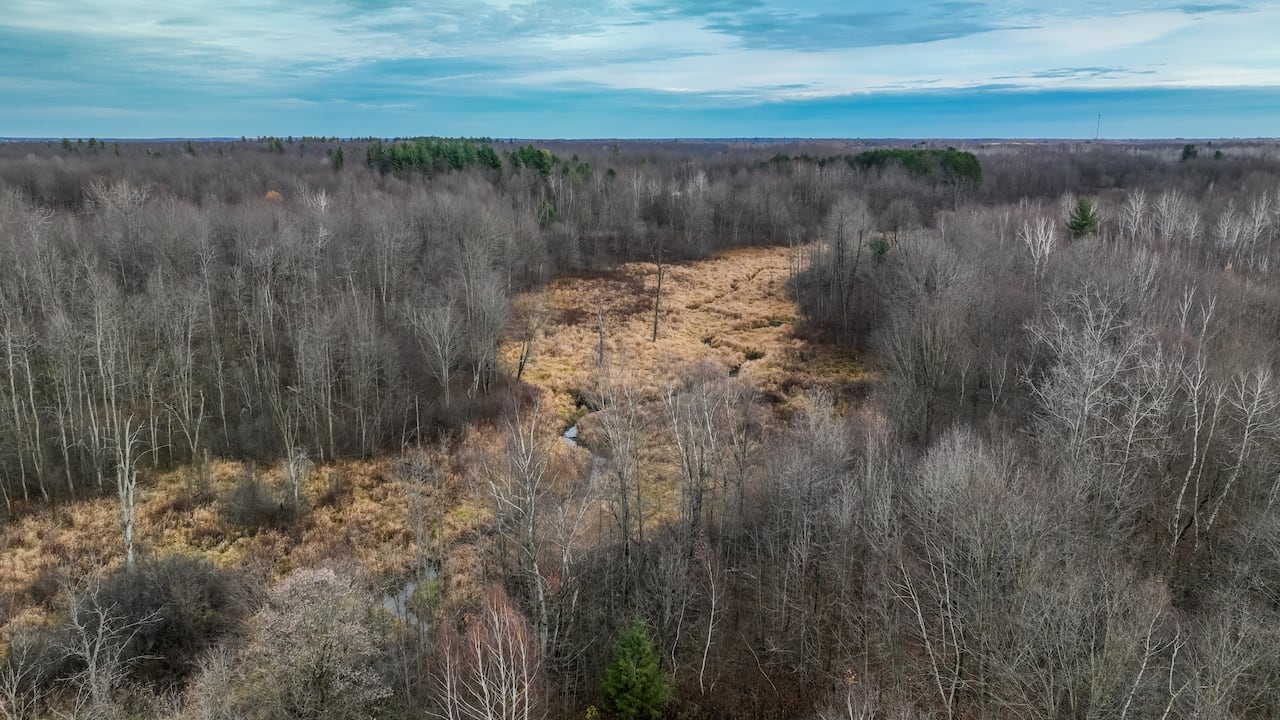 The South Bear Brook wetland in rural southeast Ottawa, beside the future development of Tewin, received provincially significant status in 2024. (Michel Aspirot/CBC)
Taggart is also a major landowner in the area.
As of 2021, its subsidiaries owned about two-thirds of the land in the area council set aside for Tewin in a vote expanding the urban boundary, with AOO Realty Corp. owning less than one-third.
During the process that led to that 2021 council vote, the wider area scored more poorly than other land closer to existing Ottawa neighbourhoods, owing largely to the substantial cost of building new infrastructure and clay soils in the area.
At the time, then mayor Jim Watson said Ottawa had a chance to prove it was serious about reconciliation by allowing First Nations to “develop a community, by their people, to create some economic opportunity.”
Kitigan Zibi chief sees ‘opportunism’
Council faced fierce opposition in 2021 from Algonquin leaders not involved in the AOO who called on Ottawa to not pursue development with the group.
The Algonquins of Ontario includes only one federally recognized First Nation, the Algonquins of Pikwàkanagàn, among its 10 members. Its chief, Greg Sarazin, declined to comment for this story.
In the 10 years since it signed an agreement in principle for a land claim, about one-quarter of AOO members have been removed from its voter list because they turned out to not have Indigenous ancestry. That included the late Lynn Clouthier, who had made the Tewin pitch years ago to city council and later resigned from the AOO.
All other federally recognized Algonquin First Nations are based in Quebec. They don’t recognize the Ottawa River as a border to their land rights and say they were never consulted on the Tewin project. In 2025, the Algonquin Anishinabeg Nation Tribal Council said it was considering a constitutional legal challenge against the City of Ottawa for failing in its duty to consult.
Kitigan Zibi Anishinabeg Chief Jean-Guy Whiteduck said it’s now even clearer that Tewin is simply a private venture “that has in our view little to do with reconciliation.”
The corporate leadership of AOO Realty Corp. underlines that point, he said.
“We definitely get the impression that opportunism is taking place here,” he said. “Individuals, private sector development, are using the native people.”
Tewin partners promise benefits to Algonquins
Over the years the Tewin partners have faced questions about how Algonquin people might benefit from the construction and sale of thousands of homes. At a committee meeting in 2021, Clouthier told councillors that profits would come to the Algonquins of Ontario Realty Corp. and be kept in trust.
Asked last week whether Taggart has any ownership stake in AOO Realty Corp., the Tewin Team said that AOO Realty Corp. is “the corporate vehicle through which the Algonquins of Ontario and the Taggart Group advance their partnership on Tewin.”
It said both AOO and Taggart will be “true financial beneficiaries.”
“The AOO are financial and decision-making partners in the Algonquins of Ontario Realty Corp., and their direction on how the land is used, restored and celebrated is at the centre of the plan,” its statement said.
“The AOO is a full joint venture partner and will share in the profits. In addition, there is an extensive benefits agreement that includes educational scholarships, training, job opportunities, and business opportunities.”
But Coburn isn’t satisfied with that answer.
“I think we can decidedly say that this has nothing to do with the Algonquins other than the fact that a large developing corporation is moving forward using our name and whatever sort of social license and political cachet it may have,” he said. “There is no reconciliation in this.”