
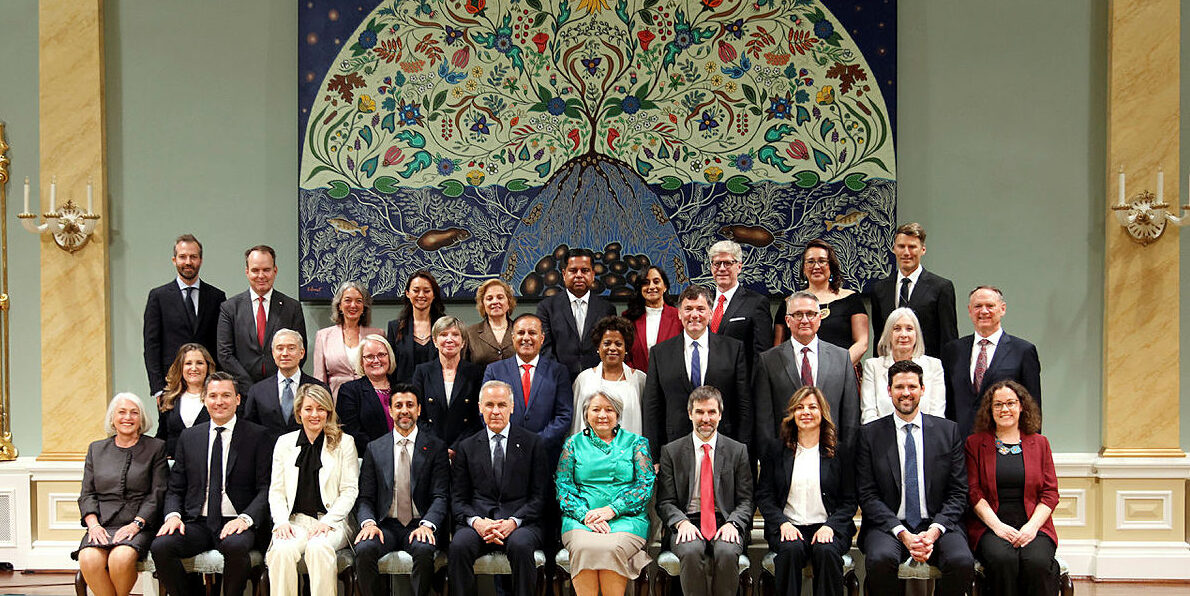
With the federal budget coming later this fall, some lobbyists and stakeholders are raising concerns about the limited access to senior cabinet ministerial and PMO officials, blaming “risk averse” staffers who fear for their ministers’ ouster in a future cabinet shuffle.
“The stakes are high. Perhaps the ministerial offices are thinking, ‘Wait a minute, we don’t want to make a mistake here,’” said one well-established lobbyist with a long history in the Liberal Party, in an interview with The Hill Times. “If you tell me not to make a mistake, the surest way I’m not going to make a mistake is I’m not going to do anything. That explains they are so risk averse.”
Several other public affairs consultants, who have been in the lobbying industry for years, said that it appears most of the staffers are overly careful and worried that if they make a mistake it could reflect poorly on their minister and could likely end up being a negative media story.
Since taking over as prime minister last year, Prime Minister Mark Carney (Nepean, Ont.) has only made some minor tweaks in his cabinet and has not undertaken any major shuffle.
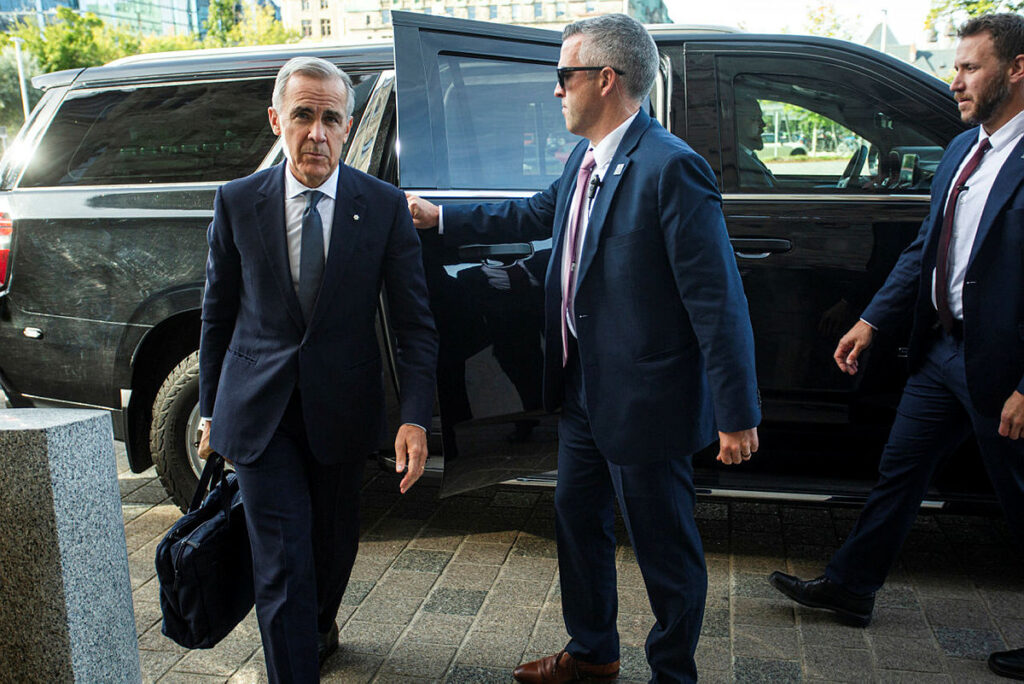 Since becoming prime minister last year, Mark Carney, left, has changed the budget calendar to the fall from the traditional spring release. The Hill Times photograph by Andrew Meade
Late last year, he was forced to make some changes after then-minister Steven Guilbeault stepped down in protest over Carney’s memorandum of understanding with Alberta over the building of a new pipeline. Guilbeault’s cabinet resignation triggered three changes: Marc Miller (Ville-Marie-Le Sud-Ouest-Île-des-Soeurs, Que.) was appointed as the minister of Canadian identity, culture, and official languages; Procurement Minister Joël Lightbound (Louis-Hébert, Que.) was named Quebec lieutenant; and Environment Minister Julie Dabrusin (Toronto-Danforth, Ont.) was given the additional responsibility for Nature.
In September of last year, Carney gave Government House Leader Steven MacKinnon (Gatineau, Que.) additional responsibilities of Transport after Chrystia Freeland stepped down to serve as special envoy to Ukraine.
Since then, speculation about a potential cabinet shuffle has been ongoing, keeping some ministers nervous about their political futures. The most recent speculated date for a potential shuffle is after next month’s midterm elections in the United States. This uncertainty has been keeping both ministers and their staff on their toes. Any time politicians, staffers, and Hill reporters run into each other in the Parliamentary Precinct or at a social event, one key topic of discussion is what they are hearing about the next cabinet shuffle.
“People are naturally nervous because they don’t have a sense yet of what Carney is looking for in success versus failure, how he defines it, how he evaluates it,” said a veteran lobbyist. “It [lack of access] could also just be [staffers] workload. Initial every week that you’re in in the minister’s office, the number of calls you get grows exponentially.
The source said their level of access to top officials under the Carney government has gone down since the last election. They said when Carney first took over, PMO policy staff were available to meet with almost anyone and were willing to give them an opportunity to make their case for any project they liked. After the meeting, if the staffers thought that a specific idea or project position was not feasible or did not fit the government’s agenda, they would decline any future meetings.
In contrast, now, when lobbyists or stakeholders reach out to top government officials, they often get “radio silence.”
Lobbyists who’ve been in the business for decades said they can take “no” for an answer, but receiving no answer at all to their outreach is frustrating. If the staffers are busy, they can tell lobbyists they will get back to them when they have time, but ignoring calls, emails, and texts is “disappointing.”
“If I’m proposing a dead horse, just tell me that,” said the source.
 Finance Minister François-Philippe Champage brought down last year’s budget on Nov. 4, 2025. It was unclear last week when he will release this year’s budget. The Hill Times photograph by Andrew Meade
“The normal channels aren’t working as well as they were. Initially, the rule was you could get to see them once, you don’t want to waste your meeting on the front end of your file. There’s a time and a place for everything, but a lot of people [senior staffers] would see them. But if you went in there and you didn’t have an ask or your ask was too ridiculous, you are not going to get it again.”
According to the lobbyist registry database, there are currently 5,287 active registrations, which mention the Prime Minister’s Office as a department they may lobby. Last month, 207 communication reports were filed to the lobbying registry, which does not mean that 207 different lobbyists interacted with the PMO. It could mean one lobbyist may have had 20 communications with Carney’s office. From March 2025 when Carney took over as prime minister, until Sept. 30, 3,189 reports were filed to the registry.
Meanwhile, lobbyists interviewed for this article said that a significant number of staffers to cabinet ministers are in their 20s or early 30s, and, in most cases, are recent university graduates. They have not spent enough time in politics to understand its complexities and dynamics. It’s well-known within Hill circles that seasoned political operatives are unwilling to join the ranks of political staff because of the mandatory five-year lobbying ban after leaving government. Consequently, many have chosen to remain in the private sector rather than working on the Hill. The ban was first introduced by the Stephen Harper government, and since then, a significant number of veteran political hands have decided to stay outside government.
Public affairs consultants also pointed out in interviews last week that some of the most senior players in the current government have backgrounds in diplomacy, business, and finance, and they probably do not fully appreciate the importance of managing stakeholder relationships in politics.
As of last week, it was not known when the next federal budget would be brought down. Usually, the incumbent finance minister makes this announcement before the House Finance Committee only a few days in advance of budget day. Until Carney became prime minister last year, budgets were traditionally released in the spring. That changed under the new government, and this year the budget will be tabled again in the fall. Prior to the budget release is the busiest time for lobbyists and industry stakeholders to pitch their ideas to the government.
New budget calendar could be reason for limited access
Brian Klunder, a veteran cabinet ministerial staffer in the Jean Chrétien and Paul Martin cabinets, and now a partner at Temple Scott Associates, said that he’s had no issue in receiving access to senior ministerial aides or the PMO. He said one reason why some public affairs consultants could be having difficulty securing meetings is because of the coming budget, and staffers likely are receiving a higher-than-usual volume of meeting requests.
Klunder said the government’s emphasis on the Major Projects Office is also attracting a lot of interest from lobbyists and stakeholders. He said the Carney government is functioning differently from previous administrations because of its focus on getting projects moving fast and being more results oriented.
 Brian Klunder, a partner at Temple Scott Associates, says he’s not had any issue with access to the current cabinet. He said public affairs consultants should focus on projects and ideas that are on the government’s priority list. Photograph courtesy of Brian Klunder
Another factor, Klunder said, is that some stakeholders and public affairs consultants may be trying to get meetings on issues that are not on the government’s top priority list. Carney’s top priorities include the economy, the Canada-U.S. trade relationship, and major projects. He said this government is most interested in ideas and projects that are shovel-ready and could be moved forward quickly.
“There’s a lot of big issues at play, whether it be major projects, the fall budget,” said Klunder. “So that’s moved everything up. They’re [staffers] open to stakeholders that are engaged and thinking about things a little bit differently, especially in relation to the agenda. If you are going for a meeting, you have to focus on what their priorities are, and how do your priorities match up with theirs [the government’s].”
As budget day approaches, Klunder said, the number of issues receiving attention tends to narrow. Now that the budget is tabled in the fall, stakeholders want to meet with ministerial staff before key decisions are finalized. He said the new budget calendar is likely one of the reasons why some stakeholders feel access has become limited. At the same time, trade and tariff issues are negatively impacting numerous sectors of the economy, requiring senior staffers to spend more time assessing, researching and gauging theses impacts which leaves little time for meeting with stakeholders, he said.
“You don’t have the late fall and early winter to get ready for a budget, which is the normal cycle,” said Klunder.
“Like now, it feels sort of truncated. … We feel like we’re being heard, but we’re being very specific in how the things that we’re asking for, and as far as meetings, are relating to their ministers and the government’s priorities.”
Klunder said that stakeholders’ feedback is important when the government is considering different policy ideas as it helps them understand how those decisions would likely impact Canadians and businesses on the ground. For example, if Ottawa is considering measures related to the ongoing trade dispute with the U.S., different industries can predict the possible positive or negative effects of those measures on their respective sectors.
Get Today’s Headlines Newsletter
Your quick scan of the news you need each weekday to be the smartest person in the room.
By entering your email address you consent to receive email from The Hill Times containing news, analysis, updates and offers. You may unsubscribe at any time. See our privacy policy
“It’s not to say don’t do it, but understand these are the impacts you might need to respond in different ways,” said Klunder.
“It’s also when you’re bringing an idea to them, understanding how they’re going to perceive that idea and how that can be implemented as policy.”
Another lobbyist interviewed for this article said that it is important for any government of the day to hear contrarian views as otherwise it risks falling into an “echo chamber” and ends up making decisions without fully understanding alternative perspectives.
“I get nervous when governments function in an echo chamber or a vacuum,” said the source. “We had a lot of that in the last [Justin Trudeau] administration.”
The source said that the best way to deal with the lobbying community is to let them “have their say” and should be told they can’t always “have their way,” but don’t ignore them.
arana@hilltimes.com
The Hill Times

Abbas Rana is the assistant deputy editor at The Hill Times. He reports on parliamentary caucuses, nomination contests, party leadership campaigns, the Prime Minister’s Office, and cabinet. Rana won the 2025 Ontario Community Newspaper Award for Best News Story (circ. over 8,000) for his story on Conservative nominations in that year’s election. Contact him at arana@hilltimes.com. See all stories BY ABBAS RANA