
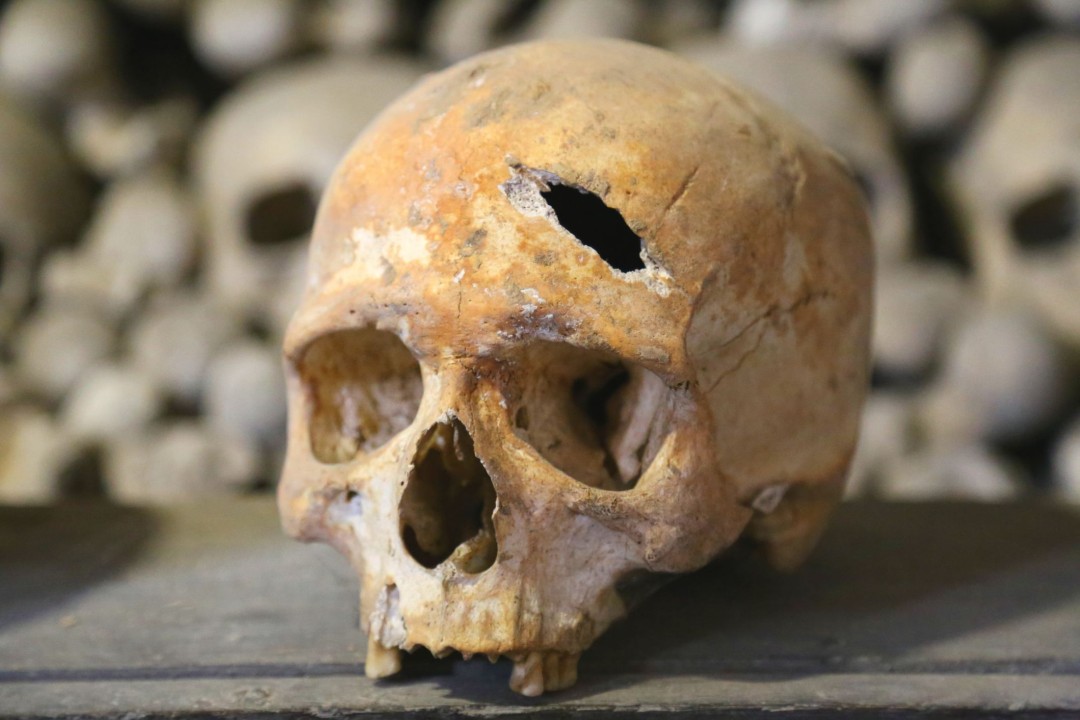
Some of ancient Egypt’s earliest elites may have followed their ruler into death via human sacrifice. A fresh analysis of skulls from a 5,000-year-old royal cemetery suggests a number of royal retainers, including craftspeople and ladies in waiting, were likely killed as part of funerary rituals. In a study in Frontiers in Environmental Archaeology, Purdue University researcher Roselyn Campbell re-examined 46 skulls from graves clustered around the First Dynasty tombs of King Djer, King Djet, and Queen Merneith at Umm el-Qa’ab near Abydos, per Ars Technica. She found signs of likely fatal blows on 18 skulls, including fractures and one chop wound to the eye.
Egyptologist Flinders Petrie, who excavated the site in the 1920s, had proposed human sacrifice but reported no trauma; Campbell argues he may have misread fatal injuries to the skull as damage that occurred well after death. The blows appear to have come from flat wooden or antler tools rather than the maces shown in royal smiting scenes, per the Guardian. Experts say the work offers rare physical evidence of short-lived “retainer sacrifice,” which seems to vanish by Egypt’s Second Dynasty. Campbell notes that the retainers may have been terrified or resentful in the face of death—or may have believed sacrifice would bring them “an eternal life in the service of the god-king.”