
Israel and Ireland’s UEFA Nations League rematch on Sunday ratcheted up tensions between the two teams, in a sports drama where emotions over the Gaza war have fueled theatrics as intense as the match itself.
During the 1-1 draw played in Serbia, Ireland’s captain declined, as in the last match, a pregame handshake with his Israeli counterpart, Irish players bowed their heads during the playing of the Israeli national anthem and the team donned black armbands to signal their disapproval of Israel’s actions in Gaza.
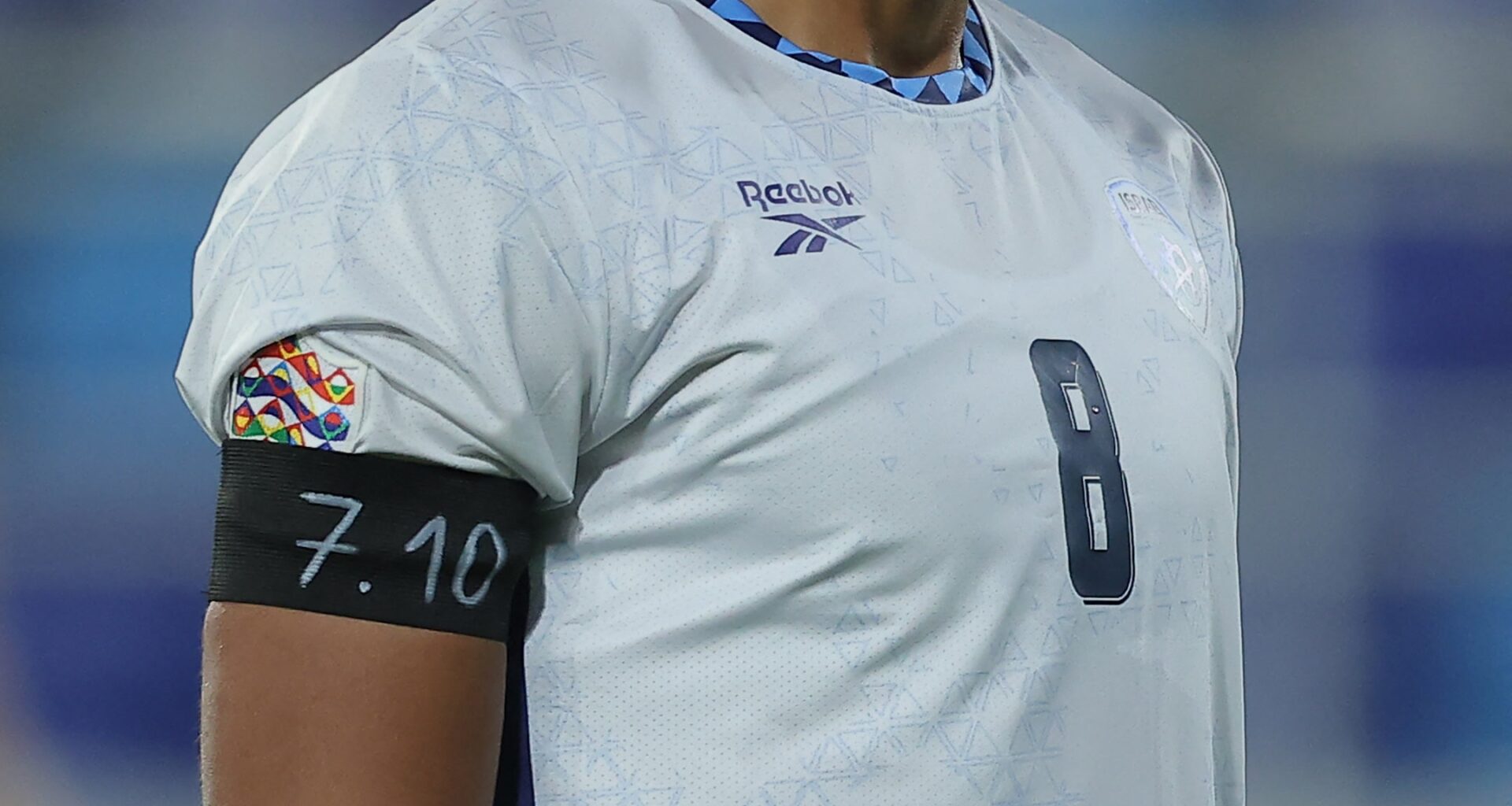
Israeli players also wore black armbands displaying “7/10,” in recognition of the anniversary of the Oct. 7, 2023, Hamas attack.
Tensions also spilled off the pitch.
Staffers for the Irish team abruptly cut short a Saturday press conference with Irish head coach Heimir Hallgrímsson after a tense back-and-forth between Israeli journalists and Ireland’s press officer, Kieran Crowley.
While both Hallgrímsson and Israeli coach Ran Ben-Shimon, in his separate meeting with the media, insisted their focus remained on the game itself, Ireland’s press conference took a turn when an Israeli journalist asked Hallgrímsson for his thoughts on the flydubai hijacking last week.
“What do you say about the people that you support? Their ideology is based on murder,” the reporter asked. “Just this week, one of them tried to kill 170 Israeli passengers, including 27 innocent children and thousands of others.”
Crowley interrupted, saying, “We are not doing any questions like this today. We are doing football questions.”
Another Israeli reporter then asked Hallgrímsson about his team calling Israeli players “monkeys” during the Sept. 27 match. Crowley again interrupted, saying, “That is completely untrue. … That’s a lie. You’ve just broadcast a lie.”
The press conference was then cut off, as the reporter argued with a staffer who confiscated the microphone. UEFA barred the two Israeli reporters from the postgame media gathering on Sunday.
The incident came after months of controversy leading up to the Sept. 27 match between the two sides, which Ireland faced intense pressure to boycott. Ireland has a long history of pro-Palestinian policies and anti-Israeli sentiment.
There were additional signs of tension on the field, with Ireland’s head of athletic performance, Damien Doyle, alleging that an Israeli player spat at him as the teams left the field at the end of the first half. Israel’s football association denied the accusation.
After the match, Hallgrímsson called on UEFA to ensure the two teams do not face each other in the future.
“That’s not ours to decide, that’s UEFA,” he said. “I wouldn’t want or wish any national team to go through what we have gone through these two weeks. UEFA needs to step in and do something.”
Hallgrímsson also indicated that he had made a “mistake” by sharing his stance on the war in Gaza. In the lead-up to the matches, he had told reporters, “We’re not playing with genocide, we’re playing against genocide. We’re playing against Israel, we’re not playing with Israel.”
On Sunday, Hallgrímsson added that “my feelings and my opinions should be set aside when I am spokesman for an organisation.”
Sunday’s game included Irish player Finn Azaz, whose mother has Israeli heritage, as a substitute.
As the Year Turns, Support the Journalism You Trust. JTA covers the stories shaping Jewish life around the world — with the depth this moment calls for. As you reflect on the year ahead, consider a gift that keeps independent Jewish journalism strong.
One-time
Monthly
Choose an amount to donate
$72$180$360$500
Support Us