
Whatever happens in the coming months, the prospects for a lasting peace between the United States and Iran are dim.
Iran’s nuclear program, missile and drone arsenal, and proxy groups still stand; control of the Strait of Hormuz remains contested; and perhaps most important, Russian and Chinese support is facilitating a rapid Iranian reconstitution. Meanwhile, the war has exposed fundamental vulnerabilities in the United States’ Middle East posture and munitions inventories, and U.S. forces have exited the conflict exhausted and depleted.
Whatever happens in the coming months, the prospects for a lasting peace between the United States and Iran are dim.
Iran’s nuclear program, missile and drone arsenal, and proxy groups still stand; control of the Strait of Hormuz remains contested; and perhaps most important, Russian and Chinese support is facilitating a rapid Iranian reconstitution. Meanwhile, the war has exposed fundamental vulnerabilities in the United States’ Middle East posture and munitions inventories, and U.S. forces have exited the conflict exhausted and depleted.
The White House and Department of Defense should expect a more difficult Iran in the months ahead.
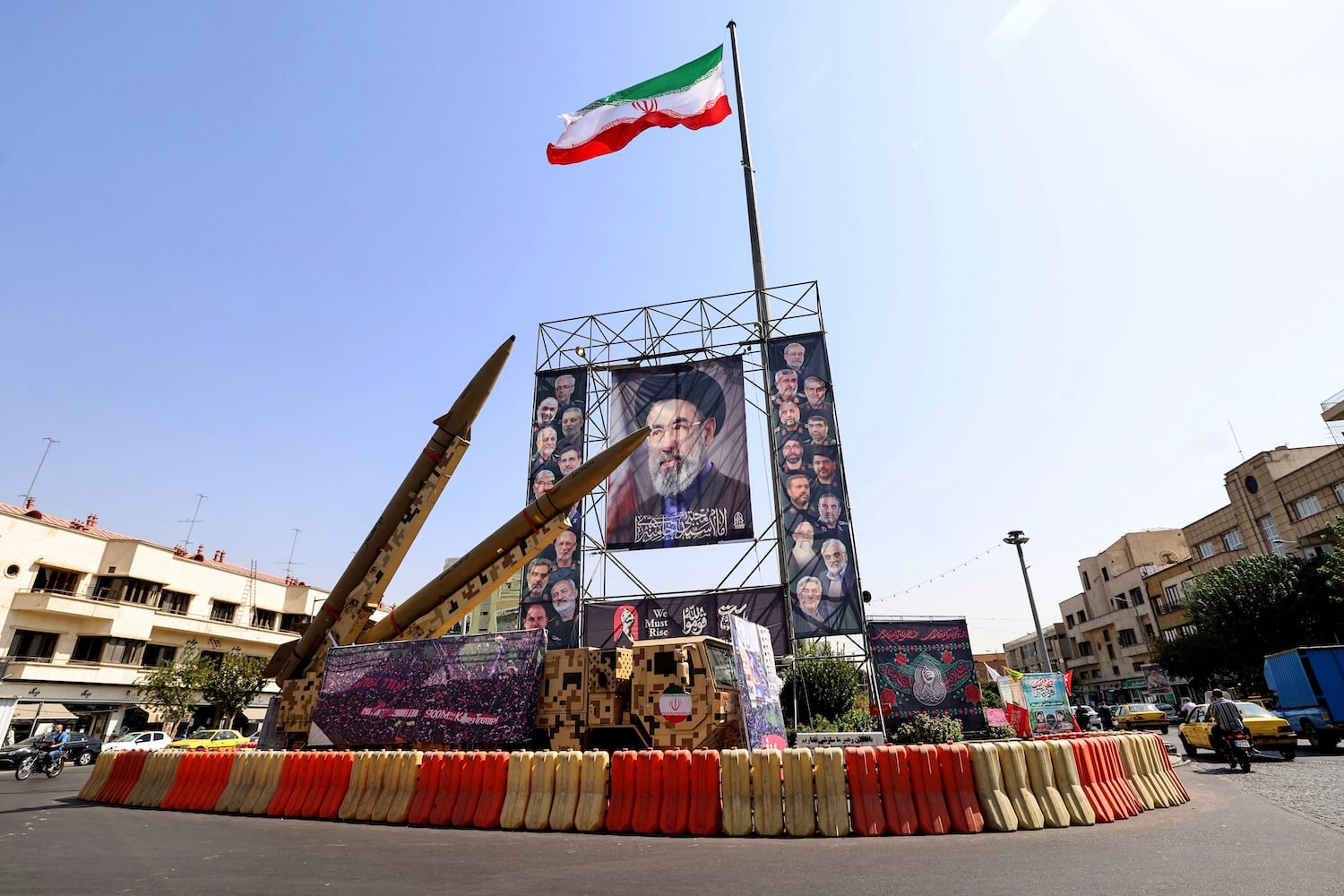
In seven months, Iran has validated the utility of its drone and missile arsenal, successfully driven a wedge between Israel and its Arab neighbors, and degraded U.S. forces. Simultaneously, Iran’s mines, small boats, drones, and missiles have largely closed the Strait of Hormuz, holding global energy markets hostage. Rather than isolate Iran from Russia and China, the conflict appears to have only increased their defense industrial cooperation. Buoyed by these successes and motivated to deter future U.S. and Israeli interventions, Iran has every incentive to reconstitute its missile and drone arsenal, learn from this war, and continue its bid for regional dominance.
The question for the United States is therefore not just how to end the current conflict, but how to avoid a new disaster that dwarfs the losses and damage of recent months. We recently ran two war games exploring what a future round of fighting might look like. The results were grim. An honest appraisal suggests that Washington must change its approach to missile and drone defense in the region or risk major losses.
Set in late 2027, our war game was based on a scenario in which an Israeli attempt to “mow the grass” sparked a new round of fighting. By this point, both Russia and China had helped rebuild and upgrade Iran’s drone and missile arsenal—an activity already underway—and Iran had incorporated Russian strike tactics to make its attacks more deadly. In other words, the Islamic Republic had more offensive tools and a sharper sense of how to use them.
We also assumed that at this point the U.S.-led regional coalition possessed more numerous and advanced drone defenses. More generously, we assumed that U.S. and regional actors had replenished their Patriot, THAAD, SM-3, and SM-6 stockpiles (a process that will likely take until at least 2029), and that they were able to rapidly reposition defenses as the crisis boiled into conflict.
Despite these optimistic assumptions, things still ended badly for the U.S. side. In both war games, the Red team (Iran and its proxies) inflicted substantial initial damage on its chosen targets. One Red team retaliated against U.S. military bases, while the other focused on Israeli critical infrastructure and air bases. In both scenarios, ballistic missiles cratered runways while drones and cruise missiles targeted warehouses, fuel, aircraft, and air defense radars, rendering U.S. bases inoperable. Israeli air bases were temporarily closed, though extensive hardening limited the damage. Red also launched hundreds of ballistic missiles and drones at Israel’s electric grid and a desalination facility, knocking out power and forcing water rationing.
Strains on the U.S. inventory were no less significant. In both games, the Blue team expended hundreds of its high-end Patriot, THAAD, and Standard Missile interceptors, rapidly depleting newly restored supplies in just days. Counter-drone systems occasionally offered useful point defenses, with air-launched APKWS rockets from defensive counterair patrols offering the most flexible drone protection. But even these improved capabilities were overwhelmed by Iran’s layered, multiwave drone and missile salvos.
A major insight that emerged from our war games was the dangerous potential for Iran to increase the scale of its attacks while focusing on a handful of targets. After the first few days of the 2026 war, Iran launched an average of 30 to 50 missiles and 100 drones a day, spread across the region. In sharp contrast, the Red teams in our war game typically fired 150 to 300 weapons at just one target. Larger salvos, concentrated on fewer targets, exhausted defenders’ ready interceptors and delivered scores more missiles and drones before batteries could be reloaded. Red’s inventories were large enough to sustain attacks of this size and scale continuously for weeks—if not months—while Blue only had several reloads’ worth of missile defense interceptors and struggled to destroy Iran’s dispersed mobile launchers.
This threat is not far-fetched, and the United States’ current approach will not be enough to counter it. Despite significant effort, U.S. industry cannot replace the high-end missile interceptors fired in the 2026 war fast enough to be ready for a near-future conflict. Should full-scale fighting resume against a reconstituted Iran in the near term, coalition forces will run out of Patriot, THAAD, and Standard Missile interceptors in days, not weeks. Though offensive counterattacks are sometimes seen as a solution, “shooting the archer” has proved difficult: Combined U.S. and Israeli offensive airpower has failed to totally eliminate the Iranian drones and missiles that hold the Middle East at risk. Moreover, U.S. aircraft increasingly operate from distant bases in Jordan, Israel, and beyond to limit their vulnerability to attack, making it even harder to hunt for small, mobile Iranian launchers.
To prevent this scenario from becoming a reality, several things need to change.
Most glaring, the Gulf needs a more integrated sensing and shooting network. With only minutes to react to Iranian drone and missile salvos, early detection buys critical time to communicate and avoid mistakes. The United States has historically taken a leadership role in intelligence-sharing among Gulf countries, but it faces challenges from partners’ hesitation to participate and share information. The time has come to break these silos and unlock increased air domain awareness over the Persian Gulf.
Equally important, the United States and its regional partners not only need more air defense interceptors, but also a more selective approach to using them. Highly capable PAC-3 missiles have become stopgap tools in the absence of more cost-effective solutions. But this is not a sustainable arrangement. These missiles should be conserved for high-end threats and not fired at drones except when the intended target is of sufficiently high value. Deploying a more robust and layered set of interceptors will help ensure that high-end missiles can be used more selectively. This, in turn, also requires fielding more cost-effective drone and cruise missile defenses. Senior Pentagon leaders must develop, test, procure, and deploy new systems as quickly as possible.
Finally, Washington must make its regional assets harder to find and destroy. This requires hardening bases, deploying decoys, and dispersing assets in order to complicate Iranian targeting. Economic infrastructure will likewise require greater redundancy and resilience, including by embedding spare capacity and burying key assets, so that commercial hubs can absorb future strikes without halting operations. With Washington facing long lead times for interceptor deliveries, these forms of passive defense are particularly important in the short term.
U.S. efforts to deter and defend against a future Iran will ultimately depend on a larger strategic question: What should U.S. objectives and posture in the Middle East be? The United States cannot be everywhere, and some bases within range of numerous short-range Iranian weapons may be indefensible. The White House and Congress must measure these emerging risks and decide whether American forces will simply defend transportation and sea lines, or whether they will also defend and deter against future attacks on regional allies. These questions directly weigh on the types of air defenses the United States needs and how urgently they are needed.
War games are not predictive, but they provide a safe environment to fail and learn. If the United States does not reevaluate its approach to air defenses in the Middle East, it will risk catastrophic losses in the future. The question for U.S. leaders now is whether they can adapt before time runs out.