
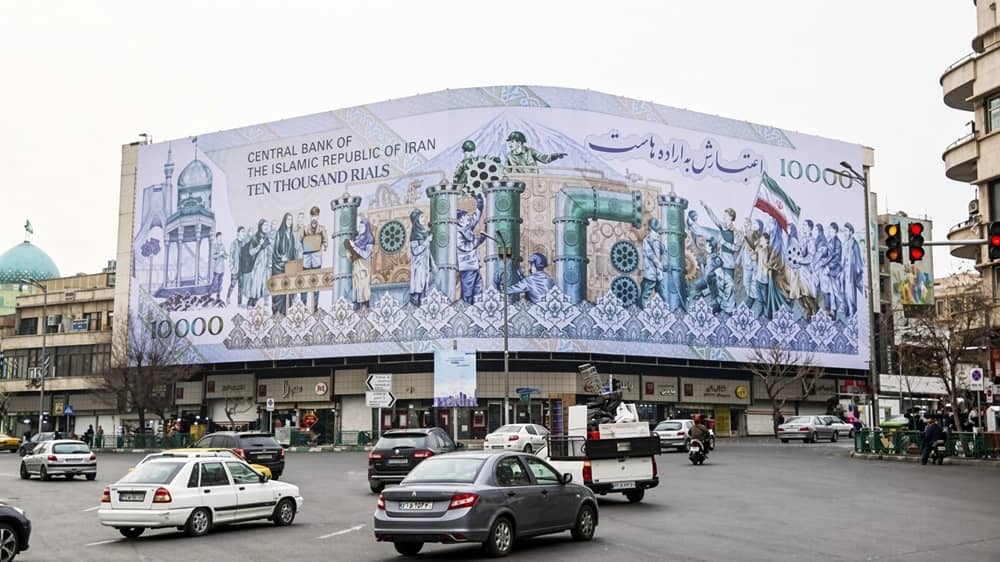
Senior officials are increasingly describing Iran’s economic deterioration as a security vulnerability. Judiciary chief Gholam-Hossein Mohseni-Ejei warned on October 5, 2026, against “anything that could… anger the people,” coupling that warning with demands for “cohesion” and vigilance against an enemy exploiting internal divisions. State television carried the remarks, while the regime-aligned Arman-e Melli headlined them “Let’s Not Anger the People.” The point was not a promise of economic relief; Ejei was literally warning against a nationwide unrest.
That anxiety is reinforced by unusually blunt economic admissions. Ali Babaei Karnami, chairman of parliament’s Social Committee, told ILNA on October 5 that inflation in “some goods” had reached 150–160% and claimed workers and retirees were showing “restraint” despite dissatisfaction. “If the conditions and course of the country were normal,” he added, “there is no doubt other things would happen.” The free-market dollar, meanwhile, has traded around 270,000 tomans after another steep slide in the rial, according to regime-aligned Nournews. MP Ehsan Azimi-Rad blamed currency and basic-goods price surges partly on “incorrect management” and demanded resignations if top economic officials could not manage “wartime conditions.”
State security forces are using the same vocabulary for the economy. SSF chief Ahmad-Reza Radan called merchants “launcher operators of the economic war” and economic “officers,” while urging joint police-market action against hoarding. In the state-television version, he told the bazaar, “The time is a time of war,” and warned merchants not to “play the enemy’s game.” State television’s account also quoted Radan describing hoarders and smugglers as threats to “economic security.” Commercial behavior and bazaar stability are thus being folded explicitly into the regime’s security framework.
Two police officers were killed in another armed attack in Sistan and Baluchestan.
Meanwhile, the dollar remains near 270,000 tomans—and authorities now threaten websites that publish what they call “false” exchange rates.
On #WorldTeacherAppreciationDay, 47 Iranian teachers…
— NCRI-FAC (@iran_policy) October 5, 2026
Economic dysfunction reaches the cabinet
The resignation of Oil Minister Mohsen Paknejad has become a focal point for a deeper dispute over oil revenues and the opaque “trustee” networks used to move money under sanctions. Energy Committee member Mohammad Rashidi denied that Paknejad resigned because of controversy over roughly 80 million barrels reportedly assigned through four trustees, but conceded that “whoever comes after Mr. Paknejad must resolve these issues.” The denial leaves the underlying problem intact.
The judiciary on October 6 supplied unusually large official numbers. Spokesman Ali Kazemi said 71 trustee-related cases had been opened and about 26 trillion tomans recovered. He also said 832 cases involving foreign-exchange obligations had produced €9.5 billion in returned or settled obligations. These are regime-produced figures, not independently audited accounts, but they show the scale of the state’s concern over missing or delayed foreign-currency proceeds. Hours later, acting oil minister Hamid Bourd said the ministry’s job was to sell oil, while trustees and money transfers belonged to the Central Bank and banking system.
The governance problem extends beyond oil. The state inspectorate said it had identified 344 state-owned companies, 82 of them loss-making, yet some had still paid management bonuses; one refining company was forced to return board bonuses and an allegedly unlawful “social responsibility” payment. Presidential adviser Noureddin Ahi separately argued that Pezeshkian should remove ineffective managers, saying “consensus” should not mean tolerating incompetence. MP Mehdi Kouchakzadeh told Pezeshkian’s son that “an elementary-school child understands more than you” while attacking currency policy.
Clashes outside Zahedan, and a security officer killed in Rask—an incident authorities initially downplayed.
Meanwhile, a senior parliamentary figure says Iran’s economy is “considerably worse,” food #inflation has topped 121%, and energy shortages are disrupting production.…
— NCRI-FAC (@iran_policy) October 1, 2026
Coercion expands alongside warnings about anger
Parliament on October 6 approved Article 20 of its “countering foreign infiltration” bill, imposing degree-four imprisonment and permanent professional disqualification for passing unpublished official data to a “foreign agent” without authorization. It also approved Article 22, barring Iranian citizens from interviews with media designated “hostile” by the Intelligence Ministry and attaching degree-six penalties. The breadth of these categories expands the legal perimeter around information flows precisely as officials emphasize “infiltration.”
The judiciary is simultaneously signaling renewed compulsory-hijab enforcement. Kazemi said noncompliance is a “flagrant offense,” police must refer offenders to judicial authorities, and prosecutors nationwide had been instructed to pursue the issue. He said “special measures” had begun against what the judiciary calls organized “norm-breaking.” In the same briefing, Kazemi said 250 cases concerning alleged cooperation with Israel or other hostile states involved 1,895 defendants—94 media workers and 1,801 others—with 70 indictments. He separately put cases connected to the two recent wars at 476, with 163 indictments.
Three explosions shook #Zahedan on the anniversary of Bloody Friday as Iran’s point-to-point inflation hit 89.8%, the dollar crossed 256,000 tomans, teachers and nurses quit, internet instability spread and the state expanded loyalist mobilization.
The pressures are increasingly…
— NCRI-FAC (@iran_policy) September 30, 2026
Pressure is visible on the street as well. In Semnan, purchasers of vehicles from Farda Motor gathered outside the provincial judiciary on October 6 to protest what they described as an unjust effort to impose a settlement in their case. The protests give concrete context to Babaei Karnami’s warning: organized economic grievances remain active, while senior officials are openly acknowledging the risk that continued hardship could erode the public “restraint” on which they currently rely.
The clearest signal from the past 48 hours is convergence. Economic stress is feeding disputes over competence, oil money and currency management; senior security and judicial officials are warning against provoking public anger; and the same institutions are widening controls over information, dress and alleged “infiltration.” The regime’s own language increasingly treats economic management, social discipline and political security as parts of the same problem.