
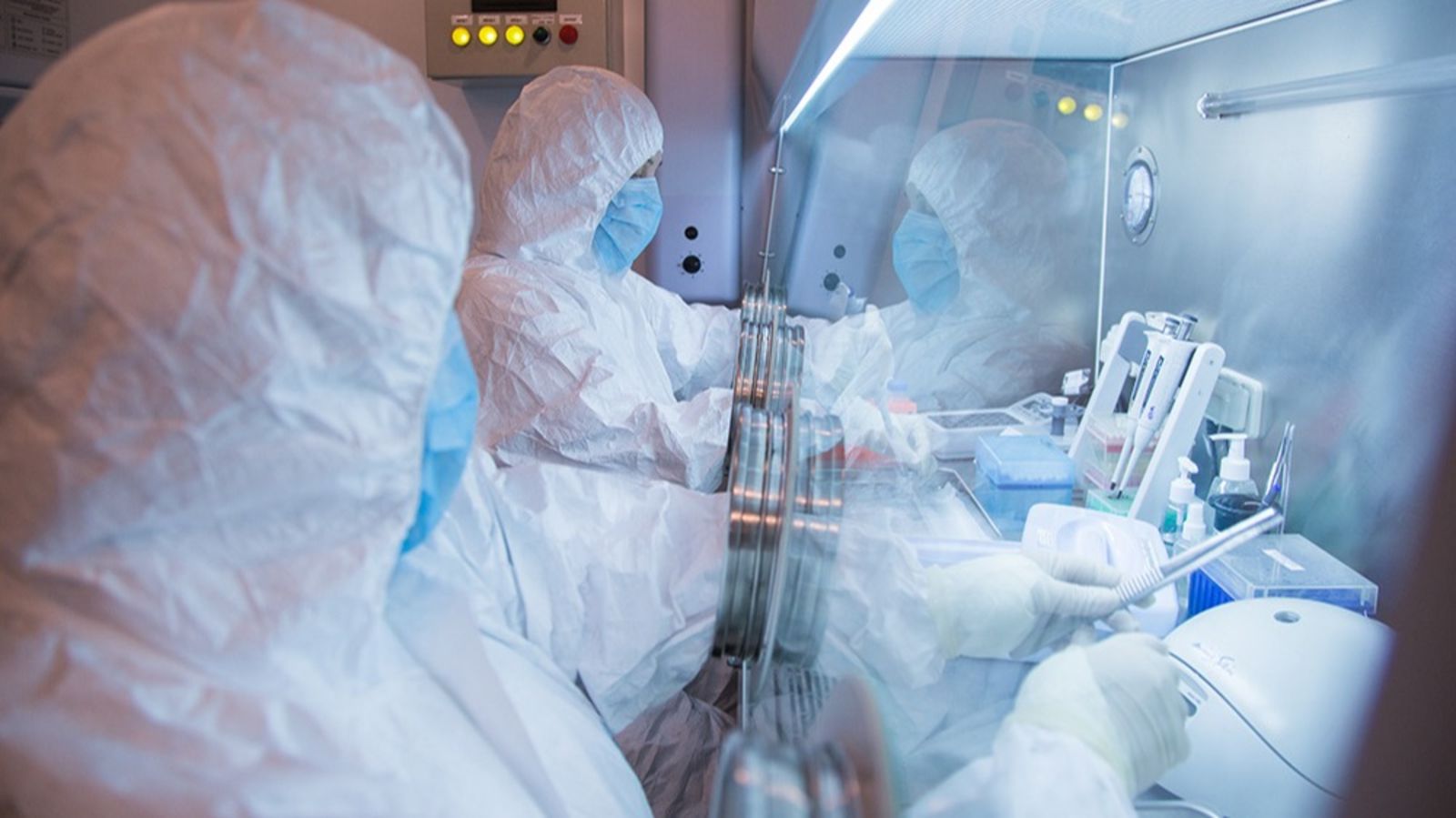
How worried should we be about the death of a Russian plague lab worker? ITV News Science Correspondent Martin Stew explains what we know so far
Russian and US authorities are closely monitoring contacts of a laboratory worker in Russia who died after they may have been exposed to the pneumonic plague.
The woman, 28, worked at the Irkutsk Anti-Plague Research Institute of Siberia and the Far East and died last week in a hospital in Shelekhov, a town just outside Irkutsk, according to local media.
The World Health Organisation (WHO) says the possible case of pneumonic plague presents “very low” risk outside of Russia as investigators look into what caused the lab employee’s death.
“There is currently no indication that we are dealing with anything similar to the pandemic,” WHO spokesman Christian Lindmeier said.
Meanwhile the UK Health Security Agency (UKHSA) has said the “public health risk from plague to the wider UK population currently remains very low”.
Subscribe free to our weekly newsletter for exclusive and original coverage from ITV News. Direct to your inbox every Friday morning.
The hospital where the worker was taken has been placed under quarantine and is no longer admitting or discharging patients, Mayor Maxim Modin said on Friday.
Russian authorities said they have found no evidence the woman’s illness was caused by any of the pathogens she worked with, but the case has raised alarm following unconfirmed media reports suggested she might have died of pneumonic plague.
What is pneumonic plague?
WHO describes pneumonic plague as a less common but severe form of plague, a disease caused by Yersinia pestis – a bacterium usually found in small mammals and their fleas.
The incubation period for pneumonic (lung-based) plague can be as short as 24 hours, the organisation says, adding that it is the most virulent form of the disease.
It is a less common but severe form that can spread between people through respiratory particles.
If untreated, the illness can be fatal, but recovery rates are high if detected and treated in time, WHO says
Symptoms include shortness of breath and coughing, often involving the coughing up of blood.
The more common form of plague – bubonic plague – is caused by the bite of an infected flea, and can develop into open sores filled with pus.
Pneumonia is a form of acute respiratory infection that is mostly caused by viruses or bacteria, and is spread generally through contact with infected people or from airborne droplets.
WHO says pneumonia is the single largest infectious cause of death in children worldwide.
Anna Popova, head of Russia’s public health watchdog, Rospotrebnadzor, flew to Irkutsk and met with Governor Igor Kobzev and other officials on Friday.
Kobzev said everyone who came into contact with the woman is under medical supervision. He didn’t identify the infection and called it a suspected case of “a particularly dangerous infection.”
Rospotrebnadzor was implementing “a full range of anti-epidemic measures,” he added.
The watchdog said the woman was diagnosed with “pneumonia of unknown etiology,” or origin, and said “extensive” testing found “no microorganisms associated with the patient’s professional activities”.
The agency also said it didn’t uncover any incidents at the institute “involving pathogenic microorganisms.”
Trump has said the US could offer support but he has not spoken to Putin Credit: AP
The UKHSA said it was seeking further information on the Russian case but reassured the public about possible spread.
The agency’s director of global health protection, Chris Lewis, said: “We are seeking information through the International Health Regulations channels to further understand the circumstances and verify the accuracy of these reports.“The public health risk from plague to the wider UK population currently remains very low.”President Donald Trump has said the US is looking “very strongly” at the case.
In Washington, the President said he was watching the situation with concern and said the US would be willing to help, but he had not spoken to Russian President Vladimir Putin about the situation.
“It’s a rough disease. You know, that’s a disease we used to be able to control, but somehow those microbes have gotten stronger and smarter. They’re like an army,” Trump told reporters outside the White House.
“Even with great advancement, the germs have really become relatively stronger than they were, and things that used to work on pneumonia don’t work as well anymore.”
Want a quick and expert briefing on the biggest news stories? Listen to our latest podcasts to find out What You Need To Know…