

Listen to this article
Estimated 5 minutes
The audio version of this article is generated by AI-based technology. Mispronunciations can occur. We are working with our partners to continually review and improve the results.
WARNING: This story contains details about self-harm.
In the wake of terrorism charges laid against an 18-year-old from Yorkton, Sask., police are encouraging parents to monitor what their children are doing online.
The accused allegedly posted content online as a member of 764, a listed terrorist entity in Canada, RCMP said Tuesday. Because they were under 18 at the time of the alleged crimes, their identity is protected under the Youth Criminal Justice Act.
Supt. Matthew Johnson is the officer in charge of the RCMP’s federal policing northwest region’s Integrated National Security Enforcement Team, which investigated and arrested the 18-year-old.
He told CBC News in an interview that groups such as 764 adhere to an ideology that wants to bring about the collapse of the social order and destroy civilization.
“And one of the means to do that, if you think in their terms, is the best way to destroy tomorrow is by corrupting the children of today,” Johnson said. “So, that’s why we see the focus on child victims in this space, especially with groups like 764.”
In the case of the Yorkton resident, police said in a news release that after getting a report of “concerning online activity,” INSET began investigating a Telegram user “who allegedly posted a series of videos depicting real-world activity as a 764 member.”
The user “was also referenced in numerous 764-related chatrooms on Discord and Telegram,” investigators found.
WATCH | How online extremists are targeting minors: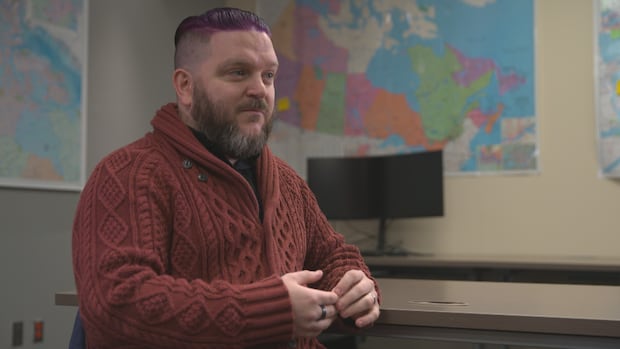
How 764 members are targeting minors for clout
Marc-André Argentino, a senior researcher at Public Safety Canada, explains how 764 members exploit minors for status and popularity in the network.
The 18-year-old was arrested in Alberta on Sept. 24. They have been charged with participating in the activity of a terrorist group, facilitating terrorist activity and two counts of committing an offence for a terrorist group.
Johnson said members of groups like 764 will use different pathways to draw in children, including on popular gaming platforms such as Roblox and Minecraft.
They often groom victims by befriending and “love-bombing” them, then getting into their private messages, “breaking down their barriers, desensitizing them and then obtaining intimate images of them,” he said.
“And then, extortion begins to further push the child down that path to further desensitization and then, in the case of 764, actual radicalization.”
Federal Public Safety Minister Gary Anandasangaree was asked Tuesday about the charges, and about a U.S. resident being charged with encouraging the killer who carried out the school shooting in Tumbler Ridge, B.C., earlier this year.
He referenced proposed legislation — the Safe Social Media Act, or Bill C-34 — intended to address some of the issues around online safety.
“We have a disturbing trend with younger and younger individuals who are being radicalized, particularly online,” Anandasangaree told reporters in Ottawa.
“It’s a trend that we’re seeing not just in Canada, but around the world …. And increasingly, the harm that I think social media, in many cases, has done to our young people cannot be undone.”
What are the warning signs?
Michael King is the deputy executive director of the Organization for the Prevention of Violence. When children are getting drawn into a group like 764, there are some warning signs that parents and caregivers can watch for, he told CBC News in June.
Animal torture and particular types of self-harm, such as cutting someone’s name into their skin, could be a sign a child is being targeted, he said.
“Sometimes these groups require children to do blood signs, which is doing pictures or inscriptions, writing with their own blood on their walls. So, if they see remnants of blood on the wall or pictures on the kids’ devices of these blood signs, that’s definitely something to worry about,” King said.
He said the main advice he would give parents is to monitor what their kids are doing online.
King said caregivers should also make it very clear to children that if they feel like they’ve made a mistake online — perhaps by revealing something personal, sending inappropriate pictures or sharing their address — they can tell their caregiver without being punished.
Johnson echoed those comments in his interview Tuesday.
“If you’re in an online space and you get pulled out, and you send that image or you do something that you regret, you think is bad or wrong — don’t be ashamed. Don’t be afraid,” he said.
“You are a victim. Report it to a responsible adult.”
If you or someone you know is struggling, here’s where to look for help: