
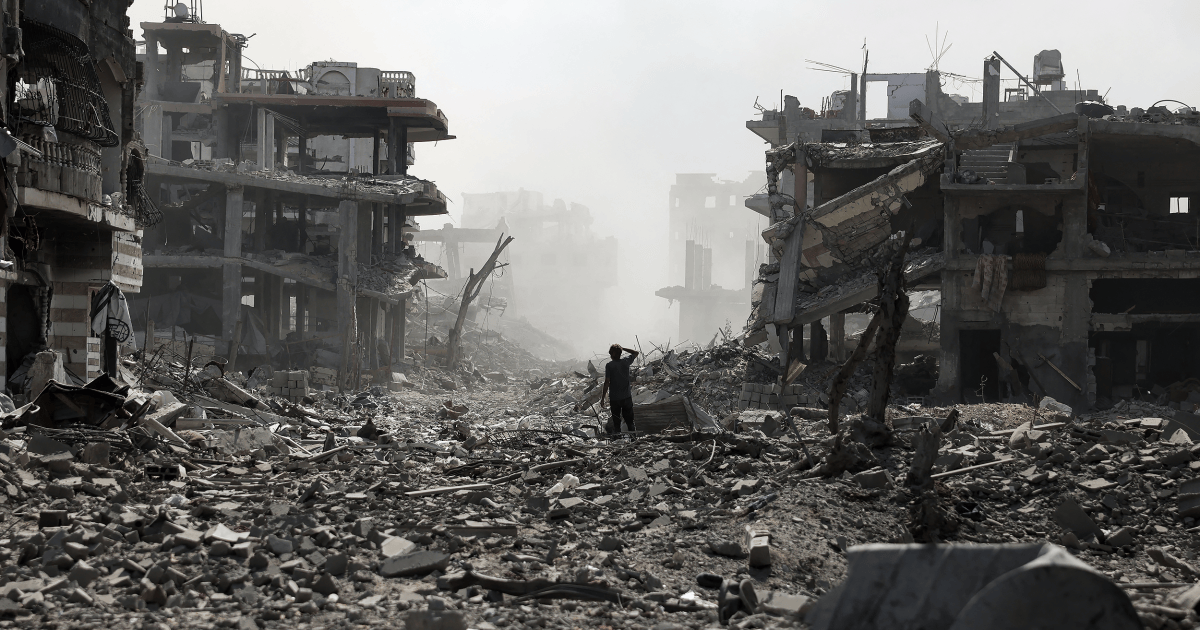
Three years after the deadly Oct. 7, 2023, Hamas attacks on Israel and Israel’s ensuing devastating retaliation on Palestinians in Gaza, the consequences have extended far beyond the Middle East.
What began as an atrocity followed by a devastating war has become a stress test for principles Western democracies have long said are universal: free speech, a free press, academic freedom, the right to protest, international law and human rights. Since Oct. 7, those principles have appeared far less universal when Palestinians invoke them — or when Israel is asked to abide by them.
When a government can threaten funding, demand settlements and pressure universities over contested political speech, the chilling effect spreads.
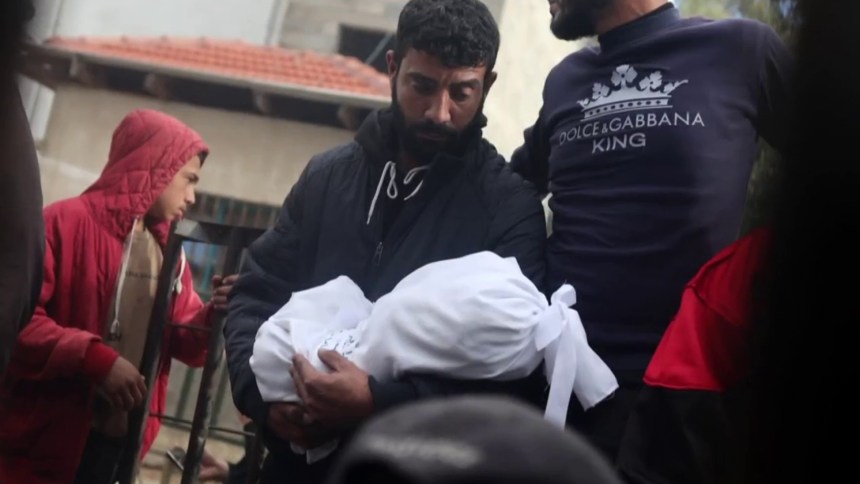
Roughly 74,000 Palestinians have been reported killed in Gaza. Vast areas have been destroyed, and much of the population has been repeatedly displaced. In September 2025, the United Nations Independent International Commission of Inquiry concluded that Israeli authorities and security forces had committed genocide against Palestinians in Gaza. Israel emphatically has rejected that accusation and said its military campaign has targeted Hamas. But that word that American political and media institutions have resisted — genocide — is no longer simply the language of pro-Palestinian protesters.
There should, of course, be room to discuss such grave findings. What should not be acceptable is the suggestion that merely raising them is illegitimate, as Israel and many staunch Israel allies, including many in the U.S. government, have argued.
That intellectual exception around Israel — in which questions we would ask about almost any other government become controversial simply because they are asked about this one — has been especially visible in America’s free speech debate. Antisemitism since Oct. 7 has been real. Jewish students have faced threats and harassment. That must be confronted. But combating antisemitism cannot mean insulating the Israeli government from criticism.
Play
Consider Rümeysa Öztürk, a Turkish doctoral student at Tufts University who in March 2025 was surrounded by masked immigration agents on a Massachusetts street on her way to class. Agents handcuffed her and took her into custody.
The government’s case against Öztürk focused on an op-ed she had co-written criticizing Tufts’ response to student demands concerning Israel and Gaza. Her visa was revoked and she spent weeks in detention. An internal State Department memo found no evidence that Öztürk had engaged in antisemitic activity or publicly supported a terrorist organization.
This past August, a federal judge ruled that provisions the Trump administration had used to revoke visas and pursue deportations against noncitizen students based on pro-Palestinian speech were unconstitutional.
The public discourse around Israel’s ongoing attacks on Palestinians exposed another truth: Free speech is not tested when a speaker says something everyone agrees with. It is tested when the speech angers the government.
The pressure has also extended to universities. This summer, former Justice Department Civil Rights Division attorney Haley Van Erem filed a whistleblower complaint alleging that administration investigations into universities over antisemitism were driven by predetermined outcomes and used, in part, to exert financial leverage. The Justice Department disputed her account.
The point is not that the antisemitism was imaginary. It plainly is not. The point is that a genuine civil rights problem can also be instrumentalized as a political weapon.
When a government can threaten funding, demand settlements and pressure universities over contested political speech, the chilling effect spreads. Professors notice. Students notice. University presidents notice. Newsrooms notice. Eventually, people learn which subjects are safer not to discuss.
I found myself thinking about that recently when I posted a video asking a simple question: What, exactly, is the approved way to support Palestinians?
Protest on a college campus, and you may be accused of making students unsafe. Boycott, and you may be accused of discrimination. March in the streets, and attention turns to whether the march inconvenienced somebody. Use a provocative slogan, and the slogan becomes the story rather than the cause behind it. An artist speaks from a stage, and suddenly there are calls to remove him.
For three years, Palestinians and their supporters have repeatedly been told they are free to protest — just not here, not like this, not with those words and apparently not in any way that forces the rest of us to notice.
At some point, the objection is no longer to the tactic but to the dissent itself.
That narrowing has affected journalism in the West, too. Israel has largely prevented independent international journalists from entering Gaza, while Palestinian journalists have paid an extraordinary price for documenting the war from inside. The Committee to Protect Journalists said 2025 was the deadliest year for journalists since it began collecting data in 1992, with Israel responsible for roughly two-thirds of the journalist deaths it recorded worldwide that year. Israel has sad it does not deliberately target journalists. Many accounts from reports on the ground, and from journalists in Palestine, indicate otherwise.
But perhaps the most consequential rupture of Israel’s war on Palestinians is in the “rules-based international order” itself.
After World War II, the world attempted, albeit imperfectly and often hypocritically, to build institutions around the idea that certain rules transcend national power. Civilians receive protection. Humanitarian workers and hospitals receive special protections. War crimes should be investigated. Political leaders can, at least theoretically, be held accountable.
The United States invoked those principles forcefully after Russia invaded Ukraine. Then the International Criminal Court turned its attention to Israel.
More articles
The ICC issued arrest warrants for Israeli Prime Minister Benjamin Netanyahu and former Israeli Defense Minister Yoav Gallant, alleging war crimes and crimes against humanity. Israel has rejected the allegations and has disputed the court’s jurisdiction. Washington’s response was not merely to disagree with the international body. The Trump administration sanctioned ICC personnel.
Press freedom must include the right to witness what governments would rather keep unseen.
Again, the double standard is laid bare: When international justice targets an American adversary, we invoke accountability. When it targets a close ally, we attack the institution.
That is not a rules-based order. It is a hierarchy: rules for our adversaries, exceptions for our allies.
The same contradiction is seen in America’s treatment of the U.N. The U.N. Relief and Works Agency for Palestine refugees in the near east said hundreds of its personnel and people supporting its work have been killed in Gaza, while its facilities have repeatedly been affected by the conflict. Israel has leveled serious allegations against some UNRWA employees, including that it has ties to Hamas.
Those allegations deserve investigation. But allegations against individuals cannot erase the protections afforded to humanitarian workers and U.N. facilities.
That is precisely the point of international law: its protections are not supposed to disappear when honoring them becomes politically inconvenient. And yet the pattern has become all too familiar.
The ICC investigates Israel for alleged crimes? Sanction it.
The U.N. condemns Israeli conduct? Discredit it.
A university becomes a center for Gaza protest? Threaten its funding.
A foreign student writes an op-ed? Revoke her visa.
These are different institutions and different legal questions. But a common instinct runs through them: criticism becomes threat, dissent becomes danger and institutions created to provide scrutiny or accountability become targets themselves.
Three years later, the question is whether our principles are universal or selective. And if we look at the evidence, the answer from our government is the wrong one.
Free speech must protect speech even when it angers those in power. Press freedom must include the right to witness what governments would rather keep unseen. International law must constrain allies as well as adversaries. And human rights must include Palestinians.
If we defend these principles only when convenient, we are not preserving a rules-based order. We are replacing it with a hierarchy of exceptions.
When the U.S. invokes international law against future adversaries, critics will not need to invent charges of hypocrisy. We will have supplied the evidence ourselves — and surrendered the credibility required to lead.
Ayman Mohyeldin is an MS NOW anchor and foreign affairs analyst.