
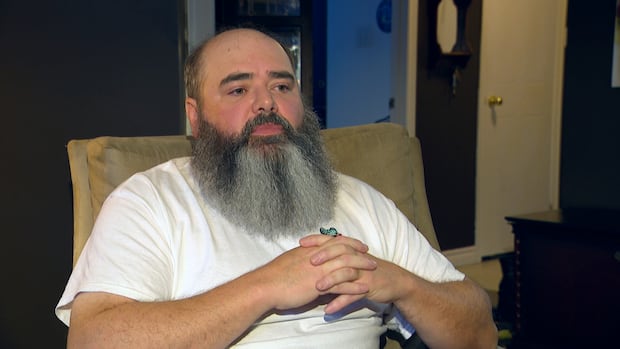
More than three years after a workplace injury left him with chronic pain and nerve damage, Martin Boutilier says he’s desperate to get back on the job.
But despite being cleared by health-care professionals for a gradual return to work, he says the Halifax Regional Centre for Education (HRCE) is refusing to temporarily reduce his hours or adjust his responsibilities to help him on that path.
“I want my job back,” said Boutilier, who’s employed at a Halifax-area school. “It’s frustrating, it’s alienating, it’s dehumanizing, it’s belittling.”
Boutilier was hired by the HRCE as a permanent educational program assistant (EPA) in 2021, and worked six hours a day with students with educational or behavioural challenges.
He was injured in April 2023 while trying to help a student off a swing set and into a wheelchair. He said the student became agitated, grabbed him by the collar and pulled him to the ground, twisting his back.
He was ultimately diagnosed with a herniated disc, and has not worked since. He receives a portion of his salary through workers’ compensation but said his medical benefits were recently cut off.
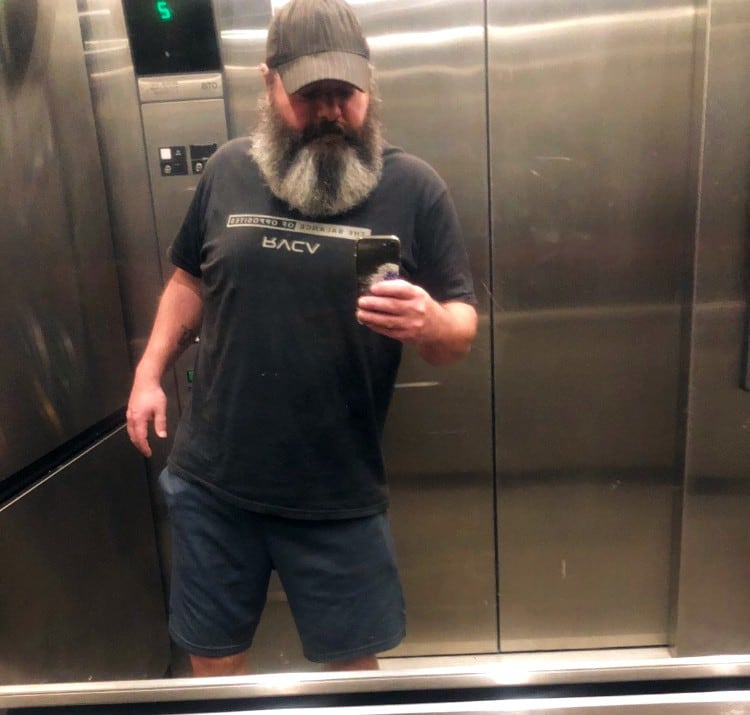
Boutilier, pictured in June 2023, says he dealt with a crooked spine for about a year until he underwent surgery to remove part of the herniated disc pressing on a nerve. (Submitted by Martin Boutilier)
He said policy required two EPAs to accompany the student outdoors at all times. But Boutilier said because he is a larger man, he was often left to work alone.
He also said he was never properly trained to physically help students, including getting them into a wheelchair.
The injury left Boutilier with a crooked spine for about a year until he underwent surgery to remove part of the herniated disc pressing on a nerve. He still deals with permanent nerve damage, numbness, mobility issues and pain.
Last year, an occupational therapist found that while Boutilier’s physical capacity deteriorates throughout the day, he could complete a six-hour shift if accommodated. Recommended measures included avoiding repetitive squatting and bending, heavy lifting and climbing stairs.
Boutilier said he has met with HRCE and workers’ compensation caseworkers numerous times to propose a shorter workday, or a full day with recommended accommodations, like being paired with students requiring less physical assistance, or a placement in a school with fewer stairs.
He said the education centre has denied these requests, citing undue hardship — a legal limit that excuses an employer from making accommodations because it would be too costly or cause safety risks, according to the Canadian Human Rights Commission.
“I think more and more, workers are losing their rights,” said Boutilier. “I know on their level, I’m a liability. What if I get injured again? Just be rid of me, hope I go away.”
HRCE did not make anyone available for an interview and could not comment on Boutilier’s case due to privacy considerations.
In an email, spokesperson Lindsey Bunin said “HRCE is committed to supporting employees who are injured or become ill and facilitate a safe return to work whenever possible.”
“Accommodation decisions are made individually, considering medical information, functional abilities, job requirements and workplace circumstances, and in accordance with applicable legislation and HRCE processes,” Bunin wrote.
‘Duty to accommodate’
Employment and labour lawyer Brian Wasyliw is a partner at Toronto-based firm Sherrard Kuzz LLP, which exclusively represents employers. He’s unfamiliar with the specifics of this case but said these types of disputes are common and can be challenging.
Wasyliw said employers generally have a “duty to accommodate” employees who have a proven injury or disability. He pointed to examples such as adjusting work hours and job duties, or providing physical aids.
“To understand what’s medically necessary and justified can be difficult,” he said.
Wasyliw said to reach the point of undue hardship, making the proposed adjustments would have to be “higher than just an inconvenience” for the employer.
Union weighs in
Shelley McNeil, president of CUPE Local 5047, said Boutilier’s story is not uncommon and she’s not surprised he’s faced resistance by the employer.
The union — currently in the midst of contract negotiations — represents over 2,800 HRCE employees, most of whom are EPAs.
McNeil said many of her members are injured at work, sometimes as a result of aggressive behaviour by students such as hitting, slapping and punching — an issue the union has raised concerns about in the past.
She said this has led to a “significant number” of workers’ compensation claims among members.
The Labour Department confirmed to CBC that the province recently partnered with HRCE on a series of school inspections to “strengthen violence prevention and workplace safety in schools,” spokesperson Greg Hanna said in an email.
Hanna said 10 inspections were completed as a “proactive effort to assess compliance with occupational health and safety legislation, promote best practices, strengthen safety culture and identify any barriers or gaps that may require further action.”

Shelley McNeil is president of CUPE Local 5047. (Cristian Monetta/CBC)
Findings are not yet available, he said, but a report is being drafted.
McNeil said students are often not to blame for school safety issues. Instead, she attributed incidents such as Boutilier’s injury to inadequate training and staffing shortages.
“When children feel safe and secure, it does have [a positive] impact on behaviour,” said McNeil. “But how can these students get the extra support when there’s not enough support given?”
Bunin said the education centre “works to recruit and retain qualified EPAs and allocate available resources based on student needs.”
She said all EPAs receive instruction in behaviour support, safety and de-escalation.
But both Boutilier and McNeil said most training for school support staff is delivered through online modules, and argue a more hands-on approach is needed.
Boutilier has an arbitration date set for February to discuss a return-to-work plan, wages, medical benefits and pension.
“If they cut me loose, I don’t know. And it’s frightening because I have two kids,” said Boutilier.
He argues it’s “illogical” and “unethical” that he was injured on the job, yet believes his employer is now standing in the way of his return.
MORE TOP STORIES