

Listen to this article
Estimated 3 minutes
The audio version of this article is generated by AI-based technology. Mispronunciations can occur. We are working with our partners to continually review and improve the results.
With less than two weeks to go until referendum day, Elections Alberta is confident it can manage what observers say is certain to be an “enormous undertaking.”
To date, the elections office has received more than 65,000 applications to work as election officers, with more than 41,000 confirmed, spokesperson Maia Hanrahan told CBC Radio’s Calgary Eyeopener on Tuesday.
“The hiring has been going really well,” Hanrahan said. “We can definitely run the referendum with the people that we have.”
Hanrahan also took a series of listener questions on the air on Tuesday.
Earlier this year, the office launched what it called the largest recruitment drive in Alberta’s history.
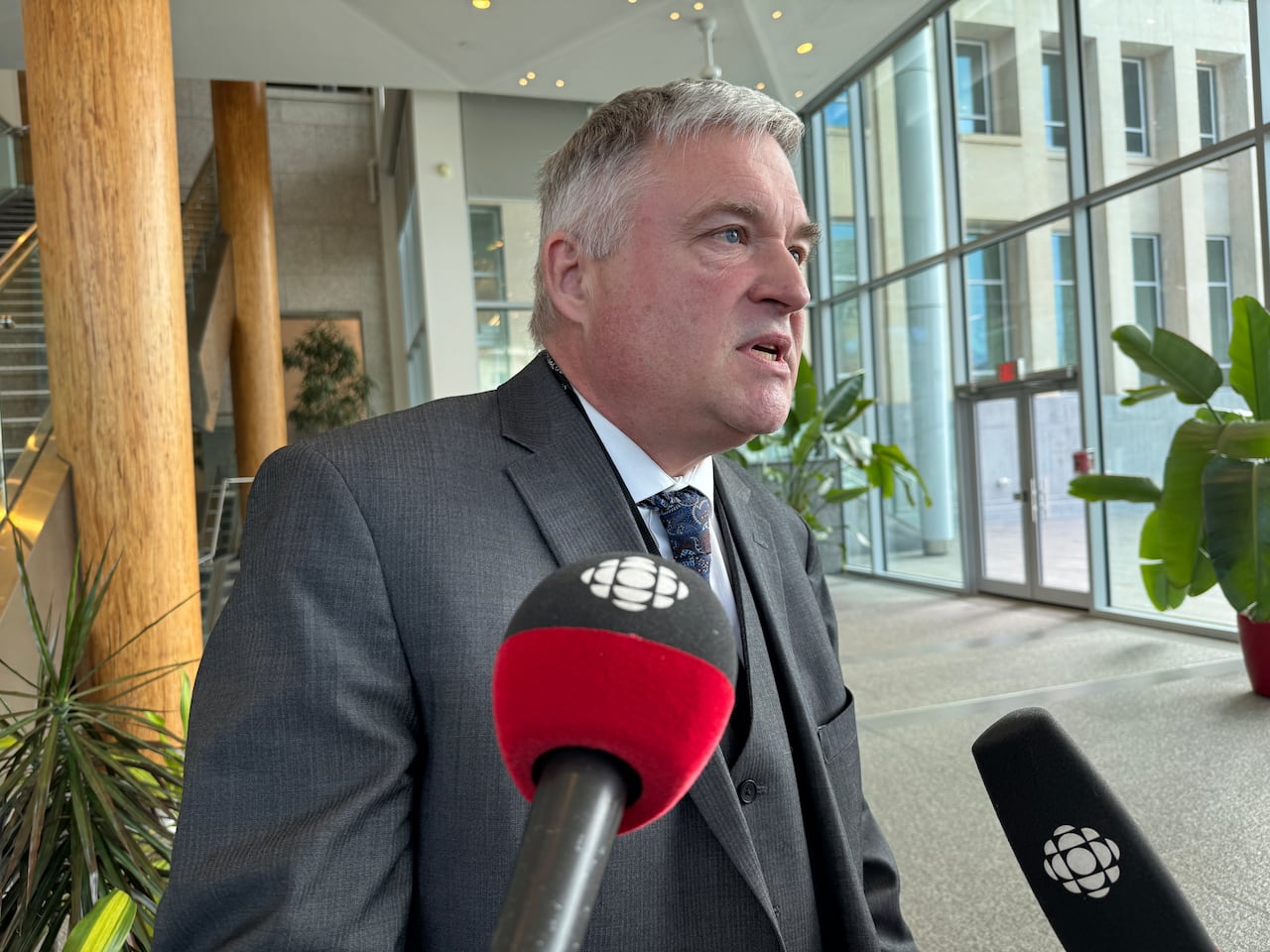
Chief electoral officer Gordon McClure, shown here in Edmonton on May 11, has called the upcoming referendum a ‘colossal undertaking’ for Elections Alberta. (Janet French/CBC)
Chief electoral officer Gordon McClure called it a “colossal” task that would require 60,000 officers. That’s more than the 57,000 recruited to assist in the 1995 Quebec referendum.
“There’s enormous pressure on Elections Alberta,” said Lori Williams, an associate professor of policy studies at Mount Royal University.
And it’s not just the number of people expected to show up at the polls that will pose a challenge.
It’s also the number of ballots.
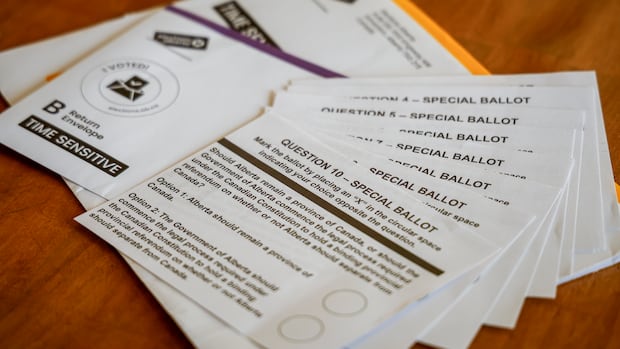
Elections Alberta is printing 45 million of them — more than the 19.8 million cast in the 2025 federal general election — with voters tasked with weighing in on the separation question, plus nine questions tied to immigration and the Constitution.
“Elections Canada would be hard-pressed to manage this process, nevermind Elections Alberta,” Williams said.
“It’s really unprecedented anywhere, but certainly in Alberta. And I think the people working the election are feeling that … this is an enormous undertaking.”
Hundreds of thousands of special ballots pending
While Elections Alberta considers itself in good shape across most of the province, there’s still a need for help in the province’s rural regions.
Some of those districts include Taber-Warner, Lesser Slave Lake, Cardston-Siksika, Grande Prairie, Fort McMurray and West Yellowhead, among others.
There are also special ballots pending in the hundreds of thousands.
Elections Alberta received and processed more than 658,000 special ballot applications. As of Sept. 29, more than 5,700 applications had been rejected due to a variety of reasons. Those include duplicate requests and invalid addressing or other information.
Completed special ballot packages must be received by mail at Elections Alberta by Oct. 16 at 5 p.m., meaning there are fewer than eight business days remaining.
And around 500,000 voters have yet to mail their special ballot packages back to Elections Alberta, Hanrahan said.
“If there’s anyone out there who hasn’t sent it yet, I would encourage them to send that as soon as possible,” she said.

Lori Williams at Mount Royal University says late-received packages could pose challenges for voters. (Elise Stolte/CBC)
There have been issues with some of the returned packages, said Hanrahan. For instance, the declaration form has been missing or incomplete, or a copy of an authorized ID is missing.
Not all of the people who receive mail-in ballots will be mailing them in, Williams said.
“But let’s say that their package is received and there’s more information that’s needed,” she said. “That really puts them up against the deadline in pretty important ways.”
What’s one worry or hope you have for Alberta after Oct. 19? Click “Join the Conversation” below. On the app? Tap here.