

The Canada-U.S. trade war has reshaped Canadians’ view of their country, somewhat rekindled coast-to-coast-to-coast unity and dominated federal and provincial elections.
For more than a year it has been steeped in the national psyche, and just when we thought a deal was near with our friend-to-foe southern neighbour, we instead face a new — steeper — round of tariffs, bans and counter-tariffs.
Canada began imposing a new round of retaliatory levies on U.S. goods on Sept. 8, after the United States imposed new 50 per cent tariffs on $27.6 billion worth of Canadian goods. The U.S. then responded late last month with a set of bans on Canadian imports on some alcoholic drinks, dairy byproducts, molasses and motorcycles, among others.
So, how could the latest in the dispute continue to reshape the Canadian economy? Could the scramble to adapt help us diversify trade partners more quickly? And, what products, if any, could become more difficult to access?
CBC News spoke to four experts in supply chains and retail to get a sense of what products could go up in price and how consumers may have to change their habits in the next few months.
They say the escalation between the two countries last month — which involved the U.S. raising tariffs after Canada and the U.S. failed to sign a new trade deal, then Canada imposing counter-tariffs, then the U.S. imposing full-scale bans — may be felt less in empty store shelves than in higher prices, fewer choices and longer waits for some products.
“Most goods should remain available, although some brands, models or specifications may disappear from the market,” said Xiaodon Pan, an associate professor in supply chain and business technology management at Concordia University in Montreal.
The counter-tariffs are meant to focus on products where Canadian alternatives are available, and range from 15 to 25 to 50 per cent.
They cover areas such as steel and aluminum, dairy, appliances, agricultural equipment, pulp and paper, plastics and electronics — and include finished products as well as some components used to make other goods. Tariffs on U.S. automobiles are also still in place.
One analysis out of North Carolina found that toilet paper in the U.S. could become “more expensive, less soft” because of President Donald Trump’s 50 per cent levy on northern bleached softwood kraft imported from Canada.
WATCH | Economists foresee stagnant growth: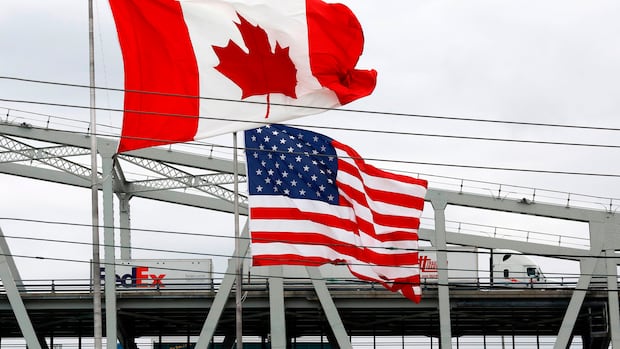
Canada’s economy still resilient, but U.S. trade war taking its toll
Canada’s economy has shown resilience in the face of punishing U.S. tariffs, but new import bans on a range of Canadian products are creating further drag. Accounting firm Deloitte has lowered its growth forecast for next year by 20 per cent.’Prices are going up,’ business prof says
Back at home though, Matt Poirier of the Retail Council of Canada says shop owners began stocking up as soon as they knew tariffs were coming after the trade deal fell through between Canada and the U.S. in August. The bulk of goods could prevent prices from significantly rising for at least couple months, he said.
“They’ve been working overtime to find either alternate sources of supply, domestic or global,” Poirier said. “But it does take a while for those supply chains to reroute.”
While the impacts of the tariffs could take a bit of time, they could still be significant once those inventory supplies dwindle by the end of the year.
Fraser Johnson, a professor at Ivey Business School at Western University in London, Ont., said retailers won’t want to shock consumers and lose business in the short term, but, “in the medium to long term, prices are going up.”
Johnson explained that while alternatives to U.S. products exist elsewhere, the increase of costs of U.S. goods will eventually lead businesses to boost prices on models from other countries as well.
Pan, of Concordia University, agrees. She said that while clothing and cosmetics, for example, may have more international alternatives, consumers are likely to start seeing “higher prices and fewer brands, styles, shades,” in those areas.
Outdoor gear fanatics could see similar phenomena, the experts said. Watch out, gorpcore.
Appliances and electronics
Whether it’s Maytag, GE, Frigidaire or high-end Wolf stoves, American companies take up a significant share the North American appliance market — but in Canada that could change very soon.
There’s a new 25 per cent surtax on U.S. refrigerators, freezers, cooking ranges, washer and dryers and dishwasher parts.
While there are many South Korean and Chinese alternatives already readily available, prices for those products could go up as well as retailers try to recoup lost costs, as Johnson mentioned.
As for parts for people who already own appliances from American brands, that could get a little tricky.
“A specific control board, pump, sensor or repair component may have very few direct alternatives,” said Pan of Concordia University.
She says the same goes for electronics and furniture.
What about shortages?
Construction materials are where things start to get more dicey.
Canada buys a lot of those from the U.S. — things like metal, plastic and foam building materials, paints, coats and adhesive, cement products and types of prefabricated wood. They’re bulky goods that our shared border makes it easy to transport.
That’s one industry facing possible shortages, says Saibal Ray, the James McGill Chair professor for supply chain management at McGill University in Montreal.
Car parts could be another, due to levies on steel and aluminum, Ray said, as “availability might be an issue.”
Johnson agrees. “If you’re thinking about making a major purchase; if you’re going through a home renovation — buying and locking in your prices earlier rather than later makes a lot of sense,” he said.
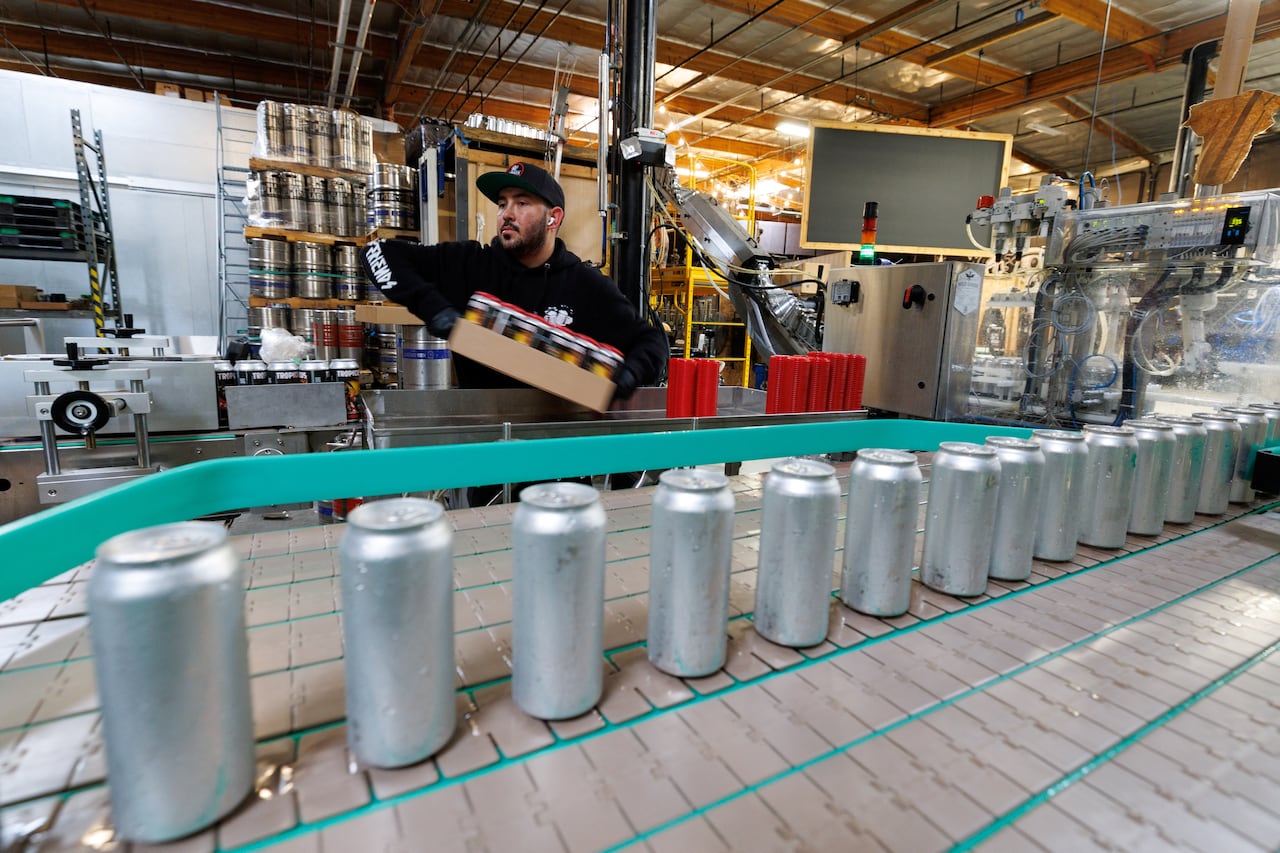
Aluminum cans are shown after being filled with craft beer during a production run at Black Plague Brewery in Oceanside, Calif., last year. (Mike Blake/Reuters)
Again, it’s not just finished products affected here. Source materials may cross the border several times before becoming, say, a car part or food container, Pan explained. She gave the example of aluminum cans for soda and beer.
Canada produces the aluminum for much of those, but the actual manufacturing is often completed in the U.S., she said.
“Because those capabilities take time to replace, tariffs can raise costs long before the underlying interdependence changes,” Pan said. She said it’s not just costs, but regulations are another hurdle to diversifying trading partners.
Elevators are another example Pan gave, of Canada-U.S. interdependence. There are North American “product standards, technical specifications, testing and certification,” but if the European Union closer aligns with those standards, that would help producers in Europe more easily sell to Canada.
Similarly, Johnson says “business-to-business” costs will go up before they hit consumers, but all of that has a trickle-down effect and it’s hard to predict the timing of when those extra costs could hit the bottom line because of how unpredictable these trade disputes have been.
“Eventually, all trade wars end,” he said, noting the uncertainty is what’s impacting small to medium-sized Canadians businesses right now.
“I don’t know when, but I do know that at some point this is going to get resolved and we’ll be able to … get on with our lives.”
Is there a ‘silver lining’ in food prices?
What’s more difficult to stock up on or lock in on prices is food, especially seasonal produce, the experts said. Plus, it’s not just the trade war increasing costs, but skyrocketing oil prices due to the U.S.’s war on Iran, too.
But produce isn’t really covered in the latest round of U.S. tariffs and Canadian counter-tariffs.
The U.S. has straight up banned Canadian alcohol, dairy and whey products, as well as molasses and sugar processing items, after Canada had retaliated against U.S. levies in August, with 50 per cent levies on each of those, but it made sure not to surtax items that aren’t already available from Canadian producers.
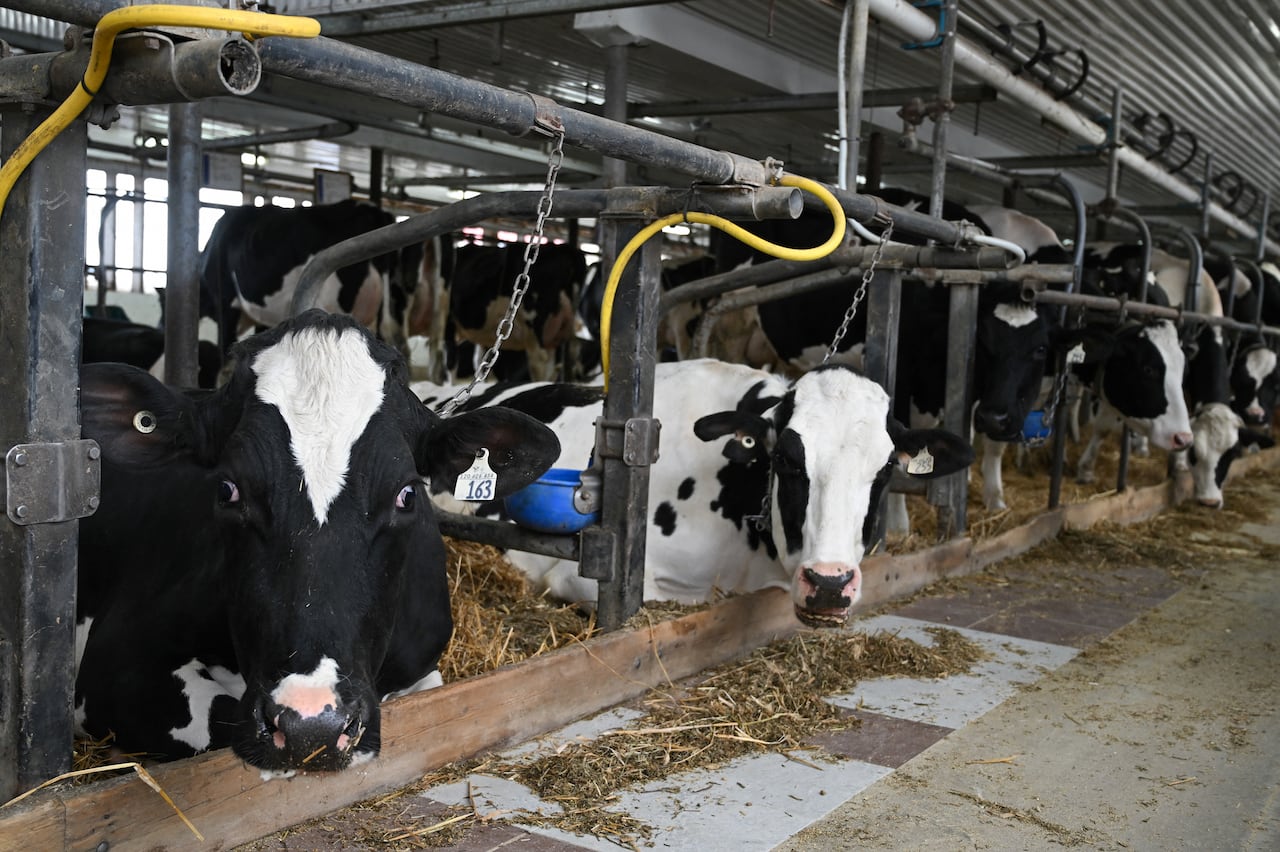
Holstein cows at a dairy farm in Saint-Blaise-sur-Richelieu, Que. (Graham Hughes/Reuters)
Gary Sands, the senior vice president of policy and advocacy for the Canadian Federation of Independent Grocers, says he believes Canadian food providers won’t have trouble replacing U.S. goods with Canadian ones.
“There’s a silver lining to this,” Sands said, explaining that he expects even more Canadian products and suppliers to get a boost as a result of the latest round of tariffs.
Already, CFIG members have seen a roughly 20 per cent rise in consumers purchasing Canadian products, he said.
“I’ve been here for 26 years. I’ve never seen anything like this. It’s definitely a permanent shift,” Sands said.
So, while consumers could see the retail landscape shift over the next few months, with changes in brands and specific models, maybe just maybe it could continue to lessen Canada’s reliance on U.S. goods, Pan and Ray said.
“The broader lesson is that deep integration creates efficiency and mutual vulnerability at the same time,” said Pan.