
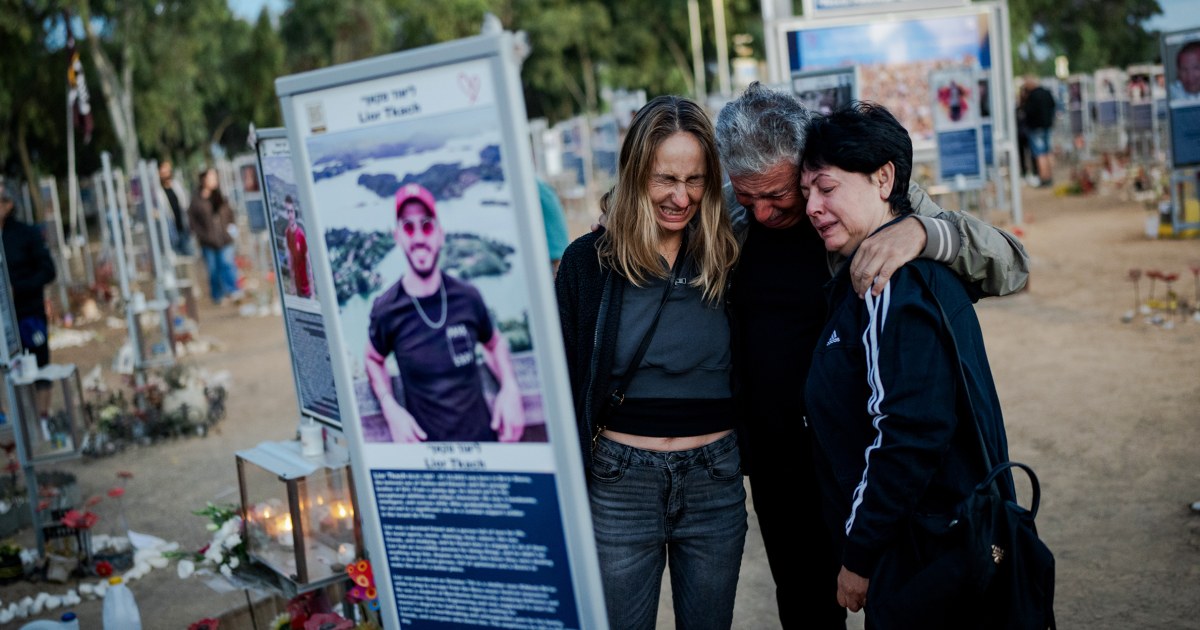
Trumpeldor beach in central Tel Aviv, packed and lively just yesterday, is today almost empty.
The white sand has been covered with an enormous installation commemorating the Oct. 7 attacks and designed to be visible to passengers on planes overhead as they make their final descent towards Tel Aviv’s Ben Gurion airport.
It is made up of row after row of black cloth onto which life-sized figures have been painted. Yellow figures represent the hostages and white figures represent those killed.
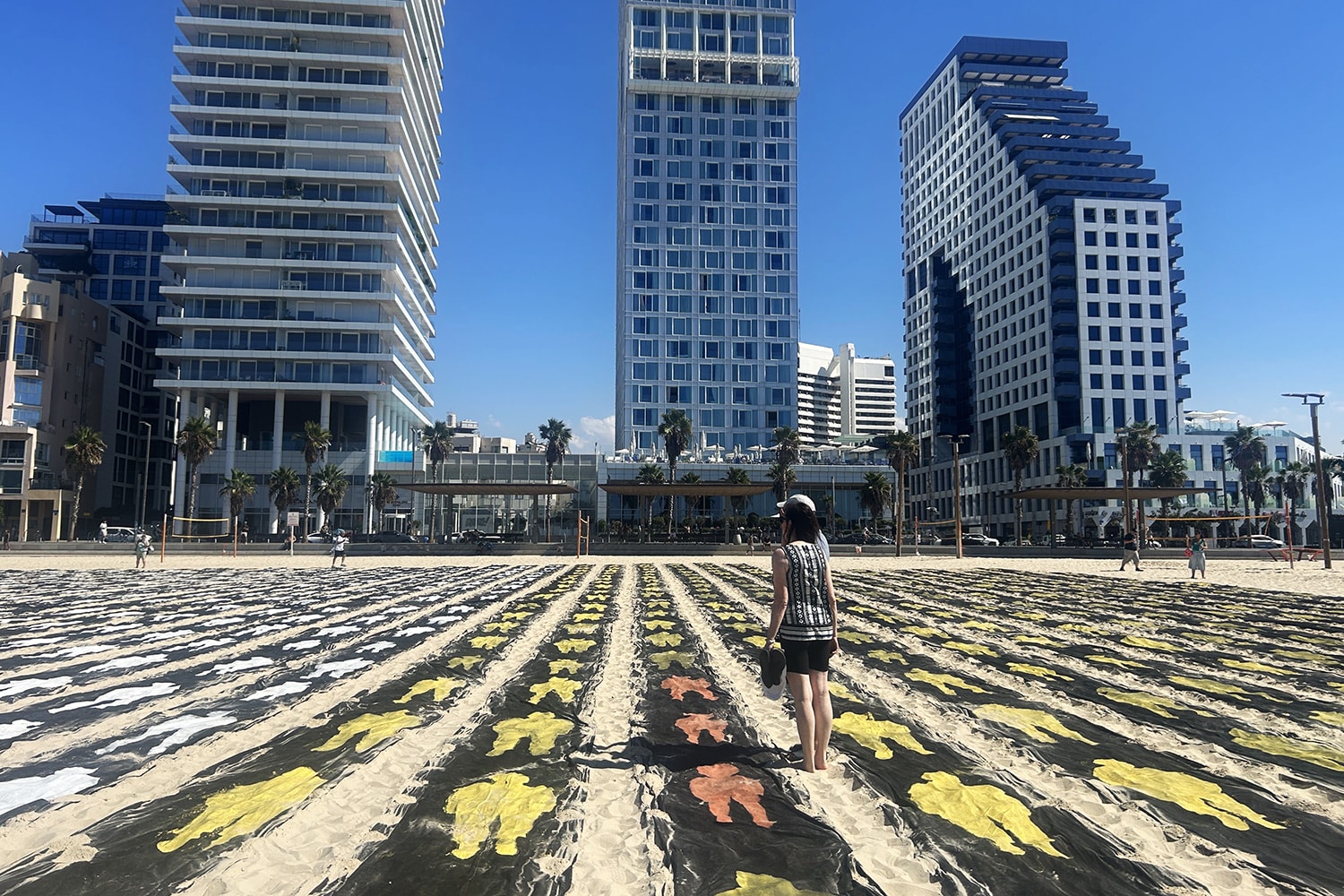
A memorial on Trumpeldor beach in Tel Aviv today. Shira Pinson / NBC News
There are also three orange figures in memory of Shiri Bibas, 32, and her two children, Ariel, 4, and 9-month-old Kfir, who were killed in captivity in Gaza.
The scene is somber and still. Visitors and passersby slow down, take pictures, talk in low voices. The emotions are evident.
“Today it’s so quiet, and it’s so somber, and it’s so…. You feel the sadness in the air,” Nava, a 69-year-old visiting Israel, told NBC News, her voice trembling.
“I didn’t think I’d get so emotional because it’s been time,” she said, adding that “to see so many bodies” laid out on the beach had an impact.
“For that many people to have been killed in one day, and so brutally,” she said. “It brings it all back how unfair and awful it is because all we want is peace.”
Fighting back the tears, she said the memory of that day three years ago was still very vivid. “We woke up in the morning, and we heard the news, and it was torture. It was absolute torture.”