

(AP)
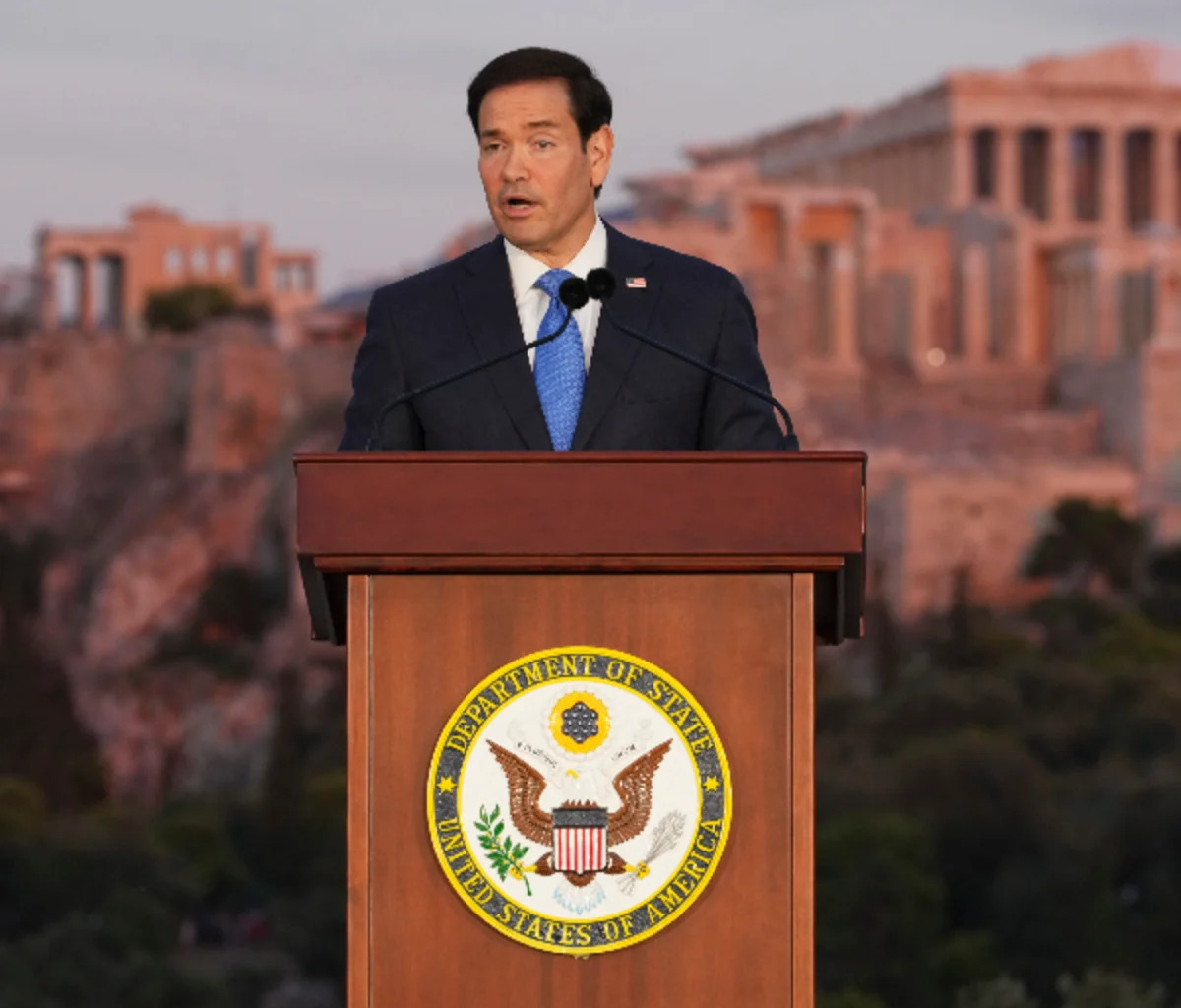
Secretary of State Marco Rubio said Wednesday that Iran has passed up “multiple opportunities” to reach an agreement with the U.S. over its nuclear program as efforts to end the seven-month war remain stalled.
“Iran has failed to take advantage of multiple opportunities to reach agreement with us on nuclear program,” Rubio said during a visit to Greece.
Rubio’s comments came after Vice President JD Vance told Reuters that any agreement to end the conflict must include a “meaningful” reduction in Iran’s uranium-enrichment capacity.
Vance said Iran needs to demonstrate through concrete action that it does not intend to develop a nuclear weapon.
“If you don’t want a nuclear weapon, then why do you need 60% enriched fuel?” Vance told Reuters.
“And if you want to show commitment to not building a nuclear weapon, don’t build highly enriched fuel,” he said, calling that “a very basic threshold issue.”
A senior Iranian official pushed back Wednesday, telling Reuters that Tehran would never surrender what it considers its right to enrich uranium.
The official said Vance’s comments represented U.S. “ideas and requests” rather than the result of negotiations, adding that there had been no negotiations between Iran and the U.S. specifically over Tehran’s nuclear program.
Iran’s recognition of its right to enrich uranium remains a “red line,” the official said.
Rubio also said Wednesday that Iran has “lost complete control” of the Strait of Hormuz, disputing Tehran’s claim that it continues to control the vital energy shipping route.
“The Strait of Hormuz is open,” Rubio said, adding that “there’s almost as much oil flowing out now as there was before this conflict began.”
Iranian military officials have maintained the opposite position, with a senior adviser to the commander of the Islamic Revolutionary Guard Corps saying Wednesday that the strait remains closed and that Iranian forces have “full control” of it.
The conflicting claims come as oil shipments through the region have recovered substantially despite continuing attacks and harassment of commercial vessels.
Middle Eastern crude exports exceeded prewar levels on several days in September, according to Reuters, although renewed attacks on tankers have raised questions about whether the recovery can be sustained.
Reuters reported Wednesday that attacks, attempted attacks and harassment involving oil, liquefied natural gas and liquefied petroleum gas tankers reached their highest weekly level since the war began during the week of Sept. 28 through Oct. 5.
At least 12 incidents were reported during that period, including drone surveillance and harassment attributed to Iran’s Revolutionary Guards, according to maritime security sources cited by Reuters.
The latest standoff follows an Iranian proposal to reopen the Strait of Hormuz and resume negotiations, which President Donald Trump rejected.
Trump has said the U.S. remains in a strong position and that he expects a decision soon on how to “finish up” the conflict.
Rubio said the U.S. position on Iran’s nuclear ambitions remains unchanged.
“Iran cannot have a nuclear weapon, simple, period, end of story,” Rubio said, adding that any agreement acceptable to Washington must ensure Tehran never obtains one.
The Trump administration has continued to press Tehran for concrete nuclear concessions while Iran has insisted that its right to uranium enrichment must be recognized, leaving the two sides divided over the central terms of a potential agreement.
© 2026 Newsmax. All rights reserved.