
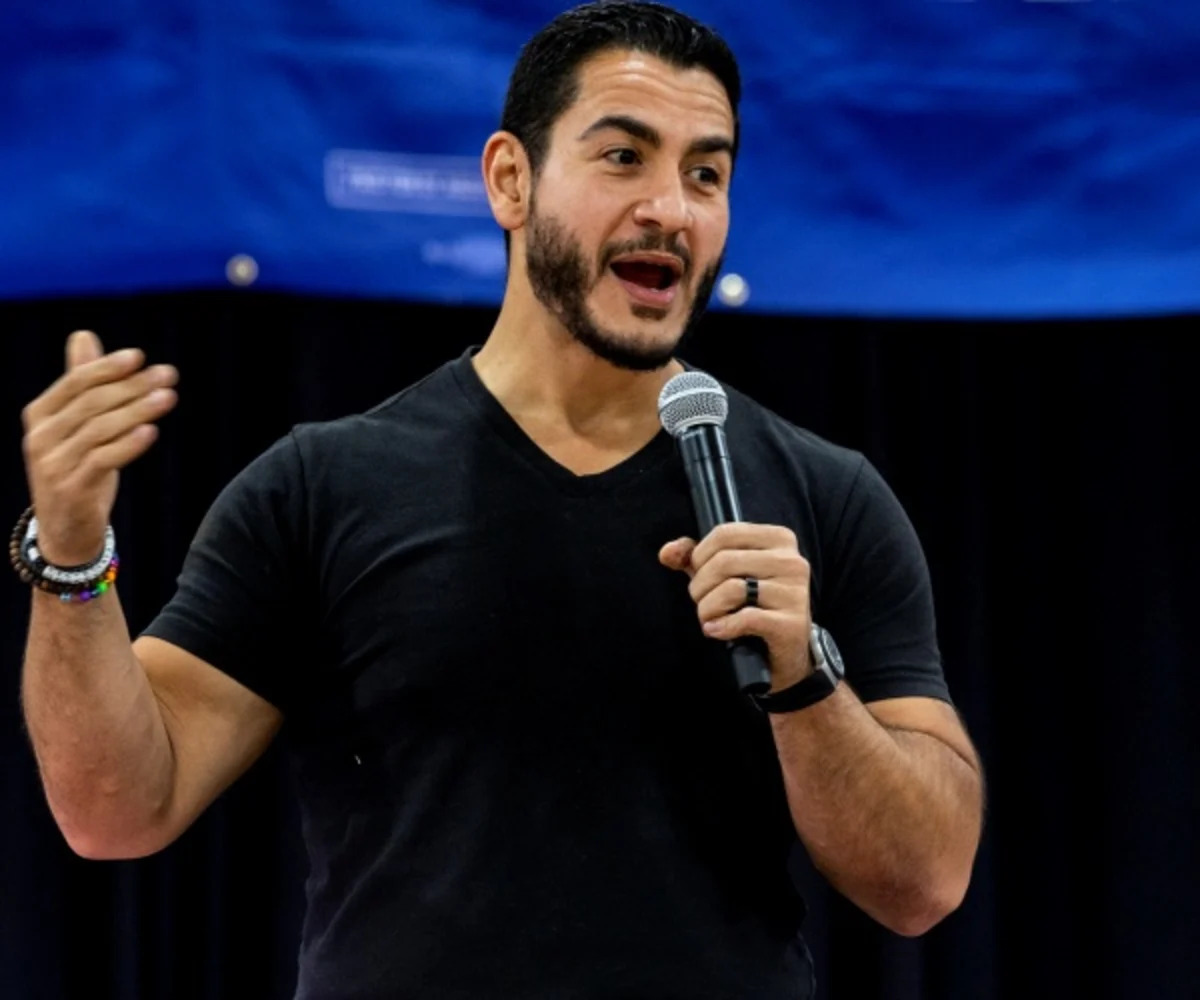

(Emily Elconin/Getty Images)
Abdul El-Sayed, the Democrat nominee for Michigan’s open U.S. Senate seat, accused Israeli Prime Minister Benjamin Netanyahu of helping push the Trump administration into the war with Iran.
His accusation revived a politically sensitive dispute over the impetus for Washington entering the conflict.
“We are in the war in Iran in part because of the advocacy of the Israeli prime minister,” El-Sayed told NewsNation this week, arguing that Netanyahu personally pressed his case for military action in the White House Situation Room.
El-Sayed also blamed the conflict for soaring energy and consumer costs as disruptions in the Strait of Hormuz have constrained global oil traffic.
The accusation echoes reporting about the run-up to the Feb. 28 U.S.-Israeli attack. Netanyahu delivered an extensive presentation to President Donald Trump and senior advisers in the Situation Room on Feb. 11, making the case for a joint campaign against Iran and portraying Tehran as vulnerable to a potentially decisive military operation.
More significantly, senior Republicans initially described Israel’s determination to strike Iran as a major factor in Washington’s decision to act.
Secretary of State Marco Rubio said shortly after the war began that U.S. officials knew Israel was going to attack and believed the resulting Iranian retaliation would target American forces.
“We knew that there was going to be an Israeli action,” Rubio said, adding that Washington concluded it should strike preemptively rather than risk heavier American casualties.
House Speaker Mike Johnson, R-La., offered a similar explanation after receiving a classified briefing, saying Israel was “determined to act with or without the U.S.” and that the prospect of an Israeli strike followed by attacks on American personnel left Trump with a difficult decision.
The comments fueled accusations from Democrats and some “America First” conservatives that Netanyahu had effectively dictated the timing of U.S. military action.
The administration quickly sought to walk back that interpretation. Trump flatly denied that Israel had forced his hand, telling reporters, “I might have forced their hand.”
Rubio likewise accused reporters and critics of taking his remarks out of context, insisting military action against Iran “had to happen anyway” and that Israel’s plans affected the timing and joint nature of the operation rather than Trump’s fundamental decision to use force.
He later complained that his statements had been selectively clipped “to reach a narrative.”
Netanyahu also rejected the suggestion that he had dragged Washington into the conflict, saying Trump “does what he thinks is right for America.”
The dispute has nevertheless persisted as the war has stretched beyond seven months and its economic and political costs have mounted.
Subsequent reporting described a months-long Netanyahu effort to persuade Trump to attack Iran, while also documenting growing differences between Washington and Jerusalem over the scope and objectives of the campaign.
El-Sayed said Americans are paying both through higher prices and through billions of dollars spent overseas, while arguing U.S. taxpayers should not “subsidize war abroad.”
The issue is likely to feature prominently when El-Sayed faces Republican former Rep. Mike Rogers in their Thursday debate in Grand Rapids.
© 2026 Newsmax. All rights reserved.