
On 27 October, Israeli voters will try to select a new government. Some of the most interested observers of Israel’s election live right next door: Lebanon’s political leaders and their constituents, many of whom hope to see an Israeli government truly willing to explore bilateral, cooperative, and constructive approaches to reconciling Israeli security with Lebanese sovereignty. None of them sees the current Israeli government as at all interested in cooperation or reconciliation.
Despite American attempts to secure a ceasefire and a diplomatic framework conducive to operational cooperation, violence continues, and the parties are talking past each other. Direct talks facilitated by the U.S. have been repeatedly postponed. With Washington facing a long list of challenges ranging from artificial intelligence to Iran, it doesn’t seem to have the bandwidth to seriously address the Israel-Lebanon issue.
For its part, Beirut is offering the prospect of a bilateral security agreement with Israel—one that would end 78 years of official hostilities and resemble the practical, effective, military security cooperation that characterised the Israel-Lebanon armistice from 1949 to 1967. It supports a US-devised “pilot zone” procedure aimed at enabling Israeli forces to leave Lebanon, permit Israeli and Lebanese residents along the Blue Line to live without fear of cross-border violence, and perhaps—assuming a favourable regional context—set the stage for formal peace talks.
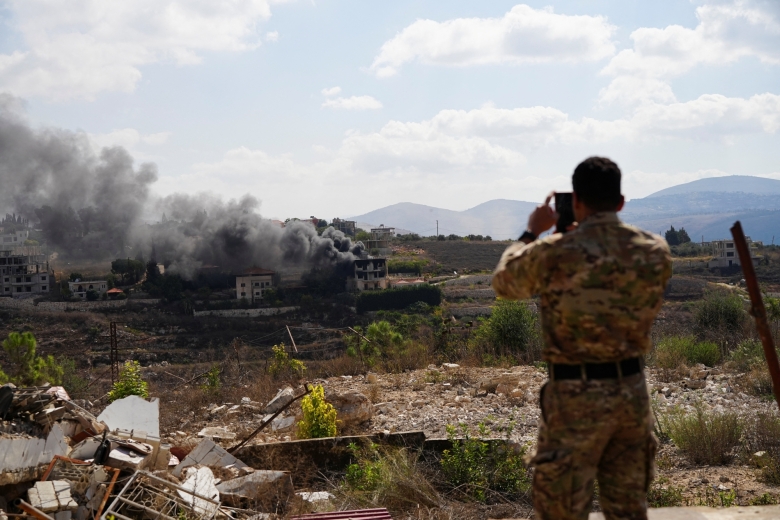
For its part, Israel is waging a unilateral military campaign against Hezbollah that neither expects nor requires any official Lebanese cooperation. It is laying waste to some 66 occupied villages in southern Lebanon, barring Lebanese civilians from returning to their homes within its buffer zone, and promising continued occupation until Hezbollah is disarmed in all of Lebanon. Israeli finance minister Bezalel Smotrich even called on Israel to annex Lebanese territory.
Few Israelis—and certainly not their current government—have any faith at all in the ability of Lebanon’s government or army to prevent Hezbollah from posing executable security threats, whether cross-border operations into northern Israel or rockets and missiles launched from various parts of Lebanon. In a post-October 7, 2023, era that may last decades, few Israelis are inclined to rely on anything other than unilateral military measures to neutralise hostile non-state actors. This inclination is magnified by the current electoral contest, as Prime Minister Benjamin Netanyahu seeks to convince Israelis that he alone can protect them from multiple regional threats.
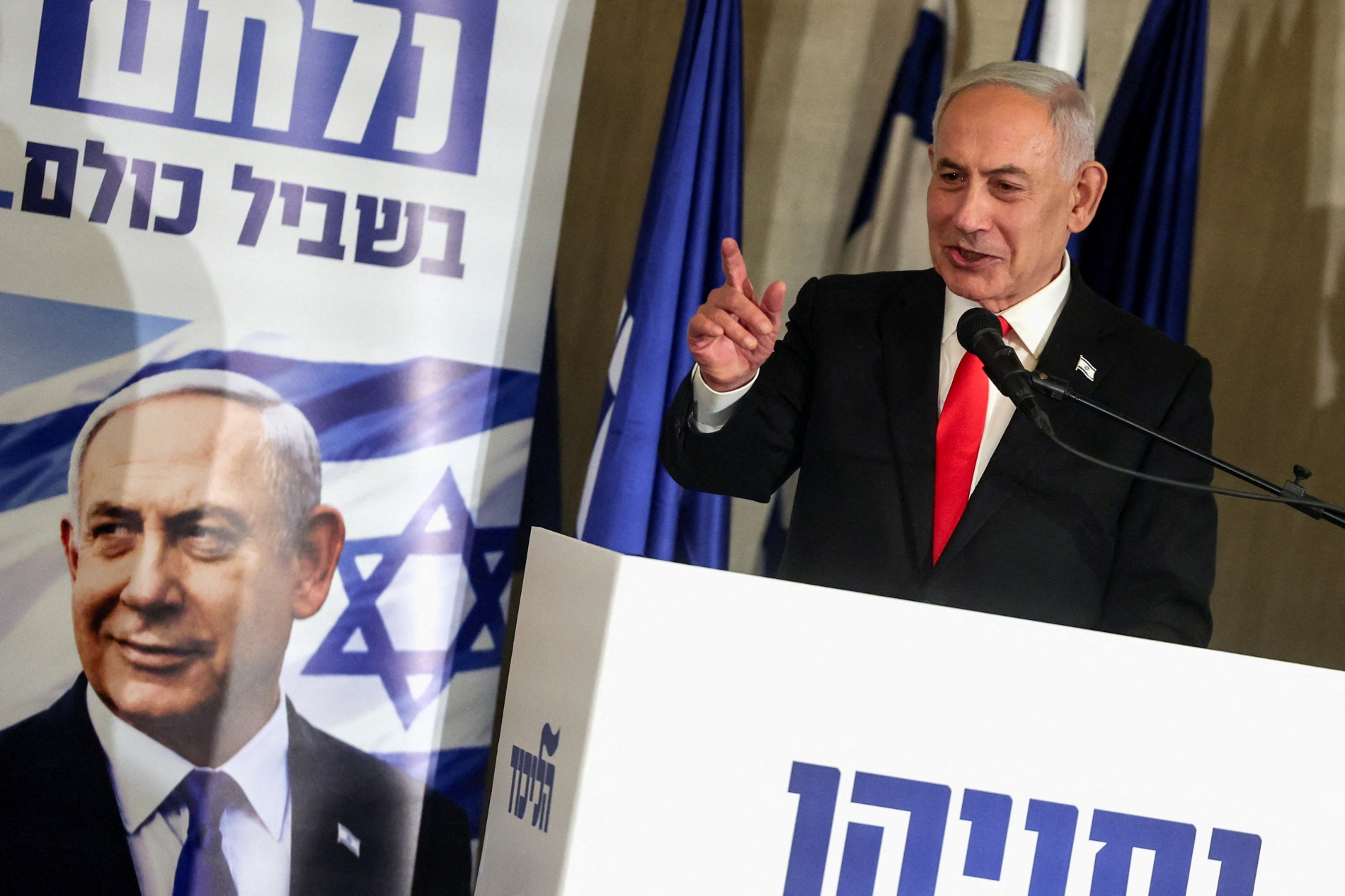 Israeli Prime Minister Benjamin Netanyahu makes a statement to members of the press in Jerusalem on 8 September 2026.
Few Lebanese—and certainly not the current government—have any appetite for unleashing Lebanon’s army militarily against Hezbollah. Yes, Lebanon’s current leaders sincerely want to establish state monopolies on weapons of war and war-and-peace decisions.
They do so for the most believable reason: without such monopolies, few external investors will see Lebanon as safe, and Lebanon’s economic recovery will be deferred indefinitely. But given decades of Iran’s partial suzerainty in Lebanon—exercised through Hezbollah’s leadership cadre and a compliantly corrupt Lebanese political class—Lebanon struggles to emerge as a fully self-governing entity.
Despite the beatings Hezbollah has absorbed at the hands of the Israeli army, the organisation retains considerable military capabilities. And thanks to decades of Hezbollah’s unchallenged political supremacy, Lebanon remains stuck with too many officials owing their positions to an Iran-led non-state actor.