
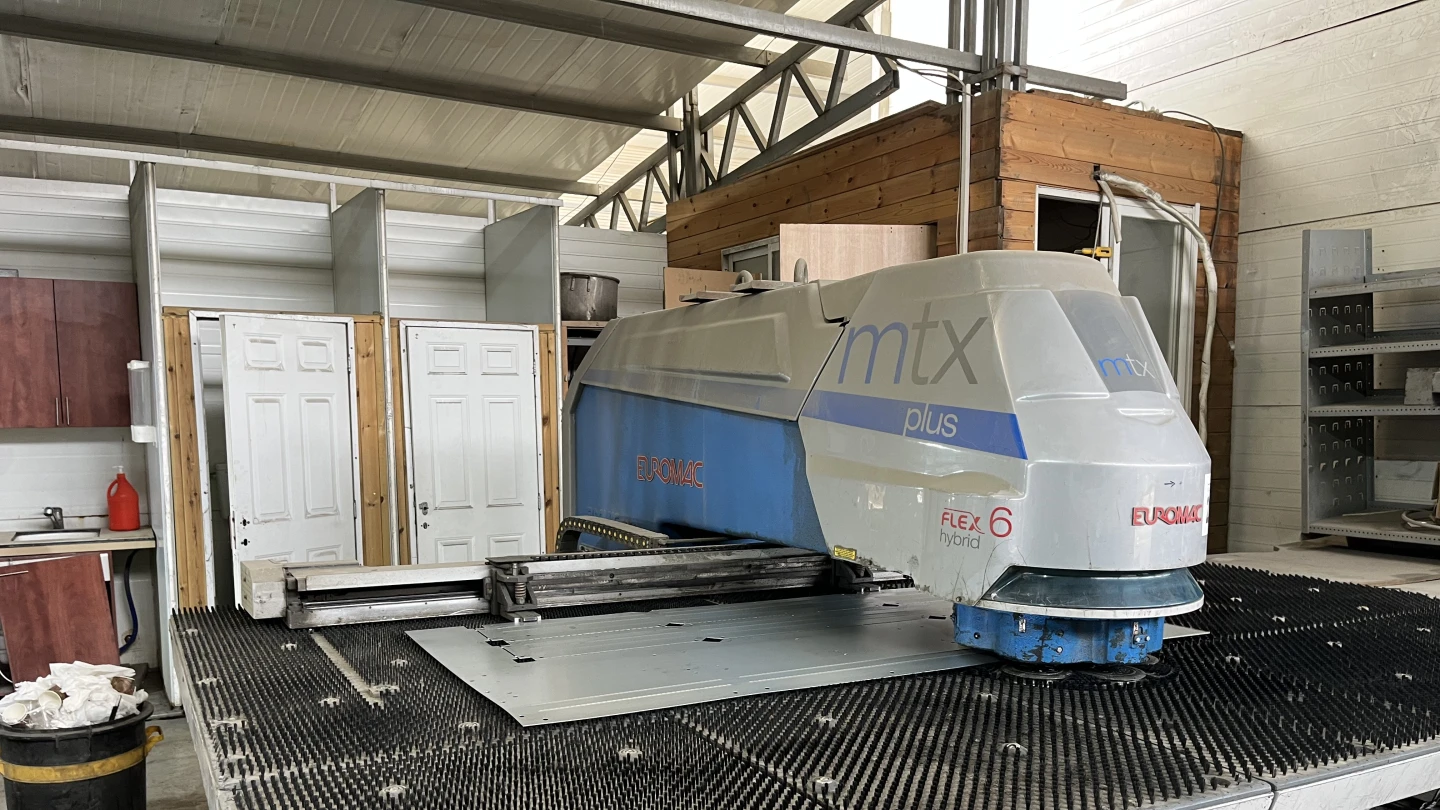
(Oct. 8, 2026 / JNS)
For more than 25 years, Psagot Playgrounds has been designing, manufacturing and installing unique, safe playground and outdoor equipment for public parks and communities throughout Israel and, in recent years, the United States.
The family-owned and operated business, with around 200 employees and now spanning three generations, has its home office and one of its three factories in the community of Psagot, in the Binyamin region of southern Samaria, just north of Jerusalem.
The company was founded by Psagot resident Aryeh Peles, who dreamed of creating playground equipment that would fill children with joy.
During a tour of the Psagot facility, Aryeh’s son and company CEO Elyassaf Peles explained to JNS that his father began designing and manufacturing playground equipment himself in the late 1990s, launching the business in 1998. But it was around the start of the Second Intifada in 2000 that, according to Elyassaf, the company really began to take off, as other playground companies refused to enter Judea and Samaria.
Elyassaf, who now works alongside five of his brothers and sisters and their spouses, joined the family business 19 years ago. He learned the ins and outs of the operation, filling in wherever he was needed before eventually becoming CEO. Today, members of the next generation of the family also work in the business.
He said that until the Oct. 7, 2023, Hamas-led massacre, the company’s sole factory was located in Psagot. However, following the new security realities, the 80 Arab workers who lived in Palestinian Authority-controlled areas were no longer permitted to enter the community for work.
As a result of the labor shortage, the Psagot factory now employs Israeli Arabs and foreign workers alongside Jewish employees. Two newer factories—one near the community of Ofra, about 12 kilometers (7.5 miles) away, and another near the Jordan Valley community of Na’ama—do employ workers from P.A.-controlled areas.
He also described the challenges of running a business during wartime, particularly when many employees—including members of senior management, designers and engineers—were called up for hundreds of days of IDF reserve duty.
“We had no choice. We just kept going, developing and growing, and even getting stronger in all aspects [of the business],” he told JNS.
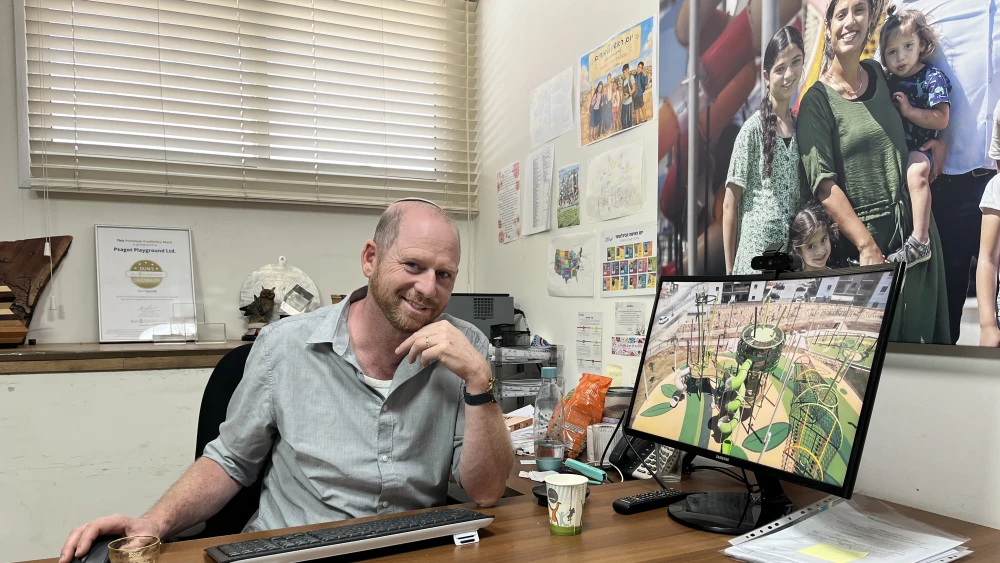
Psagot Playgrounds CEO Elyassaf Peles in his office at the company’s factory in Psagot, in the Binyamin region of Samaria, Oct. 5, 2026. Photo by Josh Hasten.
Elyassaf then shared an online catalog featuring the many playgrounds the company has designed over the years, including several that have received international recognition.
He highlighted a special “Balloon” integrated play system installed at Ganei Yehoshua Park in Tel Aviv, which was designed to be accessible to children with disabilities, including those who use wheelchairs and those with hearing or visual impairments. The project won a 2022 GOOD DESIGN Award from the Chicago Athenaeum Museum of Architecture and Design.
A playground with special meaning
Elyassaf became visibly emotional when describing a special playground the company designed and installed at Kibbutz Kerem Shalom, near the Gaza border, in memory of Amichai Yisrael Witzen, 33, and Moshe Yedidya Raziel, 31, lifelong friends who were killed on Oct. 7, 2023, while defending the kibbutz from Hamas terrorists.
He explained that Witzen and Raziel grew up in Psagot before moving to Kerem Shalom as part of a religious core group seeking to revitalize the kibbutz.
The pair were members of the community’s volunteer first-response team, and according to Elyassaf, their experience growing up in Psagot and familiarity with the security threats there helped them defend the kibbutz when Hamas terrorists infiltrated on Oct. 7.
According to an official IDF probe, six security personnel and soldiers were killed while defending the community, while no residents of Kibbutz Kerem Shalom were killed or abducted on Oct. 7.
“They bravely saved many residents there, including entire families, before losing their lives,” Elyassaf said.
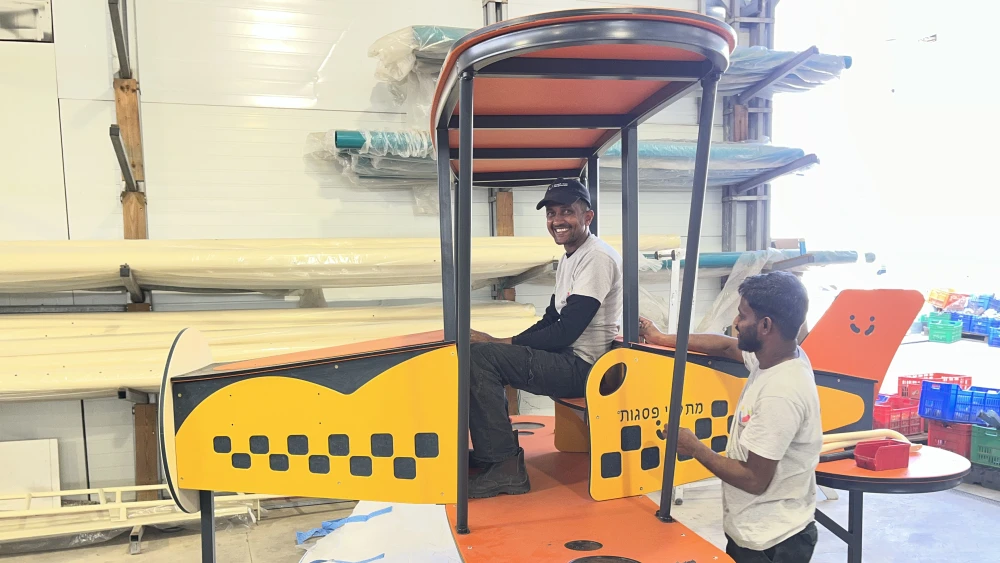
Sri Lankan workers assemble an airplane-themed play structure at the Psagot Playgrounds factory in Psagot, in the Binyamin region of Samaria, Oct. 5, 2026. Photo by Josh Hasten.
Another of the company’s popular designs features weather-resistant, accessible outdoor musical instruments for public parks, schoolyards and community spaces.
The company also designs “extreme” playground equipment, including “ninja” parks and omegas. Elyassaf said its zipline omega is currently operating at the City of David’s Visitor Center on the Armon Hanatziv Promenade in Jerusalem.
Looking to America
In 2022, the company expanded its sales and distribution network into the United States, primarily through established regional commercial playground dealers.
Last week, Psagot had a prominent presence at the 2026 National Recreation and Park Association Annual Conference in Philadelphia, considered a leading U.S. gathering for park and recreation professionals.
Elyassaf said he views Europe as “an attractive market,” but the company does not see a future there amid recent trade restrictions, boycotts, threats of sanctions and other measures by European countries targeting businesses and products from Judea and Samaria.
Spain, for example, has banned imports of “settlement-produced” goods, while the Netherlands has adopted a similar ban, and the United Kingdom and France have announced plans for comparable measures.
“We don’t want to waste time trying to sell there,” Elyassaf said. “We didn’t even try because of the threats of boycotts and sanctions.”
In Israel, Elyassaf said he does not feel that the company faces scrutiny because of its location in Judea and Samaria, perhaps in contrast to when his father first started the business.
“In Judea and Samaria, and really throughout Israel, there is amazing creativity taking place, true pioneership,” he said. “Regardless of ideology, the reality is, Israelis continue to build and make the world a better place.”
“The bottom line is, whoever buys from us, with our diverse population working here—Jews and Arabs, ultra-Orthodox, secular—really strengthens all of Israel. Our success is the success of the entire country,” he added.
This is the second article in a JNS series, “Made in Israel,” highlighting Israeli scientific and technological innovations that are making an impact around the world and explaining the science behind them.