
Voting rights groups are citing recent ICE activity near voting sites and new evidence of intimidation as they expand a lawsuit seeking to keep armed federal agents away from polling places during the midterm elections.
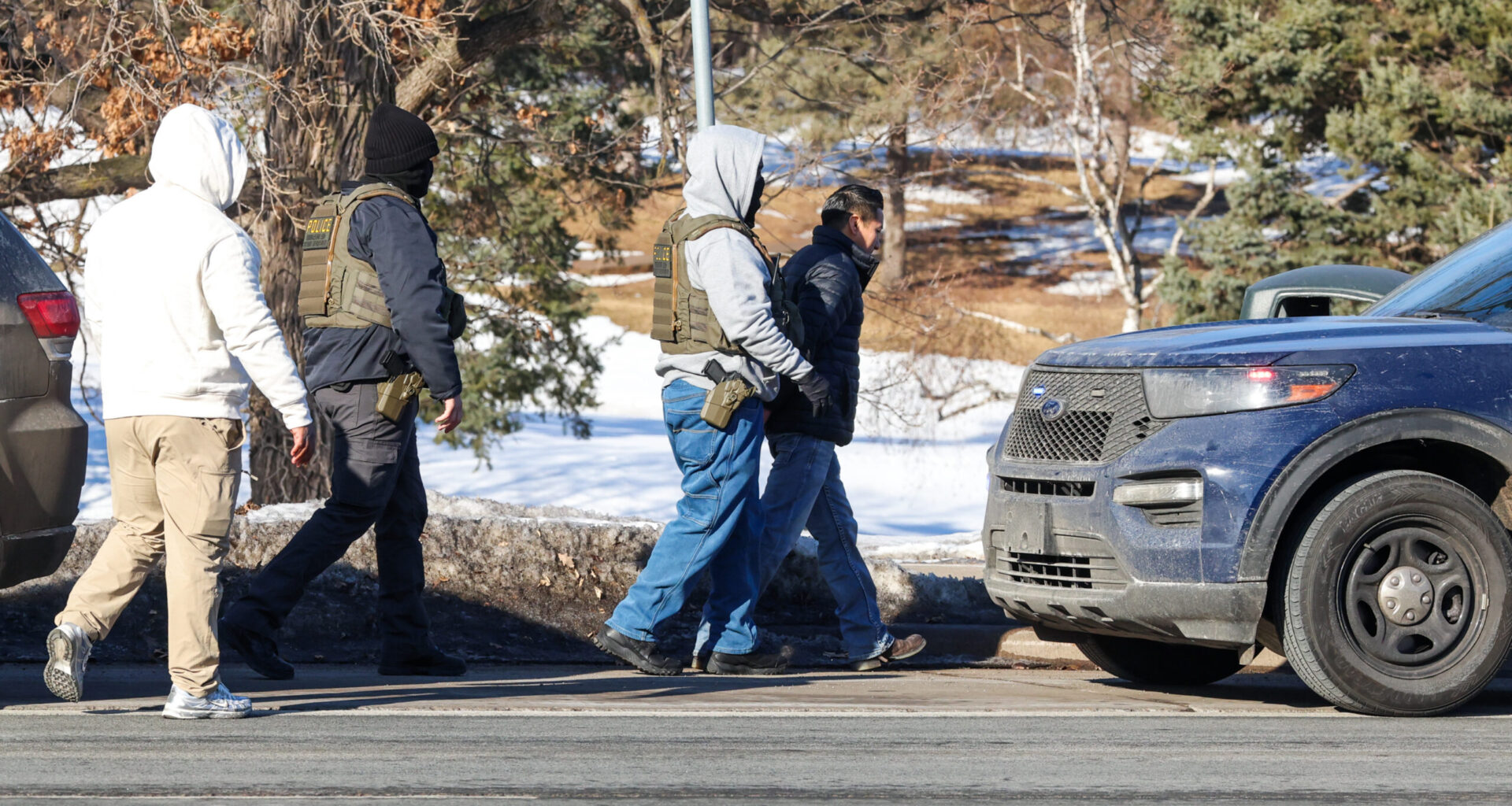
Among the newest examples is an ICE detention that took place Monday in the same area California voters had to pass through to reach a ballot drop box.
The detention occurred at Allan Hancock College in Santa Maria on the first day ballot drop boxes opened in California, according to an amended complaint filed Wednesday.
ICE detained an individual in one parking lot while an adjoining lot in the same parking area served as an active ballot drop-off location. Voters had to pass through the area where agents were operating to reach the drop box.
The filing also points to mounting evidence in Minnesota that the prospect of federal immigration agents around voting sites is already changing how voters and election workers behave.
Hennepin County, which joined the lawsuit Wednesday, says federal investigators working for the Department of Homeland Security have entered election spaces three times in the past five months — once at a city elections office and twice at an early-voting polling place at Hennepin County Government Center.
ICE agents also made at least two arrests in the building’s lobby near the current early-voting location, according to the complaint. Several election workers who witnessed the arrests became distressed, reported feeling unsafe at work and, in some cases, were assigned to other locations.
County election officials have since spent more than 100 hours developing and conducting trainings on how to respond if federal agents appear at voting sites, including de-escalation techniques, evacuation plans and procedures for removing unauthorized people from polling places.
Hennepin County has also developed eight contingency plans addressing the possibility of federal agents at election sites, accounting for 38% of its risk-mitigation planning for the November election, according to the complaint.
The filing describes signs that fear of ICE activity may also be affecting voter outreach.
One nonprofit contracted by Hennepin County to work with African immigrant communities reported that its door-knock response rate fell to between 5% and 10% this year, down from 40% to 45% in previous years. The organization said it had secured no pledges to vote and only one voter registration this year, compared with hundreds in prior years.
The complaint does not establish that ICE activity alone caused the decline, but the plaintiffs cite the figures as evidence that fear surrounding federal agents is spilling into civic participation.
Hennepin County officials also say their elections call center is receiving questions roughly every day from residents worried about federal agents at polling places. Callers have asked how the county would respond, what protections voters would have and what they should do if fear of federal interference makes them reluctant to vote in person.
Those developments are now central to an expanded version of the lawsuit originally filed last month by the League of United Latin American Citizens, Common Cause, UnidosUS and the City and County of Denver.*
The original case challenged what plaintiffs described as a DHS policy allowing armed ICE officers to go to polling places to serve warrants and conduct immigration enforcement.
Wednesday’s amended complaint adds Hennepin County as a plaintiff and broadens the case to include the Department of Justice, FBI Director Kash Patel and Attorney General Todd Blanche. It also adds a claim under Section 11(b) of the Voting Rights Act, which prohibits intimidation, threats and coercion connected to voting.
The plaintiffs now also allege that the FBI has adopted a policy allowing armed agents to go to polling places for election-related enforcement.
They point in part to Patel’s Sept. 15 testimony before the Senate Judiciary Committee. Asked whether the FBI would send personnel to polling places, Patel said the bureau had election-crimes coordinators in all 56 field offices and that the FBI would not “shy away” from election-integrity efforts.
The government has not conceded that Patel’s remarks amount to the formal polling-place policy alleged by the plaintiffs.
The amended complaint argues that recent federal law enforcement activity, administration statements and the documented effects on voters and election workers together amount to intimidation prohibited by the Voting Rights Act.
Plaintiffs say the threat of armed federal officers at voting sites is particularly intimidating to naturalized citizens, people in mixed-status families and voters perceived to be foreign-born.
With voting already underway in some parts of the country, they are asking the federal court to intervene before Election Day.
*Democracy Forward represents the pro-voting plaintiffs in this case. Democracy Docket founder Marc Elias chairs Democracy Forward’s board.