
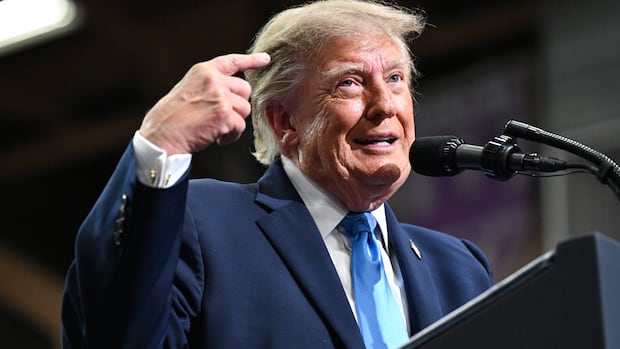
The upcoming midterm elections are a crucial test for U.S. President Donald Trump and the party he’s dominated for the past decade — and early data points suggest it could be something of a bloodbath for the Republicans come November.
Poll after poll released in recent days suggests the Democrats are poised to make major gains among voters who, only two years ago, would have never given the party a chance.
Large swaths of the American electorate appear to be souring on Trump, who returned to power promising lower prices and no more foreign wars — but instead delivered higher prices and a war on Iran in the first two years of his second mandate.
Inflation is also running hotter than it was in January 2025, when Trump’s second term began — which is significant because his predecessor, Joe Biden, also presided over an era of higher consumer prices.
Researchers say Trump’s tariffs have only worsened affordability; without them, prices might have actually fallen slightly, affirming what many economists long predicted.
WATCH | Trump ramps up campaigning before midterms:
Trump ramps up campaigning as midterm polls tighten
Donald Trump is hitting the campaign trail hard as Republicans face growing trouble in the midterms. New polls show Democrats making gains in key races, including some longtime Republican strongholds.
Oil and diesel costs have spiked partly because of the war on Iran and the ongoing Russia-Ukraine conflict, the latter of which he promised to solve within 24 hours of taking office but has since struggled to help end.
After some early victories — stopping the surge of migrants with his border policies, and brokering peace deals — Trump’s popularity has plummeted.
One number-cruncher says Trump is now the most unpopular Republican president since Herbert Hoover, whom historians generally regard as a failure given how he governed during the Great Depression.
“These are historically low approval ratings, like below Richard Nixon at the height of Watergate, and that really doesn’t augur well for Trump and his party,” said Asa McKercher, the Hudson Chair in Canada-U.S. Relations at the Brian Mulroney Institute of Government.
“Not only is Trump unpopular but so are his policies, which have not borne out or bared any fruit.”
That’s why he is floating what McKercher calls “gimmicks” such as $5,000 cheques for every adult if the Republicans retain power in the midterms.
“There’s a sense of desperation there,” McKercher said.
Some Republicans distancing themselves
While Trump has repeatedly told his supporters to “pretend I’m on the ballot,” thinking it will boost Republican fortunes in these congressional races, some of the party’s candidates are distancing themselves given how toxic the president is in certain circles.
Mike Rogers, the Republican Senate candidate in Michigan, who closely aligned himself with Trump in the past, released a new campaign ad Wednesday denouncing the president’s trade war with Canada.
Just this summer, Rogers said Canadians “have not been good partners,” but that was before polling showed the vast majority of Americans are opposed to tariffs on their northern neighbour. Politico found only 26 per cent of Americans surveyed think the Canadian tariffs are the right thing to do.
Susan Collins, the Republican incumbent running in Maine’s tight Senate race, has said something similar about tariffs, while strongly suggesting she doesn’t want Trump to campaign in her state.
“I’m not exactly his favourite senator,” she said in a debate Tuesday.
More Americans now identify as Democrat
Perhaps the most revealing recent data point is the dramatic swing in how voters identify themselves when Gallup pollsters ask them to pick between the two parties.
For much of the last four years, Republicans held a clear edge.
Now, the Democrats hold a double-digit lead as some voters reject a party they thought would deliver better economic results, temper inflation and bring about peace.
Mark Bednar, a former spokesperson for House Speaker Kevin McCarthy who now works as a Republican strategist, said all is not lost for the party — Trump is still hugely popular among the MAGA base and he’s defied the odds before.
But he said the party needs to urgently address what he calls the “enthusiasm gap,” in which Democrats are much more motivated to turn out and vote than their Republican counterparts this year.
Bednar said there’s one big bright spot for the Republicans that can help get those people fired up and off to the polls: a massive fundraising advantage.
Trump alone sits on a roughly $400-million campaign war chest that he can deploy in the closing weeks of this campaign to blanket the airwaves with ads and help boost candidates in tight races.
“The Republicans have a huge financial advantage and that gives them the opportunity to actually get out there, get your message on the airwaves and tell your story as a Republican and prosecute the case against Democrats,” Bednar told CBC News.
“The closer we get to these midterms, the closer the margins will be in some of these races.”
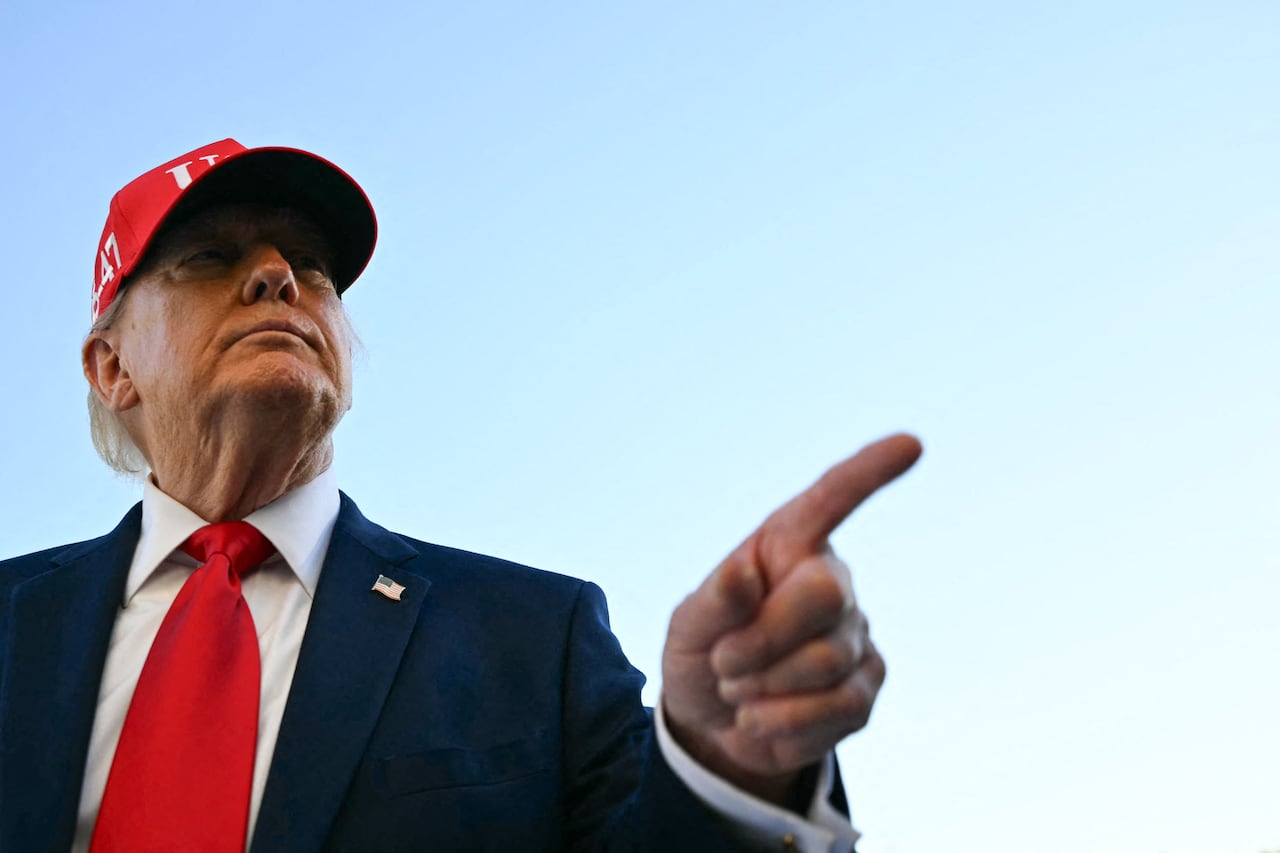
U.S. President Donald Trump speaks to the press at the White House. The Republicans have a huge financial advantage, which could help them close the polling gap with the Democrats. (Alex Wroblewski/AFP/Getty Images)
Reliably ‘red’ states in play, polls suggest
These midterm elections will decide who controls the balance of power in Washington.
Despite state-level efforts by Republicans to gerrymander the maps in their favour, polls suggest the party is poised to lose the House of Representatives — the final result could be relatively lopsided even with the creative map-making — and possibly the Senate.
On the face of it, the electoral map this year looks unfavourable to the Democrats, with many contests in reliably Republican states. (Only one-third of Senate seats are up for election every two years.)
But the most recent New York Times-Siena poll, which politicos watch closely given its past accuracy, shows states long thought of as “red” ones are in play.
Kansas, for example, hasn’t returned a Democrat to the Senate since 1932, but the Siena poll (and others) shows it could break that nearly century-old trend.
Farmers in particular have paid a dear price for Trump’s trade war. Anyone who relies on a tractor or combine to get their products to market knows diesel prices have doubled on Trump’s watch.
In the Republican crown jewel of Texas — where Trump beat Democratic nominee Kamala Harris in the last presidential election by nearly 14 percentage points — new Siena data shows Democrat James Talarico has a six-point lead over the embattled Republican Ken Paxton.
Polls reveal why there has been such a dramatic shift in that historically ruby-red state: Hispanic voters are turning away from the Republicans.
According to exit polls from the 2024 presidential election, 55 per cent of Hispanics in Texas voted for Trump. But just 34 per cent of Hispanics surveyed say they will back Paxton in this campaign, according to YouGov.
About 64 per cent of Hispanics disapprove of the job Trump’s done to this point.
This Hispanic shift follows nearly two years of immigration raids that rooted out many undocumented migrants, including some violent criminals, but also tore apart communities by removing people long established in the U.S.
But white voters in Texas, too, say they are much more likely to vote for Talarico, a political moderate and Presbyterian seminarian with a savvy social media presence, than they were for Harris two years ago.

Democratic U.S. Senate candidate James Talarico pictured in Dallas on Sept. 9. A new poll shows Talarico with a six-point lead over his Republican opponent in the race for the Senate. (Brandon Bell/Getty Images)
The inflation-battered economy has scrambled the electoral equation elsewhere.
In Ohio, a “Rust Belt” state that voted for Trump by wide margins three times, Democrat Sherrod Brown is leading his Republican opponent by three percentage points in the Senate race. Brown’s pitch: “Life is too expensive.”
As part of his recent campaign blitz, Trump visited both Ohio and Texas, but also Alabama and Oklahoma. This was an unusual move so close to a vote, when parties usually focus their leader’s time on must-win swing states.
It suggests the definition of a “swing state” is much different now than in the recent past.
“This could be a perfect storm, where it’s not just a blue wave but a blue tidal wave or tsunami for the Democrats,” McKercher said.