

Listen to this article
Estimated 3 minutes
The audio version of this article is generated by AI-based technology. Mispronunciations can occur. We are working with our partners to continually review and improve the results.
The IWK’s child injury prevention program is applauding the Nova Scotia government’s plan to strengthen child passenger safety laws.
“These changes would make Nova Scotia the first province or territory in Canada to establish these important age-based minimums in law,” Child Safety Link said in a news release on Wednesday.
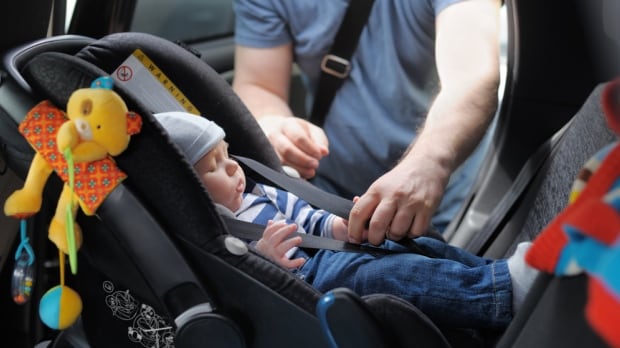
As of Oct. 19, children must remain in rear-facing car seats until they are at least two years old and weigh more than 10 kilograms (22 pounds). Children must also remain in a forward-facing harnessed car seat until they are at least four and weigh more than 18 kilograms (40 pounds).
Previously, the law required rear-facing car seats until children were at least one and 10 kilograms. The harnessed forward-facing car seat rule was strictly weight based at 18 kilograms.
The new car seat recommendations were announced on Wednesday as part of Nova Scotia’s new Traffic Safety Act. It replaces the Motor Vehicle Act and, according to the province, “has greater flexibility, enabling government to respond more quickly to modern and evolving transportation needs.”
Aligning recommendations and laws
Mike Christian, Nova Scotia’s director of traffic safety act implementation, told reporters on Wednesday that the laws will be more in line with recommendations from child safety advocacy groups.
“We are adopting those updated child restraint systems, understanding that the information that new parents receive currently by Child Safety Link and the IWK and other children’s hospitals align more so with the national recommendations rather than what’s in the current rules,” Christian said.
Child Safety Link said the amendments would raise minimum protection for young children travelling in vehicles. Dr. Krista Jangaard, president and CEO of the IWK, described the amendments in a news release as “meaningful changes.”
‘Car seats save lives’
Katherine Hutka, a health promotion specialist with Child Safety Link, said Nova Scotia is taking a “leadership role in Canada” by strengthening protections for child passengers.
“Car seats save lives. Clear, age-based requirements help families understand when children need the protection of a rear-facing seat or a car seat with a harness,” Hutka said in a news release.
The IWK said motor vehicle collisions are the leading cause of death for children in Canada and that car seats save lives. It said all children should be correctly buckled in the right car or booster seat on every ride, in every vehicle.
MORE TOP STORIES