

Listen to this article
Estimated 4 minutes
The audio version of this article is generated by AI-based technology. Mispronunciations can occur. We are working with our partners to continually review and improve the results.
The federal government is launching a $2-billion rebate program that it says will help homeowners in Canada lower their annual heating costs while reducing emissions when they install heat pumps in their homes.
The funding will provide rebates for up to 820,000 homeowners over the next eight years, saving them an average of $1,400 a year on their heating bills when they replace existing heat pumps or heating systems, officials speaking on background said Thursday.
“Homeowners can apply quickly for the rebate when their existing heating system breaks down and they decide to replace it with a new heat pump system,” a background document said.
“They can also apply as their existing heating system approaches end of life, and they want to make the transition before a breakdown occurs.”
The federal government said it will also work with the Canada Mortgage and Housing Corporation (CMHC) to provide low-interest financing for apartment building owners to retrofit more than 280,000 homes over the next eight years.
“When fully taken up, these upgrades will save Canadian families more than $1 billion every year on their energy bills, that is a great return on investment,” Carney said in Sherbrooke, Que.
The federal government is also providing $110 million in funding over three years starting in 2027-28 to renew the Deep Retrofit Accelerator Initiative.
That program provides funding for energy and emission reduction retrofits in commercial, institutional, and mid- or high-rise multi-unit residential buildings
Targeting emergency heating system replacements
The program, which will not begin until early next year, is targeting homeowners that need emergency replacements because their existing system has broken down.
The federal government said every year about one million Canadian households replace their heating system, with 80 per cent of those replacements taking place because their existing system broke down.
In the vast majority of cases, officials explained, people replace their existing system with the same one they had before. The officials explained the government wants to change that pattern.
Officials said the program is being announced months before it launches in order to give government time to consult with industry and allow installers to stock up on heat pumps.
Rebates and eligibility
The program will give rebates to households that earn below the median after-tax income in their province up to $10,000. Households earning over the median after-tax income in their province get a maximum rebate of up to $2,000.
Carney said the program can be combined with provincial grants and rebates for installing heat pumps which will result in further up-front savings.
Officials speaking on background explained the income cut-off will be calculated in the same way that it was for the now closed oil to heat pump program for low- and middle-income households launched in 2022.
That program was focused on replacing oil furnaces and only in some provinces. The new program not only covers households across the country, but also the replacement of other types of heating systems including natural gas, propane, diesel and electric.
WATCH | More about heat pumps: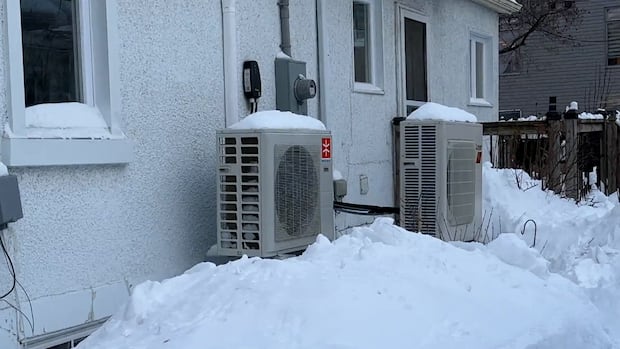
Why people in Ottawa are choosing heat pumps to warm their houses
CBC’s Stu Mills spoke with some homeowners who have installed heat pumps about their pros and cons.
“To qualify for the rebate, heat pumps must be on the Eligible Products List, an extensive selection of over 100,000 options at various price points and configurations, all suited for the Canadian climate,” a government background document said.
People wishing to apply for the rebate can do so before their system is installed through an online government portal that will determine the level of eligibility within 24 hours.
Once the heat pump is purchased and installed, homeowners can return to the portal, upload their receipts and have their rebate approved within five days. The federal government will make a direct deposit into the homeowner’s bank account.