
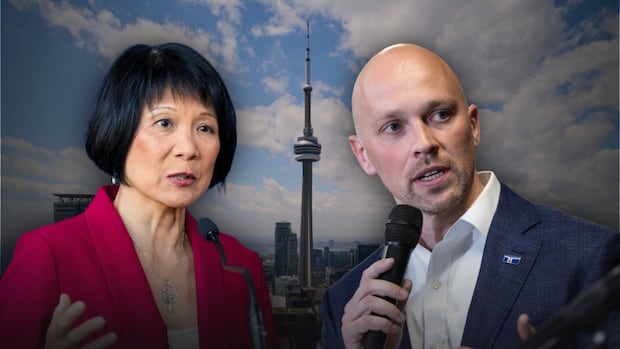
The two top candidates in Toronto’s mayoral race faced off in a head-to-head debate inside the CBC Broadcasting Centre on Thursday.
Incumbent mayor Olivia Chow and Coun. Brad Bradford discussed key issues affecting the city with Chris Glover, host of CBC Radio’s Metro Morning, who moderated the discussion.
At times, the policy talks got personal.
While answering a question about public transit, Bradford commented on how Chow uses a private driver to get around the city. That came after a recent debate where the mayor admitted she doesn’t use transit very often.
Chow defended herself, saying she has extra security as mayor and added she’s an active cyclist. “I’ve been taking TTC since before you were born,” she told her opponent.
The debate dug into the two front-runners’ positions on safety, transit and accountability. CBC Toronto’s city hall reporter, Isaac Callan, additionally asked each candidate pointed questions to hammer out the details of specific promises.
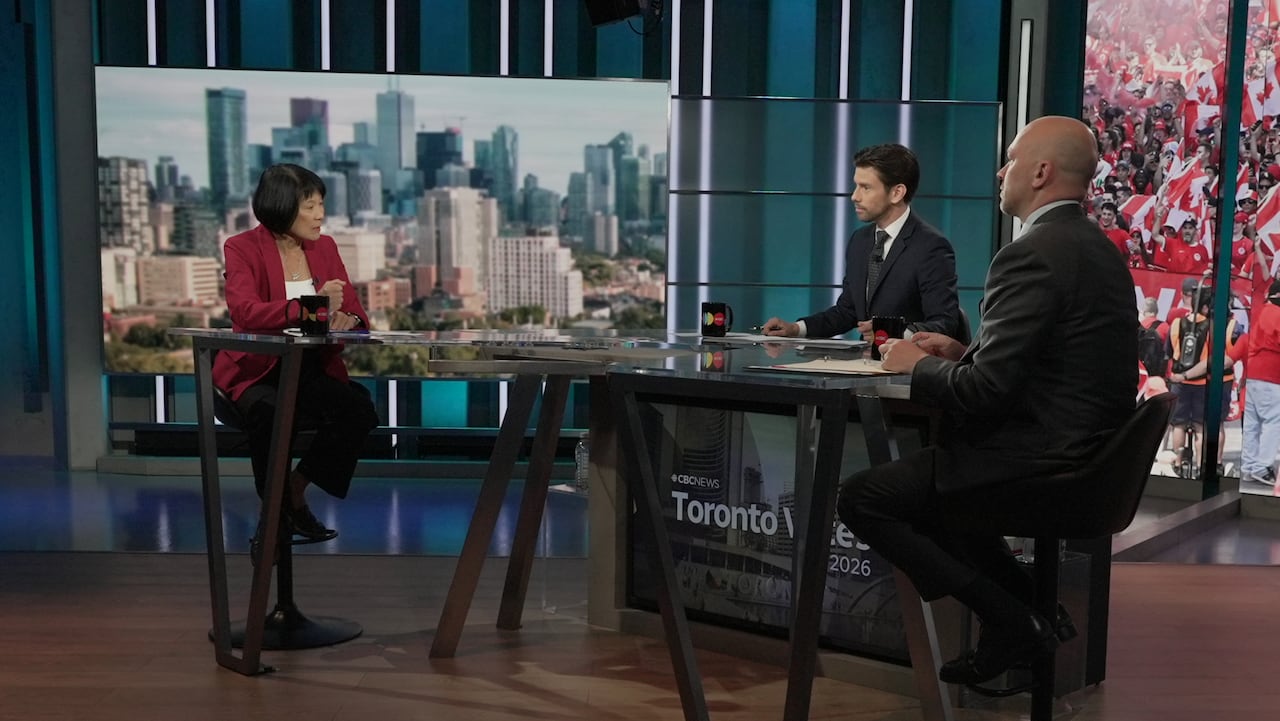
The debate took place at a crucial moment in the election — advance voting is underway across the city until Sunday, and Chris Alexander officially dropped out of the mayor’s race on Tuesday. (Mehrdad Nazarahari/CBC)
This was the third debate for Bradford and Chow in as many days and the competition has been heating up as the opponents make their case for why they should be Toronto’s choice for mayor.
The debate happened at a crucial moment in the election. Advance voting is underway across the city until Sunday, and Chris Alexander officially dropped out of the mayor’s race on Tuesday.
Last week, a survey from Mainstreet Research put Chow about six points ahead of Bradford. She was polling at about 38.1 per cent support to Bradford’s 32.2 per cent. Chris Alexander was polling in third at 7.2 per cent support and, now, his votes are up for grabs.
Candidates pressed over financial promises
Callan — who hosted part of the debate alongside Glover — asked Chow whether she would raise property taxes more than one per cent more than the rate of inflation.
“No, I don’t think so,” the mayor replied.
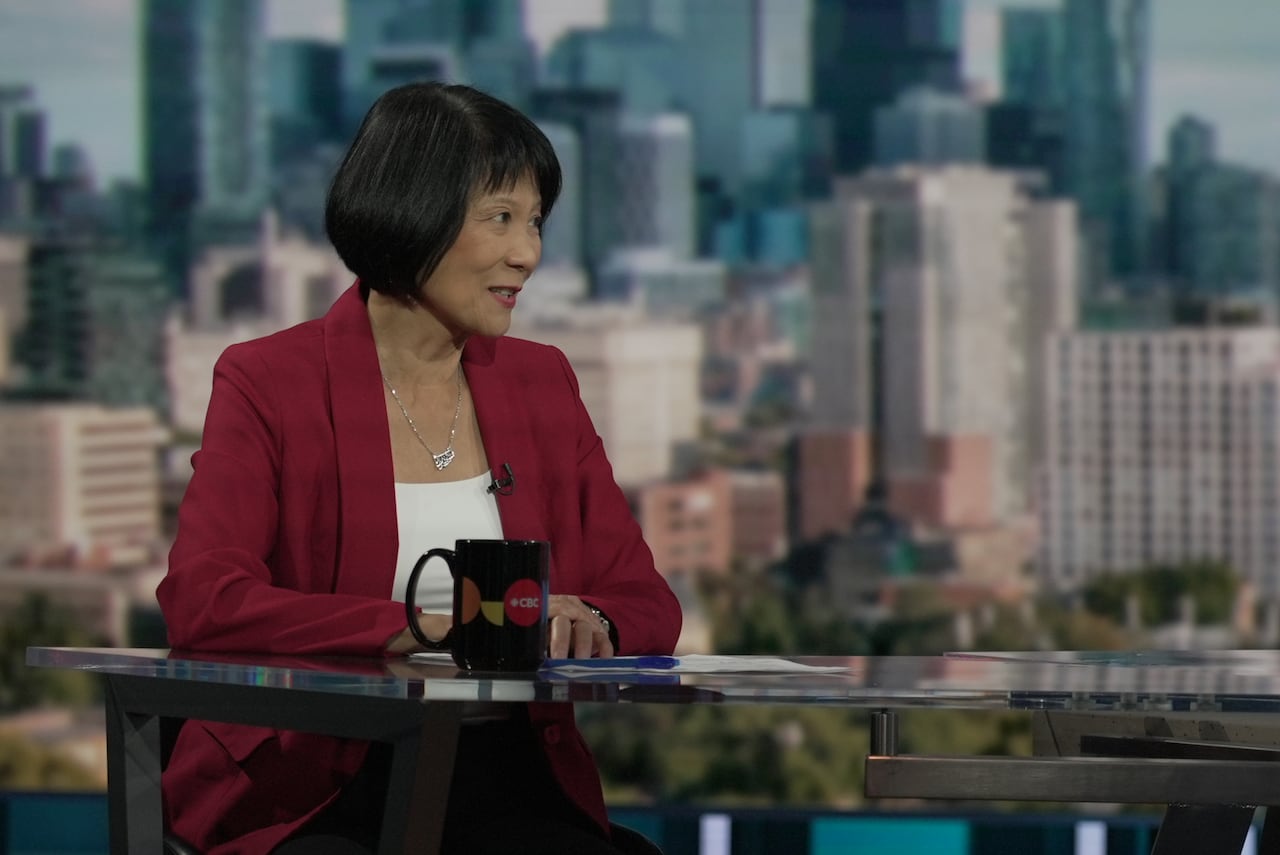
Oliva Chow said she doesn’t think she would raise property taxes more than one per cent more than the rate of inflation. (Mehrdad Nazarahari/CBC)
Chow previously said she would keep property tax increases “at or around” the rate of inflation. She said her past increases to property taxes have filled a budget hole so she can now keep future increases low.
Chow raised taxes 2.2 per cent in 2026, down from 6.9 per cent in 2025 and 9.5 per cent in 2024. The latter was the highest increase in 25 years.
During a period of open debate, Chow said her opponent holds responsibility for sending the city into the red and that he had a hand in creating the circumstances that drove the tax increase — the city had a budget deficit of $1.8 billion post-pandemic when Chow took office.
“I fixed the mess that you helped create, because you were the vice-chair of the budget committee before I came in,” Chow told Bradford.
Bradford’s financial promises amount to hundreds of millions of dollars: Cut water bills, freeze property taxes and remove land transfer taxes on the first $1.1 million of all homes.
The councillor has promised to do an independent line-by-line review to find efficiencies in the city’s budget to help pay for his promises. When pressed by Callan on if he would cut services if the review didn’t find savings, Bradford denied the possibility.
“We are going to find the money,” he said.
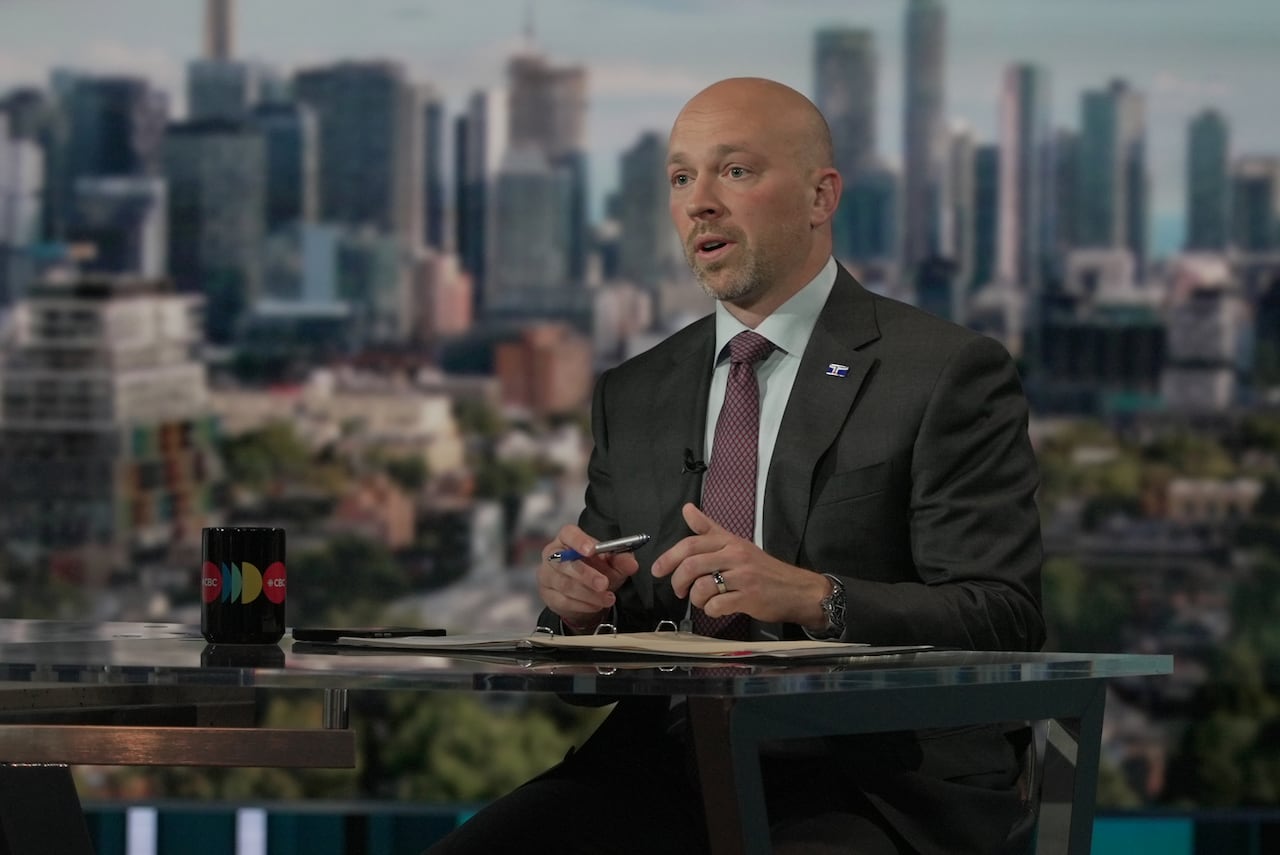
Bradford highlighted his promise to hire 1,000 more police officers and have police presence on the TTC. (Mehrdad Nazarahari/CBC)
Bradford said his plan to pay for infrastructure over decades by taking on debt rather than saving to make a payment up front will “modernize” the city’s finances.
“The province does this, Toronto Hydro does this, it’s time for city hall to do this as well,” said Bradford.
Chow defends housing record
On housing, Bradford attacked Chow, saying she hasn’t followed through on her commitment to build 65,000 purpose-built rental homes by 2030. He said only 1,500, about two per cent of the goal, have been built so far — an attack he’s used in nearly debate of the campaign.
“It’ll take another 115 years to get there if we go at the same pace,” he said.
Chow countered saying she’s “halfway” there on reaching the goal, and accused her opponent of cherry picking statistics by only looking at completed builds rather than factoring in rental units currently under construction or that have been approved.
“You and I know building a building takes two or three years,” Chow said to Bradford.
Opponents clash over public safety
When asked what she would do to make Torontonians feel safer, Chow touted her record of hiring more police officers and first responders and adding programs to prevent youth violence.
She also said she would consult local communities on plans to meet their neighbourhood safety needs.
“The ongoing dialogue police have with the local neighbourhood folks is very important as well,” she said.
Bradford said he would start by sitting on the city’s police service board and criticized Chow for not doing the same during her term as mayor.
“When it comes to leadership, there are some things that are just so important, you don’t delegate them away. Mayor Chow chose not to take her seat on the police board.”
Chow stood by her choice, saying she has confidence the police board is doing a good job under chair Shelley Carroll.
Bradford also highlighted his promise to hire 1,000 more police officers and have police presence on the TTC.
To read more about the candidate’s platforms check out CBC Toronto’s platform tracker.