
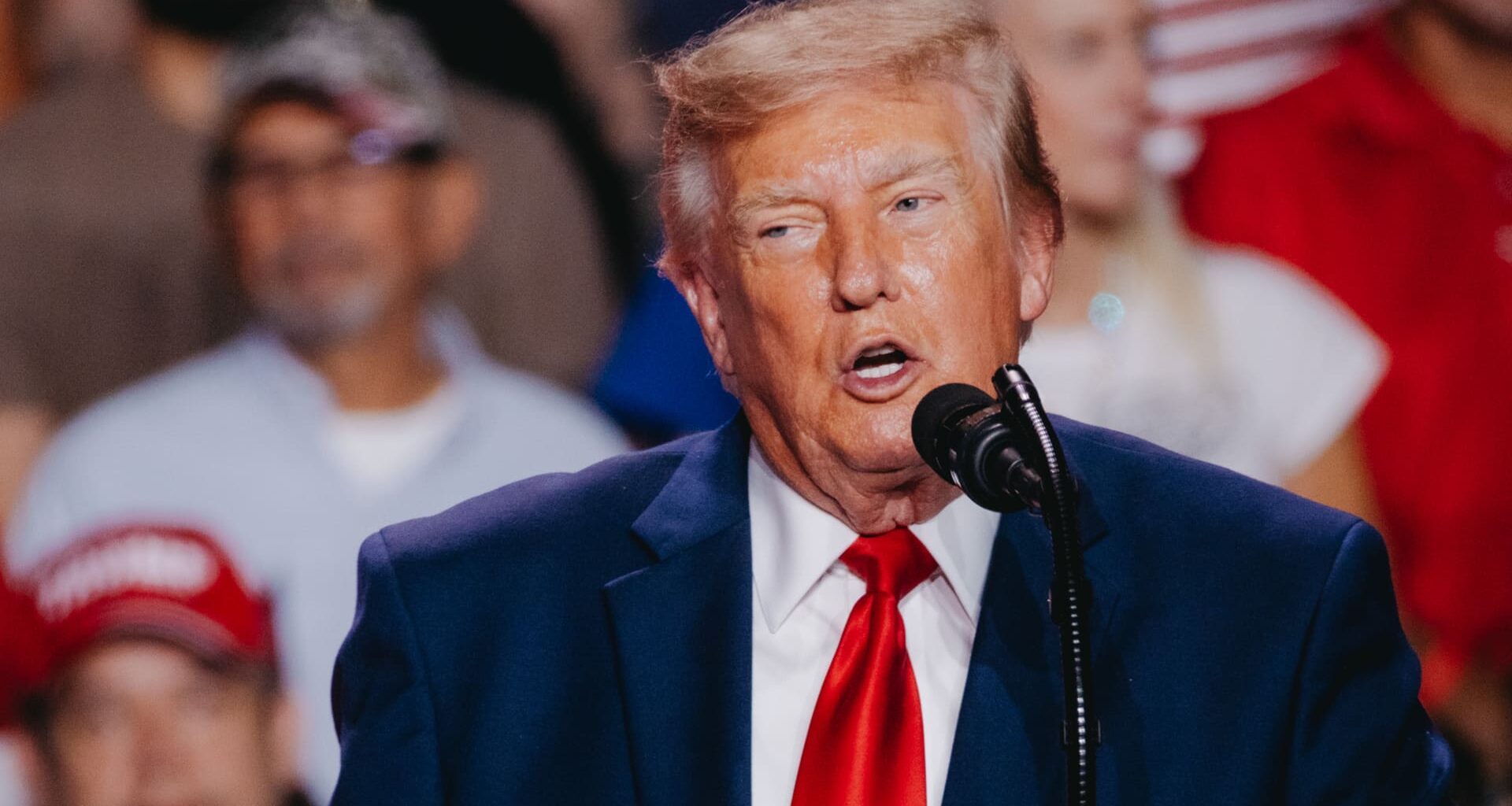
President Donald Trump said Thursday that the U.S. will not attack Iran before the Nov. 3 midterm election, explicitly tying the timing of potential further military action to the domestic political calendar.
“We will not be attacking Iran at any time prior to the Midterm Elections,” Trump said in a post on Truth Social, adding that the U.S. was having “productive discussions” with Tehran.
Trump’s declaration came after he told reporters late Wednesday that his administration was considering renewed strikes against Tehran before the election, helping send oil prices higher amid fears of further escalation. Brent crude rose more than 4% Thursday to above $104 a barrel.
Trump said the U.S. naval blockade of Iran would remain in place and reiterated that Tehran would not be allowed to obtain a nuclear weapon.
It’s a shift from his posture less than a day ago. At a campaign rally Wednesday night, Trump said a deal with Iran was “not really something that I wanted to do.”
The more diplomatic tone comes as voters are already casting midterm ballots and public support for the war has fallen. Just 31% of Americans supported U.S. military action against Iran in an August Reuters/Ipsos poll, down from 37% in March, while 83% expected the conflict to be prolonged.
The war has helped push fuel costs higher, compounding Republicans’ vulnerability on affordability as they fight to retain control of Congress. Poll after poll has ranked the cost of living among voters’ top concerns heading into the Nov. 3 election.
Gas prices have climbed roughly 40% from a year ago, according to AAA data. The national average stood at $4.36 a gallon Thursday, up from $2.98 just before war began in late February.
The political fallout is showing up on the campaign trail. Numerous GOP candidates in competitive congressional races have tried to distance themselves from Trump, often on the Iran war.
Inside the White House, the election calendar has reportedly loomed over the administration’s Iran strategy for weeks. Reuters reported in September that top Trump aides were pushing to keep the war contained through the midterms to limit Republican losses, while leaving open heavier U.S. strikes after votes are tallied.
Trump’s latest statement does just that. Meanwhile, the U.S. is sending roughly 9,000 sailors and Marines and a third aircraft carrier to the region, a buildup that could put three U.S. carriers in the Middle East by late October, the Associated Press reported last week.
The president also claimed Thursday that 22 million barrels of oil moved through the Strait of Hormuz overnight, with none coming from or going to Iran. CNBC has not independently verified that figure.
Kpler data show about 11.3 million barrels per day of crude oil and petroleum products exited the strait during the week ended Tuesday, while total oil flows from the region stood at 20.4 million barrels per day.
– CNBC’s Spencer Kimball contributed to this report