
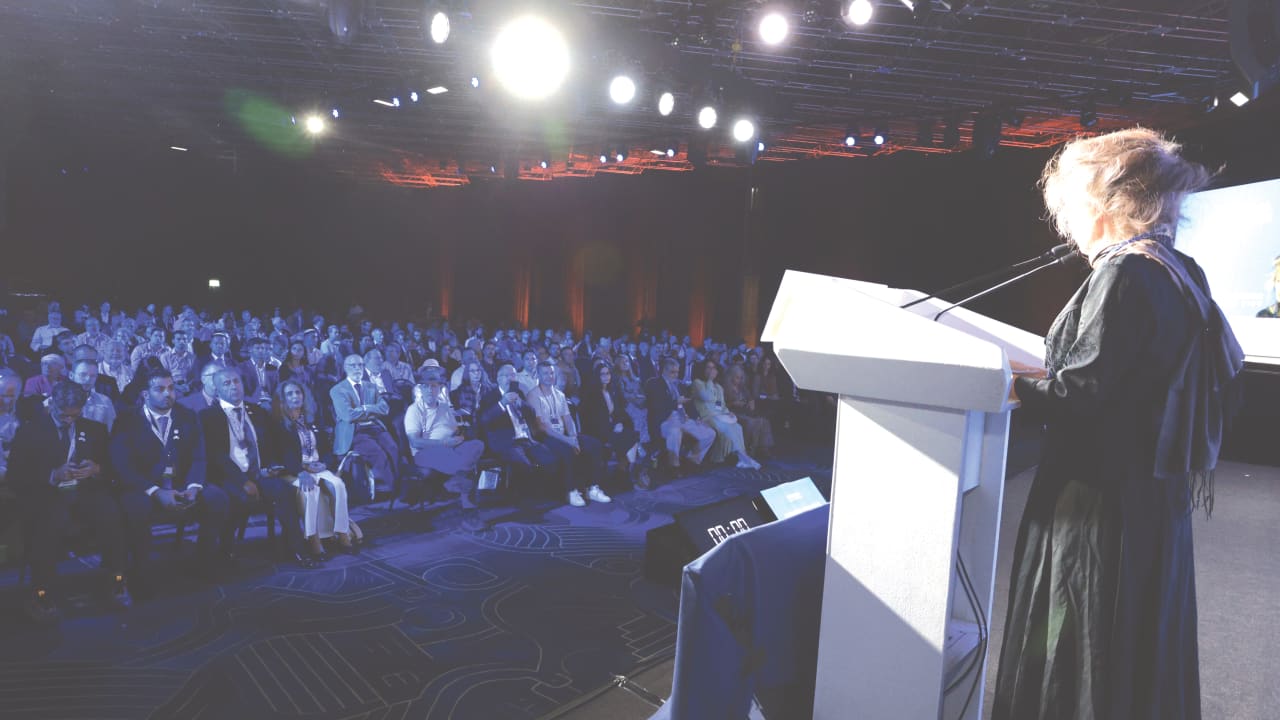
At the National Conservatism Conference in Jerusalem this week, Israeli historian Gadi Taub described progressive Jews whom he accused of appeasing antisemites as “no longer our friends.” I respect Gadi and think highly of his work. I disagree with writing those Jews off, and I worry that we are missing how much American Jewish life has changed since October 7.
NatCon, part of the national conservatism movement founded by Yoram Hazony, brought together politicians and thinkers from Israel, the United States, and Europe. They offered plenty of advice on how other people should run their independent nations. Some arguments made me reconsider assumptions; others troubled me. I also heard Israelis on the Right struggling with things said by people they had expected to agree with. Those conversations were worth having.
I was born in Chicago and grew up in Israel. I still consider American Jewry a community I belong to. Since October 7, I have seen leaders become more outspoken in Israel’s defense and more restrained in their criticism, even when some constituents wanted them to be harsher. They deserve recognition, including when the changes fall short of what Gadi or I would like.
Rabbi Ammi Hirsch, senior rabbi of Manhattan’s Stephen Wise Free Synagogue, has urged Reform Judaism for years to strengthen its commitment to Zionism and Jewish peoplehood. In 2023, I reported his warning: “I fear that we are losing the soul of the Reform movement.” He wanted Reform Jews to place responsibility for their own people at the center of their Judaism.
 An American Jewish man praying (credit: REUTERS)
On Yom Kippur 2024, he told younger Jews: “We wanted you to be Zionists.” He also acknowledged flaws in his synagogue’s educational approach. This May, more than 350 rabbis, cantors, educators, and other participants gathered at his Re-CHARGING Reform Judaism conference, which adopted resolutions renewing commitments to Zionism, Jewish peoplehood, and Israel education. I see Reform rabbis reconsidering what they teach and how they speak about Israel, with a stronger emphasis on Zionism and Jewish solidarity.
Hirsch is asking what his movement taught its children. Conservatives should ask themselves the same question. Younger Republicans and Democrats are both becoming more critical of Israel. Could failures in education explain part of this? I want young people to know our history well enough to argue with us intelligently.
The Anti-Defamation League also came in for plenty of criticism at NatCon. The ADL is a major institution devoted to monitoring and combating antisemitism, with an annual US incident audit dating to 1979. As a journalist, I consider its research among the most important and systematic bodies of evidence we have for understanding antisemitism in America.
I have known Jonathan Greenblatt, its CEO and national director, for many years. We have had serious disagreements about the ADL’s positioning and its responses to Israel’s internal affairs. I often felt it was reading Israel through American political categories and failing to understand how different Israeli society is.
Since October 7, Greenblatt has become, in my view, one of Israel’s most articulate and influential defenders on American television. He has been a staunch supporter, explaining Israel’s predicament to audiences well beyond the Jewish community. I also see a change in the organization. In 2025, he explicitly pledged to concentrate its energies on Jewish safety while continuing to oppose other forms of bigotry. Singling out the ADL for attack while overlooking that work and that shift is unfair.
American Jewish leaders are also holding together communities whose members disagree sharply about Israel. They need room to speak honestly. Asking them to defend every Israeli policy would make that work harder. Our relationship should accommodate criticism, including criticism I find unfair. I would keep the conversation going even with Jews whose politics have barely moved.
Israel needs allies. We should be open to politicians and parties who reconsider their positions and act accordingly. My mentor on these issues is Dani Dayan, chairman of Yad Vashem, Israel’s Holocaust memorial. He has taught me to examine the country, the party, and the individual. Dani once avoided visiting Germany and Austria; their acceptance of historical responsibility persuaded him to reconsider.
In May 2023, I reported on two MPs from Germany’s far-right Alternative for Germany party, known as AfD, and an aide who toured Yad Vashem. Dayan and the senior staff declined to meet them, and a request for a memorial ceremony was refused. He hoped the visit would change their views.
I’m open to parties changing. I’d like to see something more substantial than their English-language websites. If a party claims to have dealt with antisemitism, will it remove an antisemite when doing so costs votes? How does it speak about the Jews in its own country?
An Israeli handshake has political value. Before offering it, we should consult the local Jewish community. Its members hear the local speeches and will still be there after our delegation has gone home. Their disagreements with Netanyahu should not affect whether we listen to their evidence.
We are prepared to recognize changes in prospective allies abroad. American Jewish leaders deserve the same attention. And our obligations to fellow Jews extend to those who continue to disagree with us. They are our brothers and sisters, and I’m not willing to give them up.