

Listen to this article
Estimated 4 minutes
The audio version of this article is generated by AI-based technology. Mispronunciations can occur. We are working with our partners to continually review and improve the results.
The Pentagon says the firing squad execution of Fort Hood shooter Nidal Malik Hasan will be livestreamed after War Secretary Pete Hegseth said the execution would be “public.”
Hegseth, speaking to the conservative TV outlet Real America’s Voice News on Wednesday, said the execution of Hasan will take place at Fort Hood on Dec. 3.
Hasan, a former U.S. army officer, was convicted of killing 13 people and injuring 32 others in a shooting at the military base in 2009.
“We’ll make sure that people are able to watch it, that it’s public,” Hegseth said.
Hegseth spoke to the outlet aboard the USS Abraham Lincoln aircraft carrier while visiting the long-deployed crew, who supported the Iran war, before their arrival at their home port in San Diego.
When asked if Hasan had made any final requests or reached out to the Trump administration, Hegseth simply replied: “Don’t care. We’ll see him on December 3rd.”
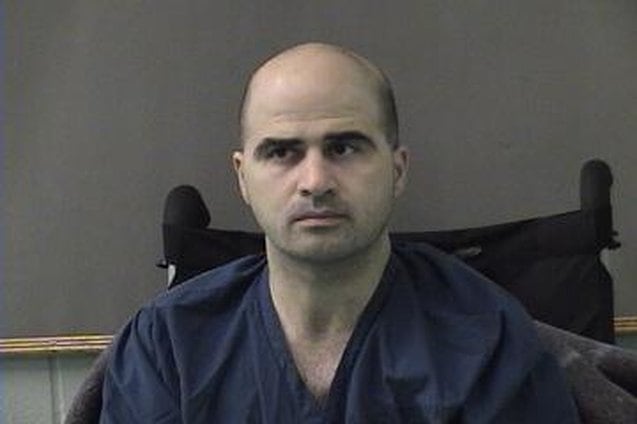
Former U.S. major Nidal Hasan, the army psychiatrist convicted in the 2009 Fort Hood shooting, will be executed Dec. 3. (Bell County Sheriff’s Office/Getty Images)
Hasan, an army psychiatrist who held the rank of major, walked into a medical building where soldiers were getting checkups, shouted Allahu akbar — Arabic for “God is greater” — and opened fire with a laser-sighted handgun.
During the trial it was revealed that Hasan spent weeks planning the deadly attack, and his preparation included videotaping a sales clerk showing him how to change the magazine on the pistol that he purchased. He would later go to a gun range outside Austin and ask for advice on how to reload with speed and precision from an instructor.
Soldiers later testified that Hasan’s rapid reloading made it all but impossible to stop the shooting.
Pentagon spokesperson Sean Parnell had said Monday that U.S. President Donald Trump had approved the execution of Hasan.
The White House on Thursday immediately referred questions about the plans for the livestreamed execution to the Pentagon.
Officials in the Pentagon clarified Thursday that the execution will be livestreamed and that more details would follow.
Mixed reaction
Deborah Denno, a death penalty expert and law professor at Fordham University, said livestreaming an execution could make the process “much more transparent” and inform the public about all that capital punishment entails. Those are benefits that she said would be useful at a time when Christa Pike’s botched execution in Tennessee has raised fresh questions about the manner by which criminal defendants are put to death for their crimes.
“I think it could possibly be a good idea because it would be transparent and the public would be fully aware that it’s happening,” she said.
When many states have had difficulty carrying out lethal injections due to difficulty accessing drugs or finding medical professionals willing to participate in executions, firing squads are coming to be seen as a less inhumane alternative, said Brenner Fissell, a professor at Villanova Law and vice-president of the National Institute of Military Justice.
“Firing squads can be a quicker, cleaner, more precise way to execute a prisoner,” he said. “I don’t think that’s what’s motivating this. There’s a perceived masculinity and military-ness to firing squads that is part of the aura Hegseth is trying to emphasize — the ‘lethality culture.'”
Elisabeth Semel, co-director of the Death Penalty Clinic at UC Berkeley Law, said Hegseth’s announcement raises a host of legal and public policy questions, including concerns for the dignity of the defendant, who will be eligible to view the execution and what the Trump administration has in mind in opting for an unusual spectacle.
Though there has been long-running discussion about the idea of televising an execution, “I don’t recall a situation in which it was instigated by the government. I think that also raises serious questions about what is the motivation of the government,” she said.
“This is a president who’s about spectacle and that’s, I think, precisely the message that he intends to deliver,” Semel said, adding that she was skeptical that the administration had given second thought to the legal and social questions being presented by the decision.
The military hasn’t executed a servicemember by firing squad since the Second World War. The last military execution took place on April 13, 1961, when Army Private John Bennett was executed by hanging.