
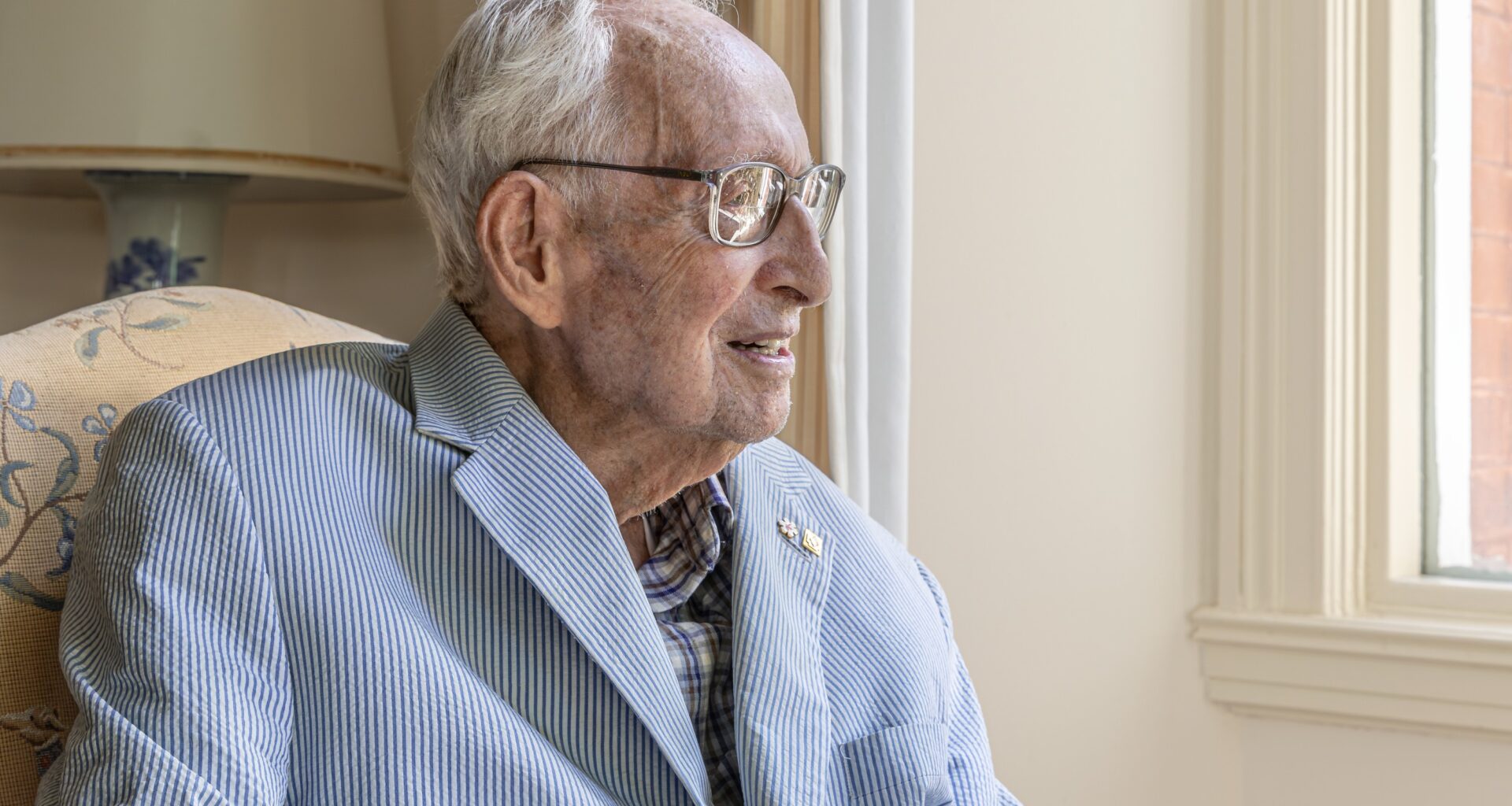
Investor and philanthropist Stephen A. Jarislowsky has died at the age of 101, his family said Thursday afternoon.
The founder of investment management firm Jarislowsky Fraser Ltd., he was an outspoken advocate for good corporate governance whose defence of shareholders’ rights at times put him in conflict with the companies he invested in.
As a philanthropist, he endowed dozens of research chairs at universities across the country and supported education and the arts.
Jarislowsky lived by basic values of trust and ethics, said former governor general David Johnston, a long-time friend.
“The notion of trust and ethics were very real. They weren’t just sayings,” Johnston said in an interview. “He was very focused on building trust in investment institutions. And, in particular, focused on good governance, governance that was ethical, was long term and involved a fair deal for investors.”
Born to Jewish parents in Berlin in 1925, Jarislowsky’s family escaped from Nazi Germany, first to the Netherlands and then to France. In 1940, when Germany invaded, he was forced to flee again.
In 1941, he arrived in the United States. He attended school in North Carolina before studying mechanical engineering at Cornell University.
He was drafted into the U.S. Army in 1944 and was sent to occupied Japan in 1945, where he worked in counter-intelligence.
Karl Moore, a professor in McGill University’s Faculty of Management who had a longstanding relationship with Jarislowsky, said the U.S. army “sent him over to Japan because he spoke fluent Japanese, which was unusual back then for an American.”
Moore noted Jarislowsky had a “unique background” and an “unusual” story. “He was born in Germany. His father died. His mother, who’s German, married a Frenchman, and they moved to Paris. So he spoke German and French, which in World War II, German was critically helpful.”
After returning to the U.S. in 1946, he graduated from the University of Chicago before attending Harvard Business School, graduating with an MBA in 1949.
Jarislowsky soon got a job with Alcan Aluminum, which brought him to Montreal for three years. He would briefly return to the U.S. before coming back to Montreal, where he would live for the rest of his life.
He started Jarislowsky, Fraser & Company Ltd. in 1955. Initially an investment research boutique, it soon began offering investment advice and began managing investments for a pension fund during the 1960s.
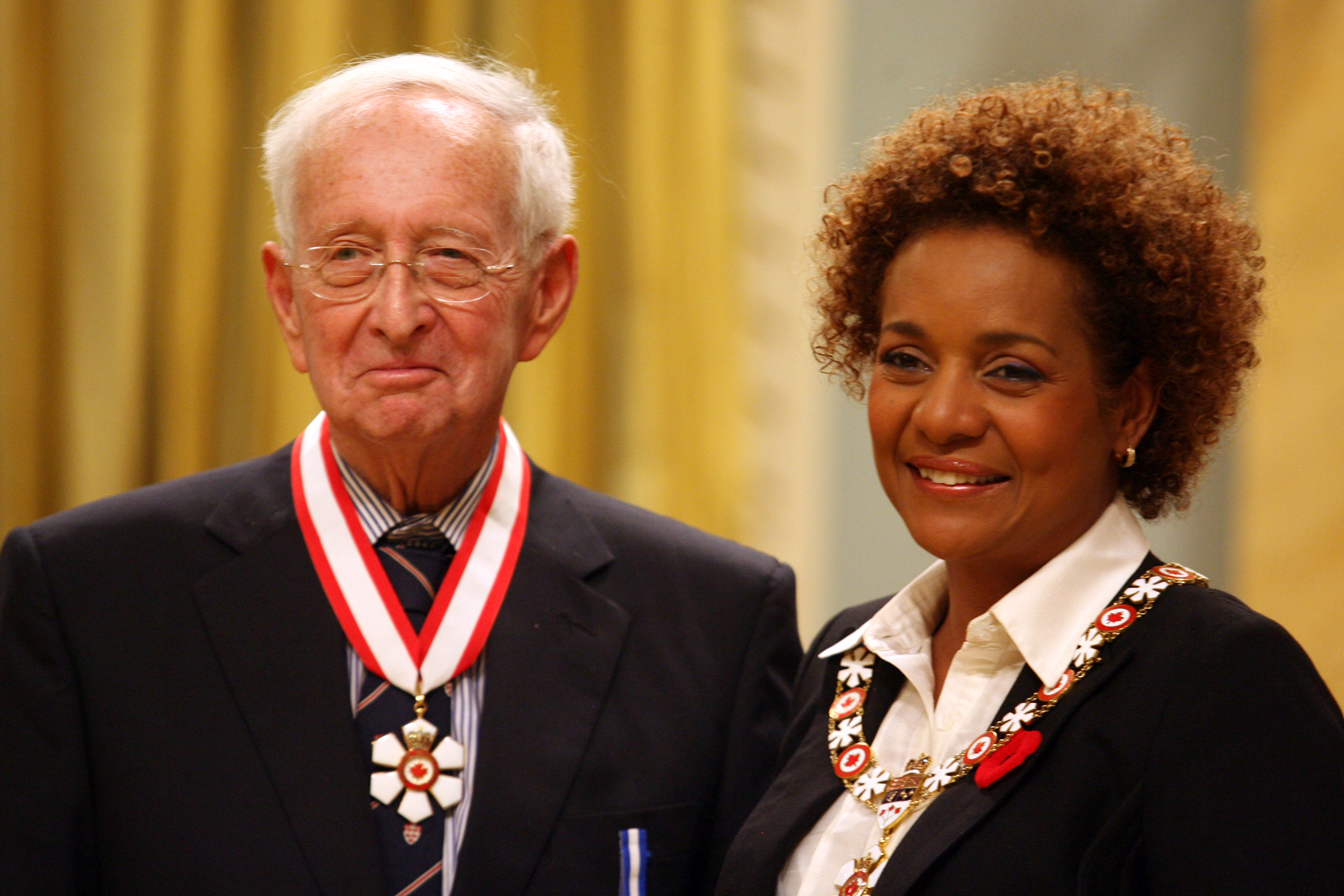 Stephen A. Jarislowsky at Rideau Hall with Governor General Michaelle Jean on on Nov. 5, 2009, when he became a Companion of the Order of Canada. Pat McGrath / Postmedia
The company would grow to become one of Canada’s most successful independent investment managers and make Jarislowsky a billionaire.
When he sold the company to Scotiabank in 2018 for $950 million, it had $40 billion in assets under management.
Moore regularly invited Jarislowsky to speak to his business students “because he was a billionaire.”
“He was incredibly insightful, and had advice for people too on how to do their business better,” Moore said in an interview following Jarislowsky’s passing. “The students were thrilled to have someone of his stature in the classroom.”
But it was his advocacy for corporate ethics and shareholder rights, as well as his investment success, that built Jarislowsky’s reputation. He railed against excessive salaries paid to executives and takeover deals that he believed were unfair to investors.
As a money manager, he saw himself as having a responsibility to defend the interest of public shareholders, writing in a 1988 commentary in the Financial Post that he believed the directors of public companies should be required to act in the interest of all shareholders and that they should protect minority shareholders in particular.
“We believe that directors should be carefully chosen from people who are informed, ethical, and who learn the business of which they are directors. They cannot be merely safe cronies of the majority shareholder or of management. We do not believe that management or the board can unilaterally oppose a takeover to save their own jobs. If a big, fat bid is on the table, they cannot deny it to the shareholders,” he wrote.
Despite taking strong public stances — and putting the money and shares he managed behind those positions — Jarislowsky described his investment strategy as a conservative one that looked for long-term gains and eschewed fads.
In 2002, he co-founded the Canadian Coalition for Good Governance with Claude Lamoureux, then-president of the Ontario Teachers’ Pension Plan, a group of large investors that has worked to promote good governance among the companies its members own.
In 2012, he stepped back as CEO of Jarislowsky Fraser, though he remained chairman of the board and continued to manage certain accounts.
He has said that after retirement, his focus was giving his money away — donating $15 million last year and around $10 million a year in other recent years.
He endowed around 50 research chairs at Canadian universities, including at Concordia and McGill, with focuses ranging from improving public- and private-sector governance, to medical and scientific research, to art and environmental studies.
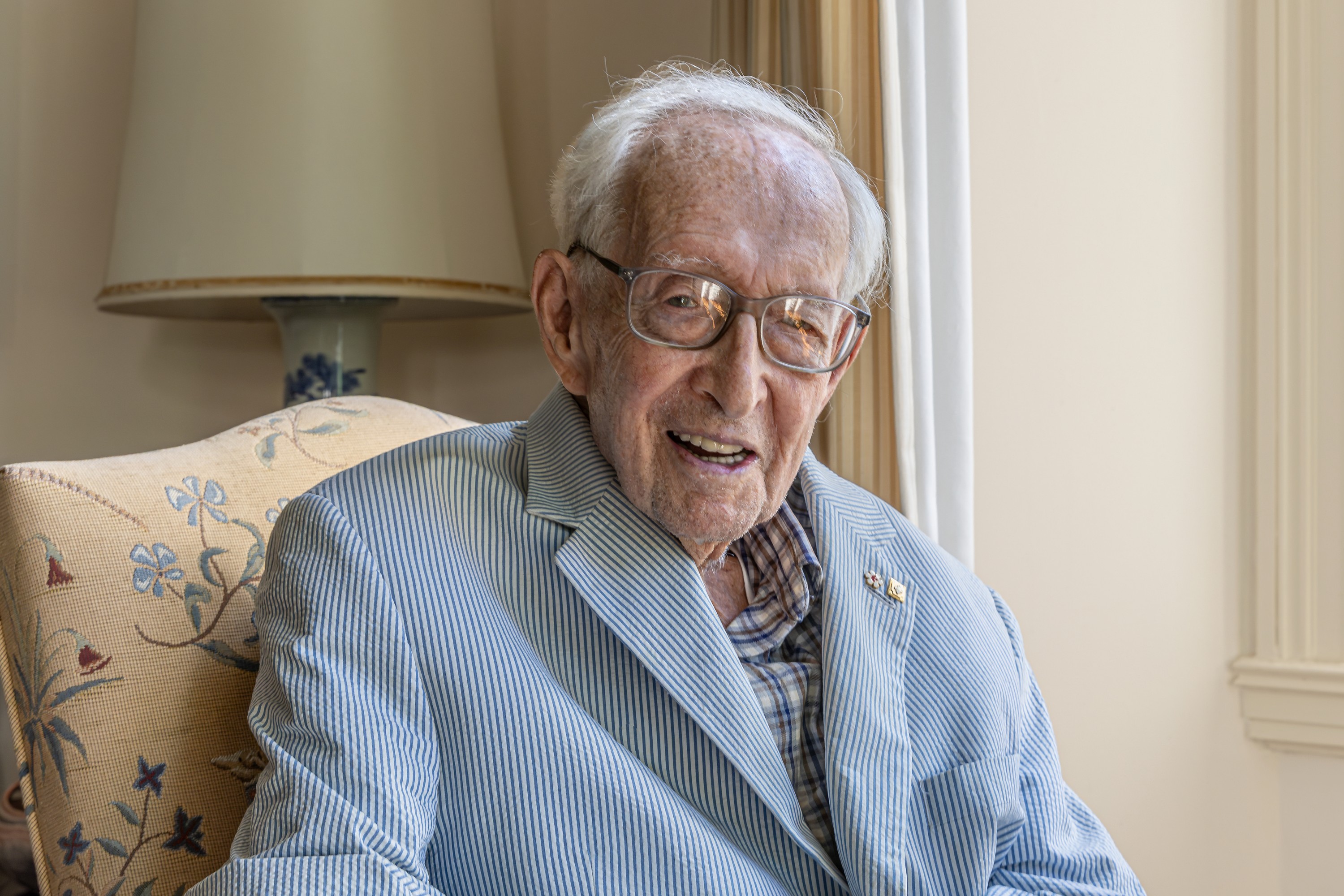 Stephen A. Jarislowsky at his home in Westmount on Sept. 16, 2025. Dave Sidaway / Montreal Gazette
Johnston said part of the motivation to give back came from Jarislowsky’s experiences.
When he arrived in Canada, “it was a bit of a struggle. He was a new immigrant; he was not part of the establishment, but he built an extraordinarily powerful investment firm, Jarislowsky Fraser, and then felt that having done extremely well financially, he had a responsibility to give back,” Johnston said, adding that Jarislowsky’s contributions weren’t just through his philanthropy, but also through the positive work done by the Canadian Coalition for Good Governance and other organizations he was involved with.
An art collector, Jarislowsky was also a supporter of several museums, including the Montreal Museum of Fine Arts.
“Any human being who rises in fortune and anybody who is able to have a foundation should aim for excellence and not pay for the norm — that’s the government’s function,” he told The Gazette around the time he celebrated his 100th birthday. “The excellence in society can come, and should come, from people who have more money than they need.”
The experience of growing up amid Adolf Hitler’s rise to power shaped Jarislowsky’s political views — including his advocacy for democracy, good governance and trust in institutions.
During the 1990s, those views influenced his criticisms of Quebec’s sovereignist movement.
“To me, the separatist option has little rational, economic sense. It is just the desire of a small group to take power,” he wrote in The Gazette in 1996, as he advocated against appeasing the sovereignist movement and called for Montreal to “be bilingual and cosmopolitan.”
That year, he would also suggest in the pages of this newspaper that the greater Montreal region should become an independent city-state, not unlike Singapore, or (at the time) Hong Kong, that could “attract the best talent from Quebec, Canada and elsewhere” and win investment through tax policy.
Editor’s Picks
Jarislowsky also criticized federalist politicians and, at times, called for lower taxes, particularly on capital gains, which he said unfairly taxed people who spent years building businesses because capital gains taxes don’t account for inflation.
“He loved a good argument. He had a great sense of humour and he was really tough on people who he felt were not meeting ethical standards and, as a consequence, he was pretty tough on some of the companies in whom he was an investor,” Johnston said. “He was tenacious and true to his word. You wanted to be on the right side of Steve.”
Jarislowsky lived more than 50 years in the same Westmount home.
“It’s never been about the accumulation of great fortunes for me. I try to live simply. I never wanted private planes or yachts. I love art and music. I also love washing the dishes every night. That was my first job and that will be my last job,” Jarislowsky told The Gazette last year.
He is survived by his wife, Gail; his son, Michael; his daughter, Alexandra, who followed her father into the investment business at Jarislowsky Fraser; and his daughter Marika, who currently sits on the board of the Jarislowsky Foundation.
Another son, Stephen, died in 2014 at the age of 63.
