
More than three years after it broke out, Sudan’s deadly civil war is still raging, fueling one of the world’s worst humanitarian crises.
More than 150,000 people have been killed, 14 million more displaced and 33.7 million people – more than two-thirds of Sudan’s population – require urgent humanitarian assistance, the Red Cross reported in July.
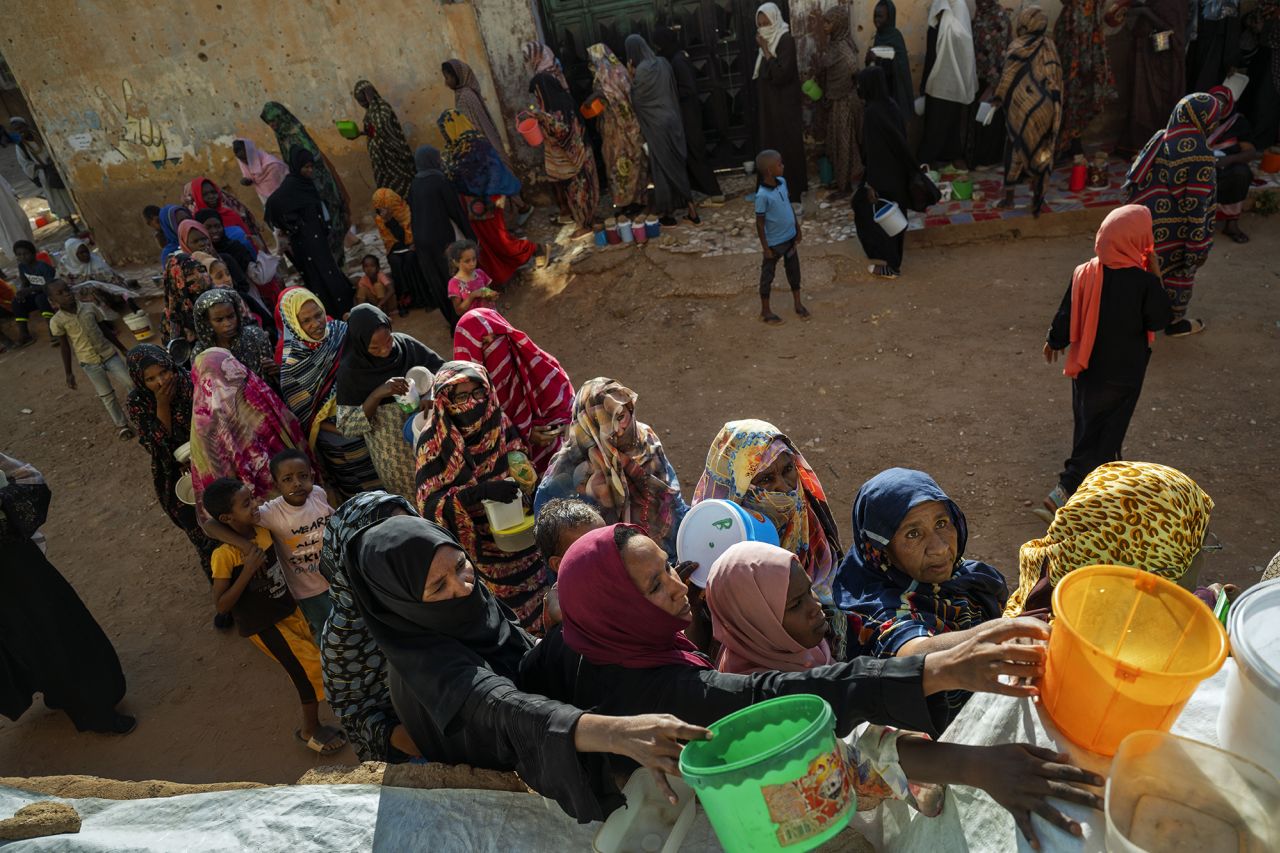
But international aid organizations have struggled to reach those in need. In their absence, the community-led Emergency Response Rooms have stepped in, providing food, clean water, medication, community kitchens, health clinics and trauma counseling.
The network of community-led initiatives is listed as a possible laureate by the Peace Research Institute Oslo (PRIO), which publishes a list of five worthy potential winners each year.
“In light of Ukraine and Iran and all of these big geopolitical wars, the Sudan war can end up a little on the back bench, but it is a war that entangles in it a lot of the dynamics in the Middle East with the rising conflict over the Red Sea,” says Haakon Gjerløw, acting director of the PRIO.
“The Houthis are intensifying their attacks. We now have also a new war in Ethiopia. So the whole Horn of Africa is becoming entangled with a lot of interests of the different actors in the Middle East,” he told CNN.
Alsanosi Adam, a volunteer and one of the Emergency Response Rooms’ spokespeople, told the Guardian last year: “You risk anything from intimidation to death. From torture to being killed – and everything in between.”
The network emerged from the Sudanese tradition of “Nafeer,” meaning a “collective call to action,” and first developed during earlier upheaval in 2018 and the Covid-19 pandemic, according to aid group Save the Children.