
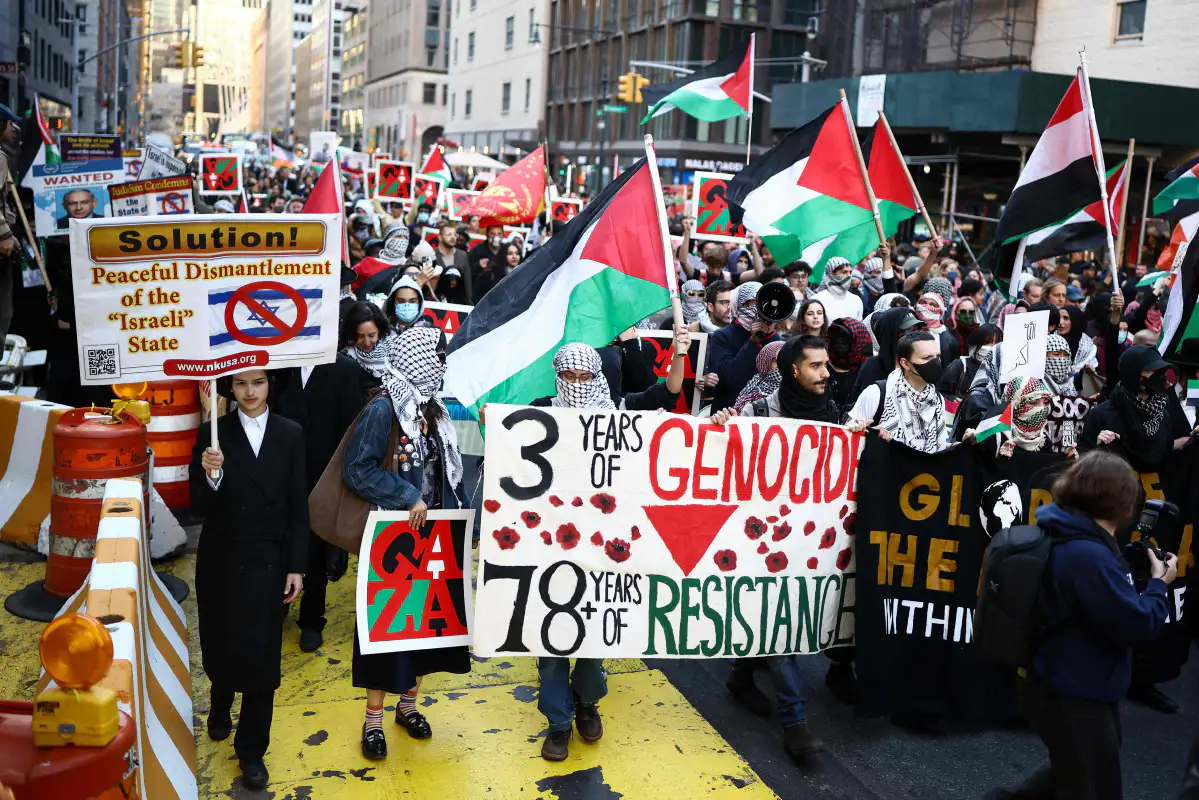
As two people who have devoted our professional lives to strengthening US-Israel relations and Israel’s ties with its Arab neighbors, we are struck by how little attention the unprecedented change in public American attitudes toward Israel is receiving in the election campaign. This is not a short-term issue that can be easily reversed. It is a profoundly important strategic challenge. We must not view the loss of American support only in terms of financial assistance, as important as that might be. The loss of military and political support could pose an existential threat to Israel. Who else is going to provide Israel F-35s or a veto at the UN Security Council? Israel’s enemies dream of the day when the absence of the American veto at the UN makes sanctions possible. Regrettably, such an eventuality is now thinkable because of the dramatic change in American public attitudes toward Israel.
The transformation of the US public’s view of Israel is widely reported, but its historical significance is often lost. To put this in perspective, since Israel’s founding as a state in 1948, it has always had the support of the American public. Initially, there was public sympathy for Israel because of the Holocaust. As it evolved from being a beleaguered democracy to a start-up nation, the public’s support deepened. That is why the US Congress historically constrained American presidents who were prepared to pressure Israel. When President Eisenhower wanted to impose sanctions on Israel in response to the 1956 war, it was the Democratic and Republican leaders of Congress – Lyndon Johnson and William Knowland – who opposed him and stopped it. When Gerald Ford wanted to carry out a “reassessment” of the relationship in response to Israel not agreeing to concessions for an Interim Agreement with Egypt – one eventually achieved months later – 76 US senators wrote the president to argue against it and in favor of more support to Israel, not less. Similarly, when Ronald Reagan, in response to the war in Lebanon in 1982, wanted to deny Israel badly needed supplemental assistance, it was the US Congress that voted one over the opposition of the president and his Secretary of State, George Shultz.
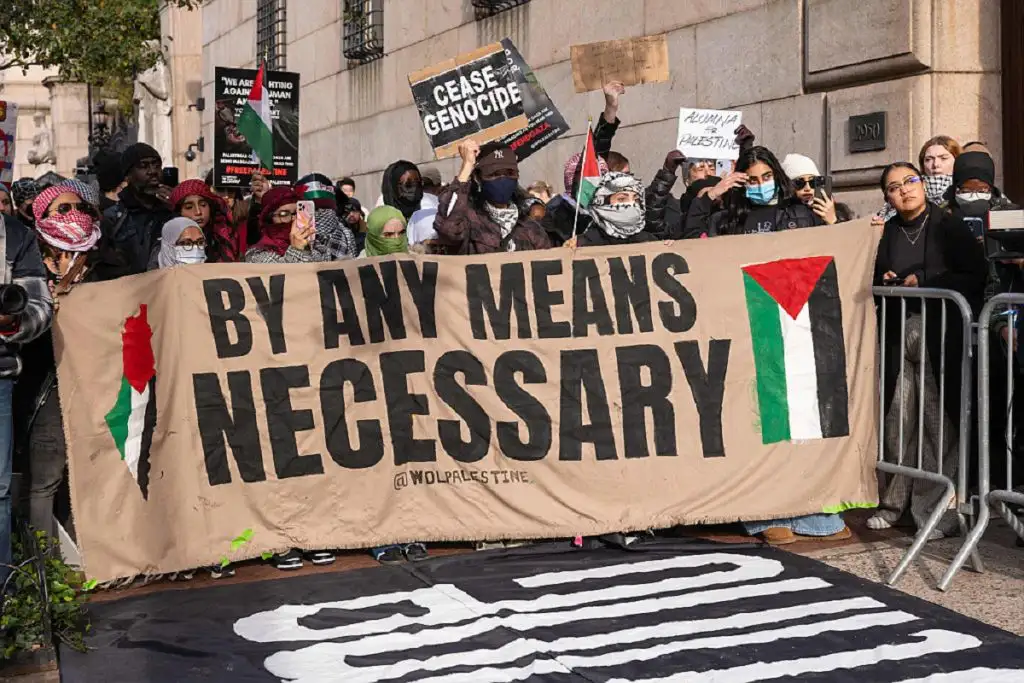 Students participate in an anti-Israel protest, Columbia University campus on Nov. 15, 2023 in New York City (Photo: Spencer Platt/Getty Images/AFP)
Congress is much more a reflection of public attitudes. This meant that since Israel’s founding, it has never had to deal with an American president in which it lacked public support. We are now in uncharted territory.
The numbers tell the story. Because of basic sympathy toward Israel, polling from 1967-1996 shows the American public consistently favored Israel over the Arabs by roughly 45 points. Polling on views of Israel and Palestinians, specifically, was conducted only after 1996, and shows a very similar gap – with the Gallup surveys from 2001 through 2018 showing Americans sympathizing with Israelis over Palestinians by an average margin of 43 percentage points. Yet, as of February 2026, there has been a sea change, with only 36% of the public sympathizing with Israel (and 41% sympathizing with the Palestinians). This low level of sympathy for Israel correlates well with a Pew poll from April 2026, which found that 60 percent of Americans now hold an unfavorable view of Israel.
Dig deeper into the numbers and the story becomes even more alarming for the future. According to a New York Times poll from May 2026, 63 percent of Democrats ages 18–29 think that the Democratic Party has been too supportive of Israel, and 72 percent of Republicans ages 18–29 think that Trump is too supportive of Israel. In both political parties, the Pew poll noted above showed that the majority of adults under the age of 50 now rate Israel negatively.
While support remains stronger among older Republicans, the fact that Vice President JD Vance’s feels comfortable emphasizing that American interests cannot be “subservient” to Israeli interests reflects his reading of the changed political map.
In other words, this is not a problem only with progressive Democrats. The reasons for the decline differ across the political spectrum, with progressive Democrats’ focus riveted on Palestinian suffering in Gaza, while some on the MAGA right blame Israel for the war in Iran.
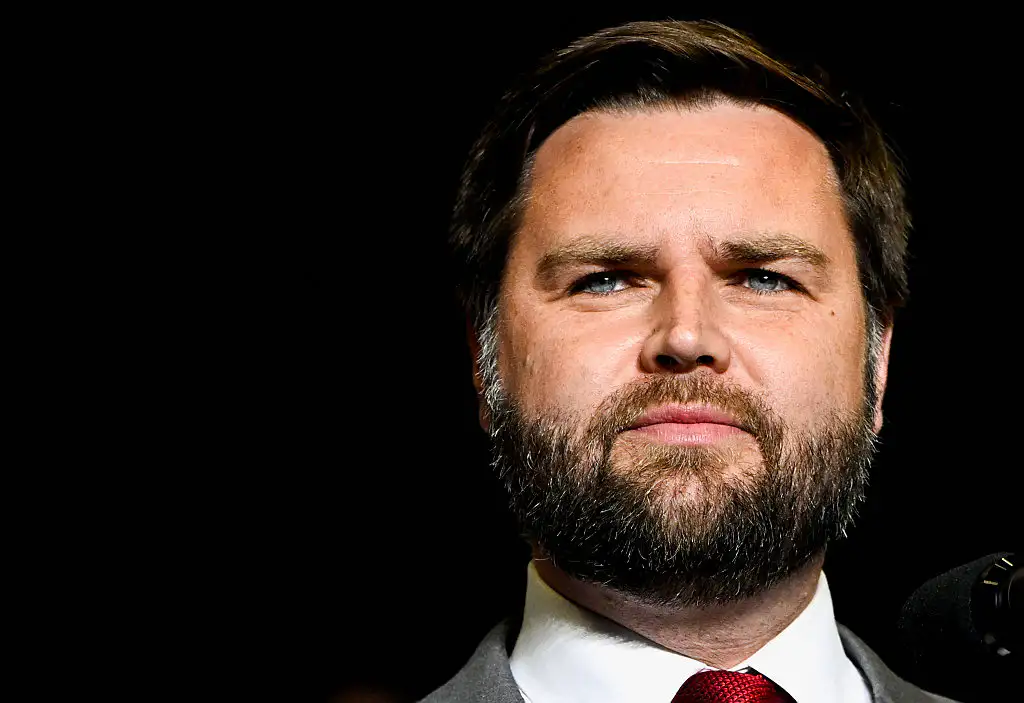 “This is not a problem only with progressive Democrats.” JD Vance speaks during US President Donald Trump’s rally in Youngstown, Ohio, September 17, 2022 (Photo: REUTERS/Gaelen Morse)
Extremist violence against Palestinians has provided a huge impetus for those who seek to portray Israel as a state that neither shares our values nor is governed by law. Assaults on Palestinian villages receive extensive American coverage and provoke outrage. While Prime Minister Benjamin Netanyahu and others suggest few are actually involved in the attacks, their words ring hollow when the assaults continue and last week involved more than 100 Israeli extremists attacking the village of Jaloud as the IDF tried to return a Palestinian family to their home. American defenders of Israel have a hard time explaining why an Israeli government capable of decapitating the Iranian leadership, carrying out the pager operation against Hezbollah, and even now able to grab Hamas leaders in Gaza can’t stop these attacks.
Of course, the loss of American public support is a function of many reasons, including the polarization of American politics – which has produced Democratic hostility toward President Trump and his perceived support for Israel – and the paradoxical reality that both the so-called progressives on the left and the MAGA right seek to pull back from US commitments overseas. Israel is not responsible for any of this, even as it does face a continuing double standard in which its right to self-defense is questioned.
But acknowledging all this does not absolve Israel of responsibility for its own choices. Israelis alone will decide who governs them. Our concern is that they weigh the consequences for a relationship that can no longer be taken for granted.
The stakes could hardly be higher. Never has Israel been so isolated internationally. It is not an island or a superpower and, at a minimum, needs American partnership technologically, militarily, commercially, and politically.
The enduring strength of the US-Israel relationship has rested on Israel’s outreach to both parties. It has been a strategic mistake to focus on only the Republicans, especially now when younger Republicans share negative views of Israel and Israel is doing so poorly not just among Democrats but also Independents.
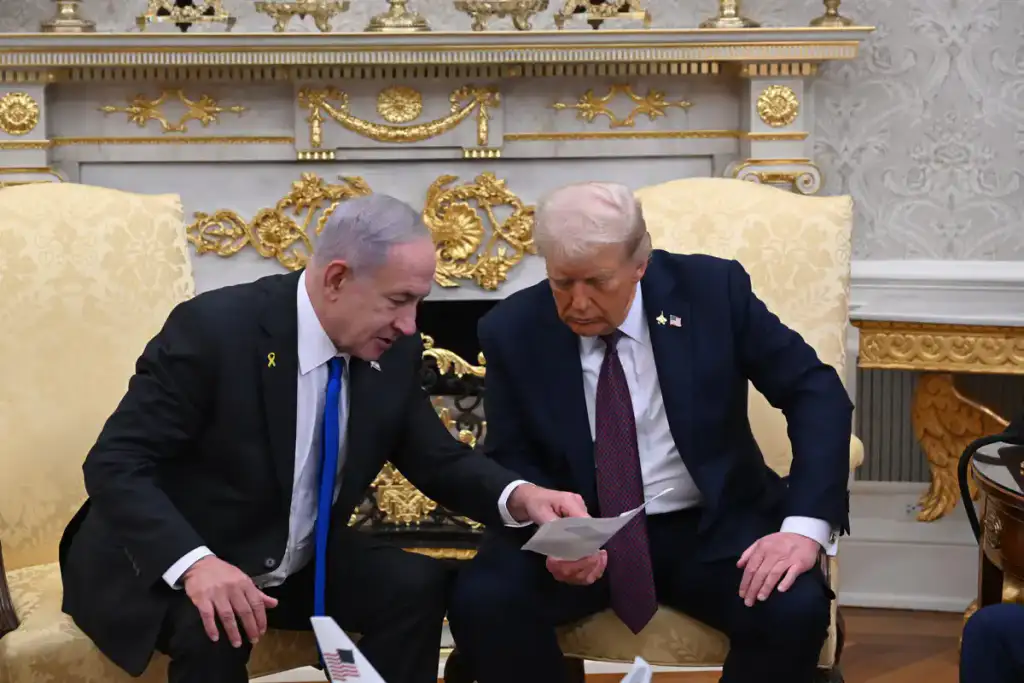 Israeli Prime Minister Benjamin Netanyahu (L) and US President Donald Trump (R) during a meeting at the White House, Washington DC, US (Photo: GPO/Avi Ohayon)
Historically, Israel was a non-partisan issue, and the foundation of the US-Israel relationship was rooted in shared values as well as shared interests. Missile defense and intelligence cooperation matter enormously, but they cannot carry the relationship alone.
From Truman and Johnson to Reagan, Clinton, George W. Bush, and Biden, a sense of shared values helped draw American presidents toward Israel in no small part because they understood that is what produced the American public’s support for Israel.
The challenge for Israel is to help Americans see the reality of our shared values. One immediate way to do so is to stop what an US ambassador, Mike Huckabee, a longtime friend of Israel, referred to as “terror” against Palestinians and to ensure that the next Police Minister is committed to ensuring that attacks on innocent Palestinians are investigated and perpetrators brought to justice.
We are sounding this warning because we care deeply about Israel and the relationship between our countries. Our purpose is to avert, not ensure catastrophe. Every candidate seeking to lead Israel should explain that they understand the depth of the problem and spell out how they intend to address the loss of American support. Simple slogans won’t suffice.
It is a strategic imperative for the next Israeli government to stop the hemorrhaging of Israel’s position in America. Difficult, yes, but an Israeli government that recognizes the stakes can act in a way that alters the current trajectory and prevents it from becoming an irreversible reality. Israel cannot control American politics, but its choices can influence American attitudes. Its standing in the United States belongs at the center of this election campaign – and among the priorities of the government that follows.